How to use exoplanet finding apps and AI tools for stargazing enthusiasts
Discover how stargazing enthusiasts can leverage mobile astronomy apps, open-source AI pipelines, and public data archives to explore and vet exoplanets from home.
Backyard astronomy has moved far beyond basic constellations and lunar phases. While enthusiasts have long used mobile apps to identify stars, planets, and satellites, newer technology now connects casual observation with professional discovery. Amateur astronomers can now access much of the same data and AI tools that professional researchers use to find worlds orbiting distant stars.
Integrating traditional stargazing apps with exoplanet data archives helps hobbyists expand their reach. Whether using a smartphone under dark skies or running the kind of software used to analyze data from space on a computer, the combination of mobile astronomy and machine learning creates new ways for the public to participate in space science.
Leveraging mobile astronomy apps for session preparation
Mobile tools for stargazing session preparation
| Application | Primary Use | Core Capabilities |
|---|---|---|
| Stellarium / SkySafari / Night Sky | Sky Mapping & AR | Real-time star charts, constellation identification, and target host star location |
| Astrospheric | Astronomical Weather | Specialized forecasts for cloud cover, atmospheric transparency, and seeing conditions |
| PhotoPills | Target & Frame Planning | Framing compositions and celestial alignments for the Sun, Moon, and Milky Way |
Stargazing enthusiasts often use mobile software to see what is visible overhead before looking at exoplanet data. Apps like Stellarium Mobile, SkySafari 7 Pro, and Night Sky 11 turn a smartphone or tablet into a portable planetarium. These tools use augmented reality (AR) overlays and star maps to help observers identify constellations, deep-sky objects, and specific planets, showcasing how on-device AI and smart software are enhancing the mobile experience.
For backyard astronomers planning an observation run with a telescope or binoculars, apps like Astrospheric and PhotoPills help ensure weather conditions and celestial alignments are optimal. Astrospheric provides astronomical weather forecasts, detailing cloud cover, transparency, and seeing conditions, while PhotoPills helps astrophotographers frame targets and plan compositions involving the Sun, Moon, and Milky Way. While mobile apps primarily map our local celestial neighborhood, they provide the spatial awareness needed to understand where target host stars reside in the wider galaxy.
Accessing public archives and transiting exoplanet data
To move from viewing our solar system to searching for exoplanets—planets orbiting stars other than our Sun—enthusiasts can use public data archives. NASA’s retired Kepler mission and the ongoing Transiting Exoplanet Survey Satellite (TESS) mission have created large, public repositories of stellar observation data. TESS, for example, monitors the slight dimming of starlight that happens when a planet transits its host star.
Since data from Kepler and TESS are freely accessible, anyone with an internet connection can download light curves and observation files. However, the amount of data is overwhelming. Sifting through hundreds of thousands of light curves manually is impossible for individuals, which is why AI and machine learning are now essential for space exploration.
Utilizing open-source AI tools for exoplanet vetting
To process these massive datasets, computer scientists and astronomers have developed open-source AI models to sift through potential planetary transits. One example is ExoMiner, developed at NASA’s Ames Research Center, and its updated version, ExoMiner++. It uses deep learning to validate exoplanet candidates from Kepler and TESS data, flagging genuine signals and filtering out false positives like eclipsing binary stars. ExoMiner++ is available on GitHub, allowing researchers and advanced enthusiasts to replicate results and analyze public archives.
Other teams have introduced pipelines like RAVEN (RAnking and Validation of ExoplaNets) to process TESS full-frame images for millions of stars. RAVEN uses simulated datasets of astrophysical events to train models to identify complex scenarios, such as ultra-short period planets in the Neptunian Desert. These automated pipelines help technically inclined astronomy buffs narrow thousands of raw signals down to high-probability candidates.
Combining stargazing apps with citizen science and future missions
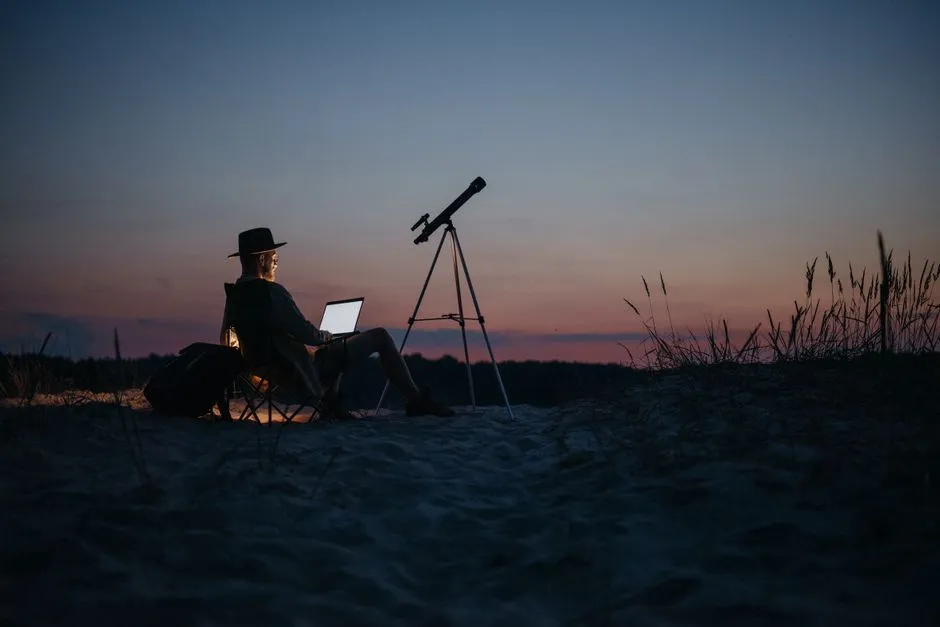
Using stargazing apps alongside AI data analysis connects backyard observation with professional science. While mobile apps help you locate host stars using augmented reality, desktop software and AI can help you investigate whether those stars host other worlds. This approach follows a broader trend toward open-source science and public data access.
Upcoming initiatives like NASA’s Nancy Grace Roman Space Telescope will capture tens of thousands more exoplanet transits, providing a steady stream of data for open-source AI tools. By pairing mobile planetarium apps with machine learning algorithms, stargazing enthusiasts can participate in exoplanet discovery from home.
References

Top mobile applications for tracking real-time exoplanet transit data
Everyday situational awareness tips inspired by real crime case studies

Related Posts
 TECH
TECHHow to leverage 5G network speed for AI cloud computing apps
Explore how the convergence of 5G speed, edge intelligence, and cloud computing transforms modern artificial intelligence applications across industries.
TECHBest smartphone telescopes and binoculars for amateur astronomy
Discover how smartphone-integrated telescopes, Wi-Fi Go-To mounts, and stabilized binoculars are transforming modern amateur astronomy.