Discover how smartphone-integrated telescopes, Wi-Fi Go-To mounts, and stabilized binoculars are transforming modern amateur astronomy.
The evolution of smartphone and Wi-Fi astronomy
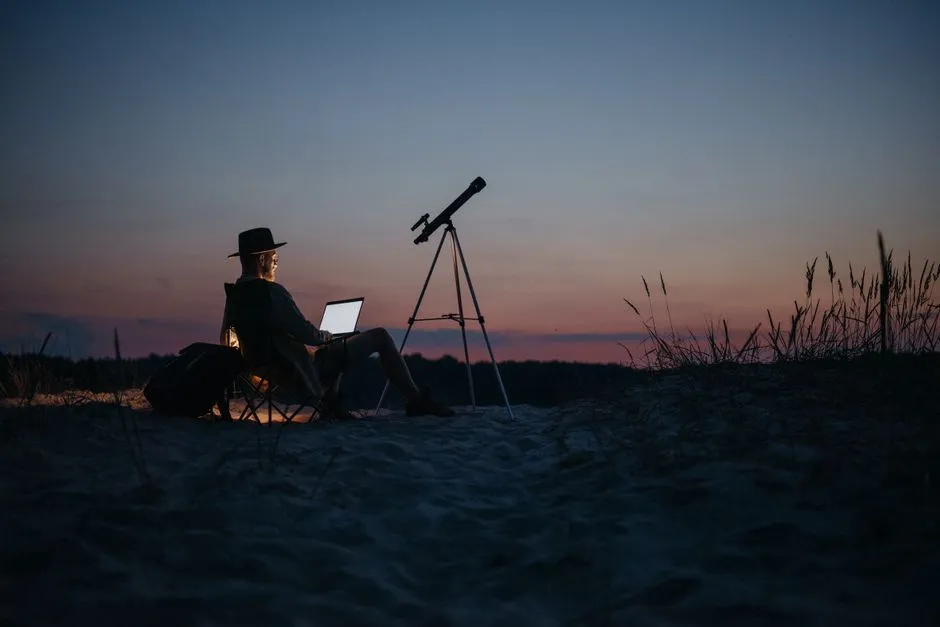
Amateur astronomers these days have an incredible amount of technology available to them to make observing the night sky just that little bit easier. It wasn't too long ago that practical astronomy saw the introduction of Go-To mounts, which offered beginners an electronic mounting setup that could point a telescope automatically at a given target in the night sky. Some seasoned observers bemoaned this quick-fix approach, arguing that it discouraged newcomers from learning how to navigate the celestial sphere manually. However, the Go-To mount has shown it can bring the night sky's wonders to those unable—or disinclined—to spend long periods outdoors on cold nights.
Now, Wi-Fi-controlled mounts and smart telescopes have made astronomy more accessible for a new generation of smartphone and tablet users, young and old. Some modern telescopes and mounts can point to a given target instantly and be controlled entirely via the phone in your pocket. Many of these telescopes can capture images as you observe, which can then be shared on social media, uploaded to the cloud, or emailed to fellow observers. Like them or loathe them, smartphone and Wi-Fi-controlled telescopes are here to stay, changing how enthusiasts interact with the cosmos.
Smart telescopes are essentially miniaturized astrophotography rigs with the work done for you—the camera, focusing, and even much of the processing are built directly into these instruments and their accompanying mobile apps. Setting up a smart telescope is typically straightforward: you place it down, level the tripod, initialize the app, and the telescope automatically aligns itself with the sky. After a few minutes, you can choose your target at the push of a button. From there, the telescope takes many individual exposures—usually lasting 10 to 30 seconds—and stacks them into a final photo. You can view an automatically processed image of your target live on your smartphone or tablet as soon as enough exposures are accumulated, or collect hours of data to edit later.
Top smart telescopes for portable imaging
Featured Smart Telescopes Comparison
| Model | Optical Design | Control Interface | Primary Strengths |
|---|---|---|---|
| ZWO Seestar S50 | 50mm apochromatic refractor | iOS / Android mobile app | Highly portable, included solar filter, automated deep-sky and solar imaging |
| Sky-Watcher Explorer 130P AZ GO-2 | 130mm reflector (AZ mount) | SynScan app via Wi-Fi hub | Focal versatility, GPS-assisted star alignment, broad deep-sky database |
| Celestron Astro Fi 5 | 5-inch Schmidt-Cassegrain | SkyPortal app via integrated Wi-Fi | Strong planetary and lunar resolution, bright deep-sky object tracking |
The ZWO Seestar S50 stands out from many of its competitors due to its low price and portable design. It is a compact smart telescope with a 50mm apochromatic refractor that comes in a shockproof carry case along with a tripod, USB-C charging cable, solar filter, and user guides. Operated via an iOS or Android app, the Seestar S50 delivers great views and captures of the Sun (using the included solar filter) and Moon, as well as deep-sky objects like the Horsehead Nebula and the Whirlpool Galaxy. This unit is a strong option for observers who want something light for dark-sky sites, and its size makes it useful for catching brief, unexpected gaps in the clouds.
Another option is the Sky-Watcher Explorer 130P AZ GO-2, which has a Wi-Fi-enabled altazimuth mount that allows users to locate celestial targets using a smartphone interface. By installing the SynScan app on a phone and connecting it to the mount's Wi-Fi hub, users can carry out a star alignment process by setting the telescope tube level and pointing it north. The app determines your location using a built-in GPS sensor, enabling the Go-To system to locate a wide range of objects, including globular clusters, the Andromeda Galaxy, Bode's Galaxy, planetary nebulae, and double stars. This setup is an approachable gateway for beginners who want manual focal versatility paired with automated location technology.
Similarly, the Celestron Astro Fi 5 Schmidt-Cassegrain Wi-Fi system uses a 5-inch optical tube on a single fork arm with integrated wireless control. Well-suited to observing planets, the Moon, and bright deep-sky targets, the system relies on the SkyPortal app for iOS or Android. When powered up, the mount automatically establishes a Wi-Fi network that connects directly to your device, allowing you to follow alignment instructions and explore an extensive database of celestial objects. During field tests, observers successfully tracked the Orion Nebula, resolved the Trapezium stars at its center, and captured the delicate oval glow of the Crab Nebula.
Understanding the capabilities and limits of smart systems
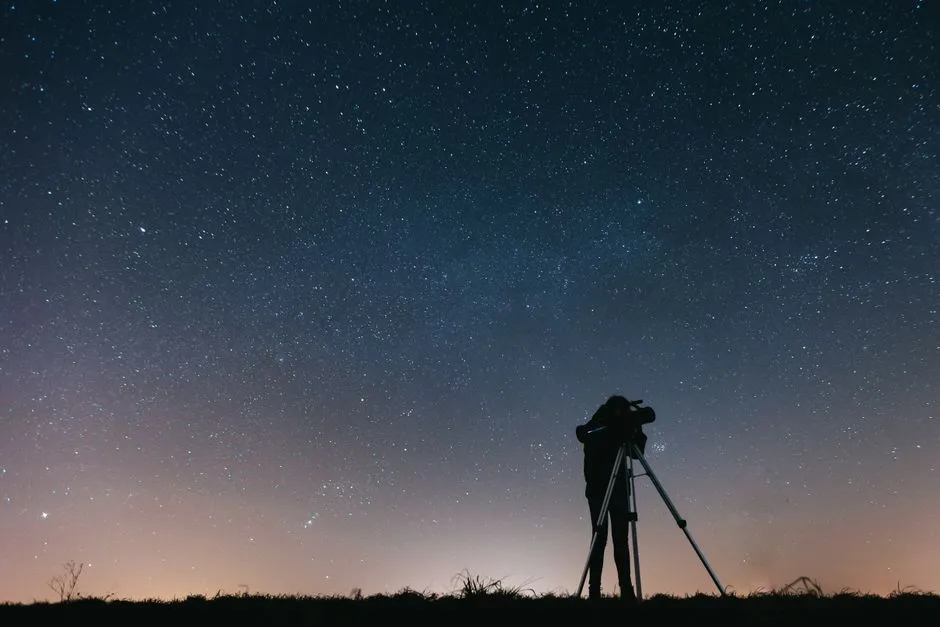
While modern smart telescopes simplify deep-sky imaging, they are built with specific architectural constraints that every amateur astronomer should understand. All smart telescopes are, by default, built on alt-azimuth mounts, which experience field rotation. Because of this, individual exposures are typically limited to 30 seconds or less to prevent image blurring. Also, due to the stair-step motion a telescope makes on an alt-azimuth mount, internal software must either crop the frame, create a mosaic, or leave ragged and noisy edges along the perimeter. Although some models allow users to tilt the instrument on an equatorial wedge for longer tracking, they generally remain optimized for deep-sky targets rather than high-magnification planetary observation.
In fact, smart telescopes are often considered a poor choice for traditional solar system targets unless you are hunting for distant asteroids or Kuiper Belt objects. A high-quality visual telescope or a pair of binoculars delivers an entirely different, often more immediate experience when observing the Moon and bright planets up close—though if you prefer using your phone, you can learn how to actually photograph the full moon with the right technique. Many experienced astronomers recommend using smart telescopes alongside traditional visual instruments—letting the smart device image faint background nebulae while you spend your evening scanning star clusters and lunar craters with your own eyes. Modern smart optics are driven by sophisticated Sony sensors (such as the IMX585, IMX678, and IMX662), which prioritize high quantum efficiency and rapid photographic speeds (typically f/5 or faster) to capture faint photons quickly.
Despite these limitations, the rapid evolution of software has turned smart telescopes from experimental prototypes into reliable, resilient imaging stations. Most units are barely larger than a gallon jug of milk, enabling quick setup times of around five minutes without the tangled cables and software alignment hassles of traditional astrophotography rigs. If an error occurs during a session, users can simply reboot the system and resume imaging, while built-in algorithms automatically reject frames compromised by sudden cloud cover or stray light pollution.
Enhancing observation with astronomy binoculars
Featured Astronomy Binoculars Comparison
| Model | Configuration & Glass | Key Technology | Best For |
|---|---|---|---|
| Canon 12x36 IS III | 12x36, Porro Type II prisms | Battery-powered image stabilization | Handheld viewing free of tremor, lunar details and bright planets |
| Hawke Endurance ED 10x50 | 10x50, BAK4 roof prisms | Phase-corrected ED glass | High light gathering and accurate color rendering across star fields |
| Bresser 10x50 Corvette | 10x50, multi-coated optics | Precise center-focusing mechanism | All-around astronomical surveying and weather-resistant field use |
While automated telescopes dominate imaging discussions, binoculars remain an essential instrument for amateur astronomy and wide-field stargazing. Many amateur astronomers prefer binocular observing over any other form of exploring the night sky, as a powerful, high-quality model allows you to examine the Moon, star fields, and expansive deep-sky objects with natural binocular vision. All you have to do is step outside into your yard on a clear night, raise a good pair of optics, and immediately enjoy wide views of the night sky without complex alignment procedures.
Image-stabilized binoculars are a major technological leap for handheld astronomy, neutralizing hand tremors that normally plague high-magnification viewing. The Canon 12x36 IS III binoculars are a prime example, featuring Porro Type II prisms, Super Spectra multicoatings, and a battery-powered stabilization mechanism. When engaged, the image becomes still, bringing fainter background stars into view while eliminating ghost images around bright targets like Jupiter and the Moon. They offer a comfortable interpupillary distance range and optical clarity for extended stargazing sessions.
For those who prefer traditional, unpowered optics with wide apertures, models like the Hawke Endurance ED 10x50 provide strong light-gathering performance. Equipped with fully multi-coated optics, BAK4 roof prisms, and phase-corrected glass, these binoculars deliver clear color rendering—such as the distinct orange glow of Betelgeuse in Orion or the subtle color differences within the Meissa Cluster. Similarly, the Bresser 10x50 Corvette binoculars offer a precise center-focusing system and weather-resistant accessories, ensuring that stars in the middle of the field snap into focus for general-purpose astronomical surveys.
References

Is brown diamond jewelry worth the price in 2024?
Top mobile applications for tracking real-time exoplanet transit data
Related Posts
 TECH
TECHHow to leverage 5G network speed for AI cloud computing apps
Explore how the convergence of 5G speed, edge intelligence, and cloud computing transforms modern artificial intelligence applications across industries.
TECHTop mobile applications for tracking real-time exoplanet transit data
Explore the best mobile applications and tools for tracking real-time exoplanet transit data, allowing citizen scientists to participate in planetary discovery.