Everyday situational awareness tips inspired by real crime case studies
Discover practical situational awareness strategies grounded in real-world crime case studies, focusing on threat detection, the OODA loop, and personal safety.
Understanding the foundations of situational awareness
Situational awareness is frequently oversimplified as a passive catchphrase, but it is a mental process that combines observation, orientation, and prediction. It involves collecting sensory data from your environment, using expertise or schema to understand what is happening, and forecasting potential outcomes to inform a response. Real-world case studies show that developing this skill set provides the warning needed to avoid danger and protect lives. Whether in a crowded public transit station or outside a school, recognizing anomalies within a normal routine helps you take a more active role in your own security.
The mechanics of this process are structured around the OODA loop—observe, orient, decide, and act—a framework originally developed by military strategist Colonel John Boyd. In high-stakes environments, the human brain relies heavily on mental file folders known as schema, which store patterns of past experiences to help identify hazards quickly. For example, law enforcement officers and security professionals analyze real-world events, such as the 2004 incident in Mosul where a poorly parked vehicle and suspicious occupants prompted an immediate fallback maneuver. By studying these cases and practical personal safety lessons from true crime documentaries, civilians can train their brains to recognize similar behavioral and environmental deviations, helping them move from simple observation to action.
To improve your situational awareness, you need to break what behavioral psychologists call the "law of least effort." The human brain naturally defaults to reflexive, rapid thinking systems to conserve energy, which can lead to cognitive biases and missed warning signs when subtle threats emerge. Unlike animals in the wild, which instinctively flee at the first sign of danger, humans have the ability to rationalize away warning signs or become distracted by smartphones. Actively choosing to override this tendency requires conscious effort, continuous environmental scanning, and a commitment to processing unusual stimuli rather than ignoring them for the sake of comfort.
Mastering Cooper’s color code for daily safety
Cooper's Color Code Awareness Levels
| Condition | Awareness State | Application |
|---|---|---|
| White | Total unfocused relaxation or sleep | Safe zones such as a private home |
| Yellow | Relaxed alertness; baseline environmental scanning | Everyday public spaces, commutes, and workplaces |
| Orange | Focused alertness on a specific potential anomaly | Targeted focus when baseline patterns are disrupted |
| Red | Action mode and emergency response | Active execution of escape or defensive plans |
| Black | Cognitive breakdown and panic | Failure state avoided through situational readiness |
Originally pioneered by U.S. Marine innovator Jeff Cooper, Cooper’s Color Code is a framework for categorizing levels of awareness and mental preparedness. The lowest level, Condition White, is a state of total unfocused relaxation or sleep, which is necessary for rest but dangerous in unfamiliar or public spaces. Transitioning into Condition Yellow establishes a good baseline for everyday life, keeping you relaxed yet alert, and allowing both reflexive thinking and problem-solving to function. Operating in Condition Yellow ensures that you remain attuned to your surroundings without sliding into mental exhaustion.
When an anomaly disrupts your baseline routine, your awareness should shift to Condition Orange, a state of focused alertness regarding a specific potential threat. However, prolonged exposure to Condition Orange can lead to "focus lock," where attention narrows so intensely onto one variable that other surroundings are ignored. While focus lock is useful for police officers searching for a specific vehicle or individuals navigating a complex environment, it should be used selectively. Moving past Orange into Condition Red initiates action mode during an emergency, while Condition Black is panic, where a breakdown in coping mechanisms makes survival much harder.
Integrating these color codes into daily routines involves designating safe zones for Condition White, such as your private residence, while using Condition Yellow for public spaces, commutes, and workplaces. If you must use a mobile device or relax in an unfamiliar area, as often suggested in solo travel safety tips, take a moment beforehand to identify primary entrances, secondary exits, and potential barriers. This preparation ensures that if an emergency startles you out of an unfocused state, you avoid sliding directly into panic. Instead, you can rapidly orient your escape, because in crisis scenarios, being mobile makes you more likely to survive.
Pattern detection and reading environmental atmospherics
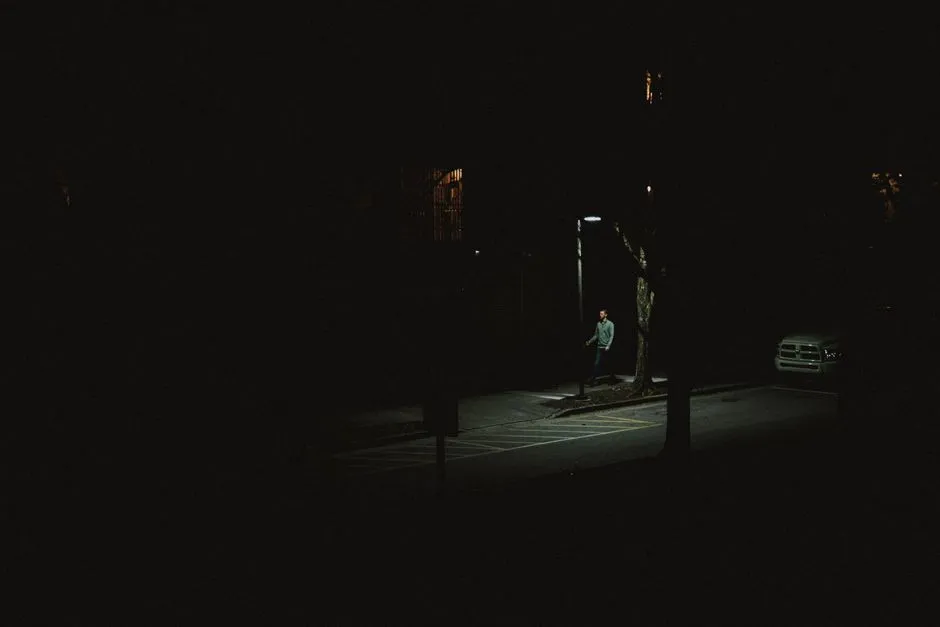
For most people, safety is the statistical norm, and daily life operates on predictable patterns. Recognizing these baselines makes anomalies obvious, allowing you to filter out benign stimuli and focus on genuine indicators of risk. Developing this awareness requires consistent habit formation, particularly when interacting with people, who are often the most unpredictable element in security settings. Concepts like the retail 10/5 rule can be adapted into a personal 20/10 safety guide: at approximately 20 feet away, make eye contact and take a quick mental inventory of a person's attire and carried objects, and at 10 feet away, offer a friendly, neutral greeting to observe body language and facial expressions.
Atmospherics—the collective mood or general attitude within a given environment—are another tool for personal safety. Much like walking into a room and sensing the tension of an interrupted argument, crowds project emotional states that shift when danger is imminent. By paying attention to whether a crowd feels relaxed, anxious, volatile, or happy, you can spot conflict before it turns into a hostile act. This macro-level observation is especially useful in crowded public venues—much like those described in a guide on how to outsmart a pickpocket in Spain—where scanning every individual face is impossible, allowing you to spot mood shifts and respond proactively.
While watching people is important, understanding your operational environment through structured observation is also key. An operational environment analysis involves identifying structural features, choke points, traffic patterns, and safe zones within the spaces you frequent, such as office buildings, shopping centers, and transit hubs. Case studies of historical tragedies, such as nightclub and building fires, show that panicked crowds instinctively attempt to flee via their primary entry points, creating lethal bottlenecks. Knowing alternate exits, ground-floor window routes, and structural cover ensures that your reaction time is measured in seconds rather than fatal hesitations.
Formulating situational action and managing fear
Key Rules for Crisis Decision-Making
- •Execute an 80 percent solution immediately rather than delaying for a flawless plan.
- •Conduct routine mental walkthroughs, as stress reduces performance to the level of prior training.
- •Channel fear as an informative warning signal while using pre-planned action to prevent panic.
In moments of crisis, indecision is often more dangerous than an imperfect plan, as perfection shouldn't get in the way of a good response. The final two stages of the OODA loop—decide and act—represent situational action, which requires turning your observations into a functional response. Rather than striving for a flawless defense that consumes precious seconds, individuals under stress should aim for an 80 percent solution. Implementing a decisive plan that resolves the majority of the danger will always yield a higher survival rate than attempting to calculate a perfect countermeasure while under attack.
A foundational element of executing rapid solutions during an emergency is realistic preparation and training. People rarely rise to the occasion during high-stress incidents; instead, they usually perform at the level of their prior training. When individuals lack structured drills or mental simulations, surprise triggers extreme stress, shutting down logical processing and inducing freezing or panic. Organizations and individuals can bridge this gap by conducting mental walkthroughs of potential crisis scenarios, which builds a library of reasoning that shortens decision-making pathways.
Finally, managing the physiological response to fear is important for maintaining clarity during a high-stakes event. While fear is a natural signal that alerts the brain to a threat, panic is a debilitating stress response characterized by elevated heart rates, sensory distortion, and irrational decision-making. Proper situational awareness mitigates the surprise factor that often leads from simple fear to paralyzing panic. By observing your environment, orienting to subtle cues, and mentally rehearsing responses, you turn situational awareness into a practical, life-saving habit.
References

How to use exoplanet finding apps and AI tools for stargazing enthusiasts
Practical personal safety lessons learned from true crime documentaries
Related Posts
 LIFE
LIFEKeeping pets safe and stress-free during natural weather emergencies
A comprehensive guide on how to prepare emergency kits, establish evacuation plans, and minimize anxiety for pets during natural disasters.
 LIFE
LIFEEvaluating the best flood insurance policies for homeowners in flood zones
A comprehensive guide to evaluating and selecting the best flood insurance policies for homeowners in high-risk zones, comparing NFIP and private options.