A friendly, grounded guide to navigating the night sky, understanding stellar movements, and spotting iconic constellations without expensive gear.
Finding My Way in the Dark Sky
I used to stand in my backyard on clear nights, look up at the infinite scatter of light, and feel completely lost. To me, the night sky looked like someone had accidentally knocked over a jar of silver glitter across black velvet. I wanted so badly to point upward and say, "There's Orion," or "That's the Little Dipper," but every time I tried to connect the dots, my brain scrambled the patterns into abstract noise. It turns out I wasn't alone; most beginners assume you need a background in astrophysics or a thousands-of-dollars telescope just to make sense of what is up there.
The turning point came when I realized what constellations actually are. According to NASA, constellations aren't rigid physical structures bound together in space; they are essentially giant dot-to-dot puzzles mapped out by human imagination long ago. Today, astronomers officially recognize 88 distinct constellations across the entire sky. The stars within a single pattern might look like cozy neighbors from our perspective on Earth, but in reality, they are separated by hundreds of light-years of depth. One star in a shape might be relatively close to our solar system, while its neighbor in the same pattern is burning across the far reaches of deep space.
Once you let go of the idea that you're looking at connected physical objects, the sky becomes much friendlier. Ancient cultures across the globe looked at those exact same distant suns and saw animals, legendary heroes, and everyday tools. By learning a few simple visual anchors, you start turning an intimidating canvas into a familiar map. You don't need high-tech equipment to get started—just a clear dark night, a little patience, and a willingness to look up with fresh eyes.
Why the Sky Keeps Moving (And What You Can Actually See)
Have you ever noticed how a favorite set of stars seems to vanish as the months roll by? That shifting view isn't because the stars themselves are darting across space; it's because we're riding on a moving planet. As Earth travels along its year-long orbit around the Sun, our night window opens into different angles of the universe. Every single night, the stars appear to rise and set roughly four minutes earlier than the night before, gradually drifting westward. In late September, for instance, you might spot the constellation Pisces hanging high in the evening sky, whereas Virgo sits on the opposite side of the Sun, completely washed out by daylight.
Your geographic location also dictates your cosmic front-row seat. People stargazing in Australia gaze out into a different sector of space than those sitting on a porch in North America. However, if you live in the Northern Hemisphere, you get access to a special group of patterns known as circumpolar constellations. Because these star groups hover directly above our planet's rotational axis, they never dip below the horizon from our vantage point. They simply pivot endlessly around a central point, visible every clear night of the year regardless of the season.
Other constellations are seasonal visitors that mark the passing of the year. While summer stargazing gets all the credit for warm weather, winter is secretly the gold standard for celestial viewing. The air in winter tends to hold less humidity, creating crisp, crystal-clear atmospheric conditions, and the Sun sets much earlier, giving you long, dark hours to explore. Spotting seasonal markers like Orion in mid-winter or Cygnus during late summer offers a comforting cadence to the natural year.
To plan your outing successfully, finding a dark location away from heavy streetlights and tall buildings makes all the difference. Letting your eyes adapt to the darkness for at least twenty minutes expands your visual sensitivity dramatically. Before stepping outside, it can be hugely helpful to check digital star charts like Stellarium Web or Sky & Telescope. These tools generate real-time maps tailored to your exact coordinates and time, taking the guesswork out of knowing which patterns are currently hovering overhead.
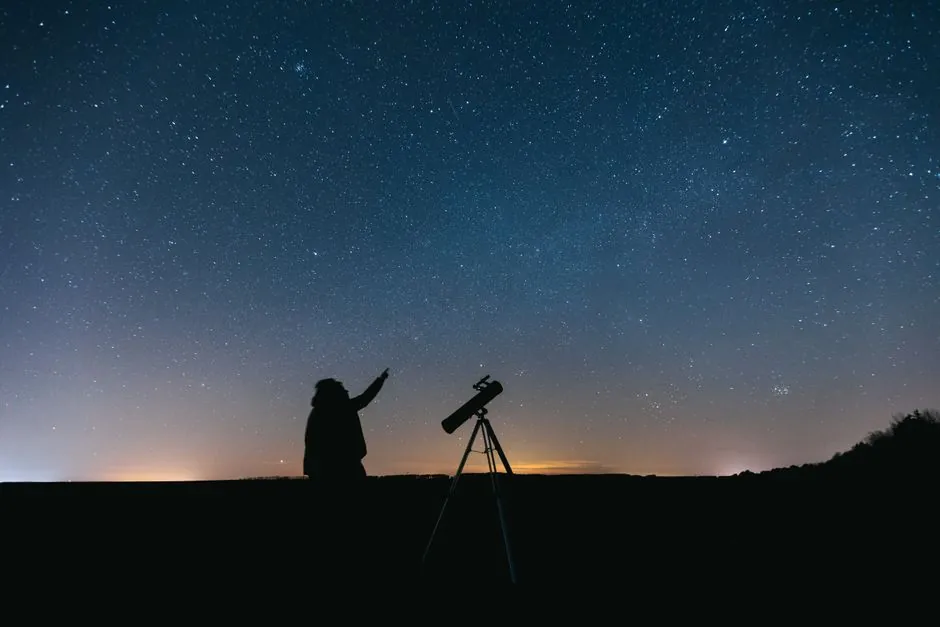
The Science Behind the Patterns: Astronomy vs. Astrology and Real-World Navigation
As you start exploring the sky, it's worth drawing a clear line between two terms that often get mixed up in casual conversation: astronomy and astrology. Astronomy is the rigorous, data-driven scientific study of celestial bodies, galaxies, and the physical laws governing our universe. It relies on empirical evidence to understand how stars form, how light travels across light-years, and how planetary systems evolve. Astrology, on the other hand, is a traditional belief system that attempts to link the positions of stars and planets to human personality traits or earthly events—a practice grounded in culture and folklore rather than scientific measurement.
Despite constellations being arbitrary human groupings, modern astronomers and space agencies still rely heavily on them as cosmic landmarks. Because stars remain in relatively fixed positions relative to one another over human lifespans, they function like neighborhood signs in deep space. When space agencies track annual meteor showers, they name them after the constellation from which the shooting stars appear to originate. The Orionids in October, for example, get their name because their trajectories radiate straight out of the constellation Orion.
The practical power of star maps extends far beyond amateur stargazing. For centuries, sailors across open oceans relied on celestial navigation to pinpoint their latitude without land in sight. Intriguingly, this ancient skill hasn't been lost to modern technology. NASA astronauts train in traditional celestial navigation techniques as a critical backup in case electronic guidance systems encounter trouble aboard spacecraft.
Even robotic probes speeding toward the outer edges of our solar system carry digital star maps within their onboard computers. By comparing real-time photos taken by onboard cameras against stored patterns of bright stars, these spacecraft auto-correct their course across millions of miles of dark vacuum. Knowing that the simple shapes overhead double as navigation anchors for cutting-edge space exploration adds a whole new dimension of wonder to an evening walk.
The Beginner's Roadmap: Key Constellations to Spot First
If you want to build confidence quickly, the best strategy is to start with the most prominent, unmistakable shapes. In the Northern Hemisphere, your ultimate starting point is Ursa Major, the Great Bear. While the full bear shape covers a huge swath of sky, its most famous feature is the Big Dipper—a bright, ladle-shaped asterism made of seven distinct stars. In spring, Ursa Major sits high overhead, making its iconic bowl and curved handle practically impossible to miss.
Once you've located the Big Dipper, you can use it as a cosmic compass to find Ursa Minor, the Little Bear. Trace an imaginary line through the two stars forming the outer edge of the Big Dipper's bowl, then extend that line straight upward into the dark. It will point directly to Polaris, the North Star. Polaris sits at the very tip of Ursa Minor's tail. Because Polaris sits directly over Earth's northern axis, it stays stationary while all other stars appear to rotate around it, making it the anchor of celestial navigation.
Moving into autumn, look toward the north for Cassiopeia, the Seated Queen. Cassiopeia is famously easy to spot because its five brightest stars form a bold, jagged "W" or "M" across the night sky. The main band of the Milky Way runs straight through Cassiopeia, making it a stunning backdrop on crisp fall nights when atmospheric clarity is high.
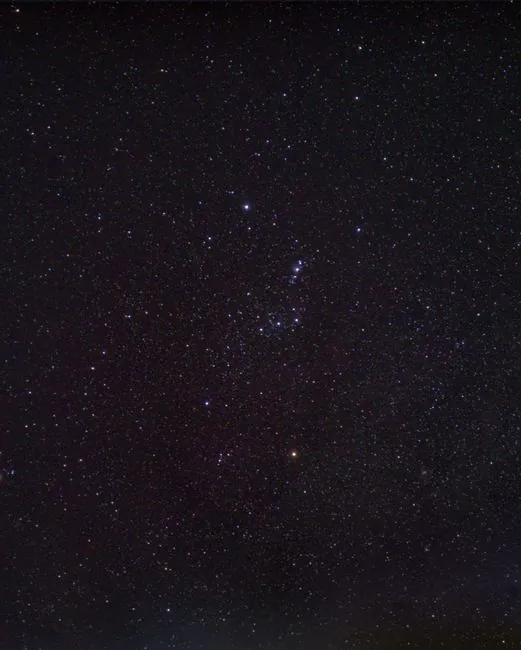
During winter, your primary target should be Orion, the Hunter. Orion is dominated by three bright stars arranged in a tight, neat diagonal row known as Orion's Belt. Once you spot the belt, you can trace down and to the left to find Canis Major, the Great Dog. Canis Major houses Sirius, which shines as the single brightest star in our entire night sky, glowing like a blue-white diamond near the horizon. In late summer and early autumn, keep an eye out for Cygnus, the Swan—also known as the Northern Cross—whose long stellar neck stretches right along the glowing spine of our galaxy.
Practical Tips for Your First Stargazing Session
When you're ready to head out, resist the urge to buy expensive equipment right away. The human eye is remarkably capable of capturing stellar patterns once given the chance to adapt. It takes roughly 20 to 30 minutes for human eyes to adjust fully to low light, opening up faint stars that were completely invisible when you first stepped out the door. Try to avoid looking at your smartphone screen during this time; even a quick glance at bright white light can reset your eyes' dark adaptation and force you to start the waiting game all over again.
A useful mental habit for navigating the sky is a technique astronomers call "star-hopping." Instead of scanning the void blindly, start from a bright, unmistakable pattern you already know—like Orion's Belt or the Big Dipper—and use its geometry to draw imaginary lines toward unfamiliar shapes nearby. Star-hopping breaks the vastness of the cosmos down into manageable steps, turning an intimidating hunt into a rewarding game of connected paths.
Don't forget to prepare for physical comfort. Stargazing involves standing or sitting still in the cold for extended periods, so dressing warmer than you think necessary is essential (a warm jacket, thick socks, and a beanie are non-negotiable in cooler weather, much like knowing how to keep your home warm and energy-efficient when you head back inside). Bringing along a flashlight equipped with a red filter or red-light mode is another great trick; red light preserves your dark adaptation while allowing you to check paper star maps or navigate dark paths safely. Keeping your expectations grounded helps, too; you aren't trying to spot distant galaxies on night one, but rather getting comfortable with the sky's main signposts.
Looking Up with Fresh Eyes
Learning to read the constellations gently changes how you experience nightfall. What once felt like an anonymous, chaotic backdrop transforms into a familiar tapestry of stories, science, and history. The sky stops feeling like a distant ceiling and begins to feel more like an outdoor gallery that changes its exhibits with every season.
There is a quiet humility in realizing that the light entering your eyes tonight left those stars decades, centuries, or even millennia ago. You are standing on a spinning rock, looking out through a thin veil of atmosphere into the deep ocean of time. The simple shapes overhead have anchored human wonder for thousands of years, offering the exact same view to ancient stargazers that they offer to us tonight.
Next time you find yourself under a clear sky, step outside for just a few minutes, let the cool air settle in, and look up. Find one familiar shape, follow its lines into the dark, and let your curiosity wander into the spaces between the stars.

The Simple Pre-Workout Fueling Strategy That Saved My Long Runs
The Honest Winter Energy Guide: How I Cut Heating Costs Without Freezing

Related Posts
 LIFE
LIFEKeeping pets safe and stress-free during natural weather emergencies
A comprehensive guide on how to prepare emergency kits, establish evacuation plans, and minimize anxiety for pets during natural disasters.
 LIFE
LIFEEvaluating the best flood insurance policies for homeowners in flood zones
A comprehensive guide to evaluating and selecting the best flood insurance policies for homeowners in high-risk zones, comparing NFIP and private options.