Securing personal mobile devices against automated AI-driven cyber attacks
Explore how artificial intelligence is transforming mobile cyber threats and learn actionable strategies to secure personal devices against automated attacks.
AI-driven cyber attacks on mobile devices
The threat landscape has shifted as cybercriminals integrate artificial intelligence into their tools. Traditional threats often relied on manual reconnaissance, static signatures, and predictable attack vectors, which allowed security systems to establish reliable defenses over time. However, generative models and machine learning algorithms have automated these processes, allowing threat actors to scale operations across global networks. Personal mobile devices, which often bridge the gap between private use and professional access, have become primary targets for these campaigns.
AI acts as a force multiplier for malicious actors, enabling them to conduct automated reconnaissance, gather intelligence about mobile infrastructure, and map out device ecosystems quickly. Using AI-enabled tools, attackers can bypass traditional censorship barriers, mask their identities, and alter their attack paths in real time. This means malicious code and automated exploits can adapt when encountering standard defense mechanisms, making traditional perimeter-based security solutions less effective.
The scale of these attacks presents a unique challenge for mobile security. Threat actors can deploy automated web scraping bots that mimic human browsing habits to bypass rate limiters and CAPTCHA verifications and harvest personal data. Furthermore, malicious applications equipped with AI can learn from failed breach attempts, modifying their behavior to infiltrate operating systems without triggering alerts. Consequently, securing personal mobile devices requires proactive, adaptive security rather than passive defense.
Mobile threat vectors: Social engineering, malware, and deepfakes
AI-Driven Mobile Threat Vectors and Impacts
| Threat Vector | AI Capability | Attack Impact |
|---|---|---|
| Social Engineering | Natural language generation mimicking tone and style of trusted contacts | Personalized phishing to extract credentials or transfer assets |
| Deepfakes | Synthetic audio and video generation of authority figures | Fraudulent instructions issued during calls and video conferences |
| Autonomous Malware | Adaptive code alteration and environment analysis | Evasion of signature-based antivirus to maintain device persistence |
As machine learning models become more accessible, attacks targeting mobile environments have expanded into more convincing forms of manipulation. AI-driven social engineering is a pervasive threat, using natural language generation to craft personalized phishing messages. These communications can mimic the tone and writing style of trusted contacts, financial institutions, or colleagues. By establishing realistic scenarios, attackers trick users into divulging credentials, transferring assets, or granting unauthorized system access.
Beyond text-based deception, cybercriminals increasingly rely on realistic deepfakes to target individuals via mobile channels. By using existing audio and video recordings of high-profile figures or authorities, attackers generate doctored media to issue fraudulent instructions. When these deepfakes are used during phone calls or video conferences on mobile devices, victims may find it difficult to differentiate between genuine communications and synthetic fabrications, increasing the success rate of fraud and data exfiltration.
Mobile malware has also evolved, transitioning from rigid scripts into software capable of autonomous evasion. Modern malicious applications can analyze device security configurations and construct strategies to neutralize antivirus solutions. These strains of malware alter their code structures and execution parameters to bypass signature-based detection. By adapting to environmental feedback, AI-powered malware can persist on compromised smartphones and tablets, risking personal privacy and corporate network integrity—a trend that highlights the importance of securing mobile endpoints running autonomous AI agents in corporate environments.
Defense strategies and best practices
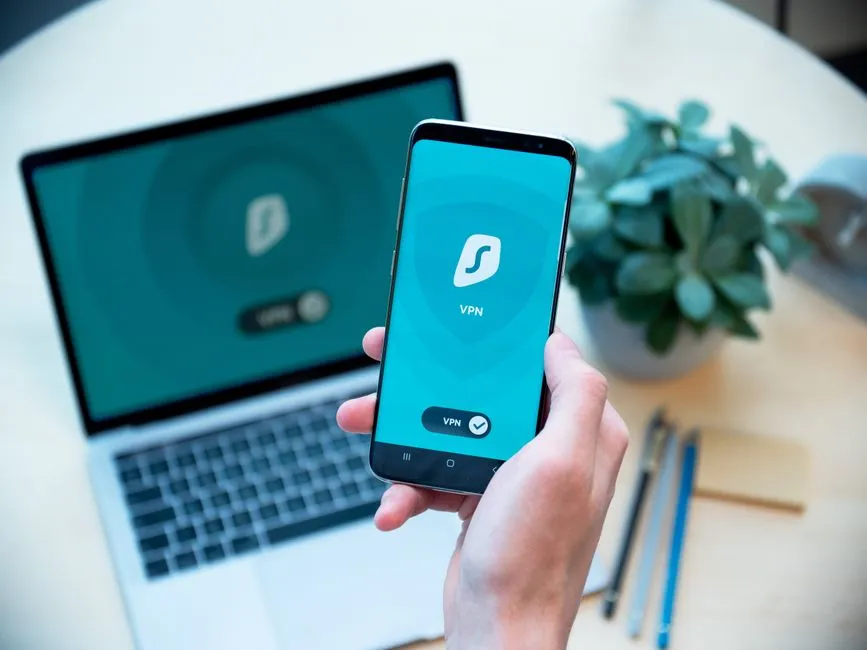
Defending personal mobile devices against machine-speed attacks requires a layered defense. One fundamental measure, adhering to best practices for mobile device security, is the use of robust authentication. Users should configure strong passcodes of at least eight digits along with biometric authentication, such as facial recognition or fingerprint scanning, to block unauthorized access. Additionally, multi-factor authentication should be enabled across all personal and professional accounts, ensuring a secondary verification method is required even if primary credentials are stolen.
Maintaining device hygiene through regular software updates is also a key part of mobile security. Operating system patches and application updates frequently contain security corrections that address vulnerabilities before automated scanners can exploit them. Users should also ensure that applications are downloaded exclusively from official marketplaces such as the Apple App Store or Google Play Store, as third-party stores often host malicious or poorly audited apps designed to harvest user data.
To further minimize risk, users should regularly audit the permissions granted to apps, disabling access to location tracking, contacts, and camera feeds when those permissions are not necessary. Network security must also adapt; users should avoid conducting sensitive transactions, such as mobile banking, over unencrypted public Wi-Fi. When public connectivity is necessary, using a reputable virtual private network (VPN) helps encrypt traffic and protect data from interception.
Device management and enterprise considerations
Enterprise & BYOD Mobile Security Safeguards
- Behavioral Anomaly Detection — Monitor baseline activity to flag irregular resource access or network switching in real time
- Workload Containerization — Isolate corporate data from personal applications using virtual mobile infrastructure or secure workspaces
- Remote Wipe Activation — Configure Find My Device or Find My iPhone to erase stored data if a device is lost or stolen
For those who use personal devices in hybrid work environments, protecting against AI-driven threats requires balancing personal privacy with organizational security. Traditional endpoint protection often struggles to maintain visibility across decentralized Bring-Your-Own-Device (BYOD) hardware. To counter this, modern enterprise architectures combine AI-driven threat detection with unified endpoint management platforms to establish baselines of normal device behavior and flag anomalous resource access or network switching in real time.
When behavioral anomaly detection tools identify irregular spikes in activity or unauthorized data requests, automated security protocols can restrict access and contain potential breaches. Furthermore, containerization technologies enable organizations to separate personal data from corporate workloads. By using virtual mobile infrastructure or secure workspaces that stream data rather than transferring it to external hardware, sensitive information remains within a protected perimeter. This approach reduces the risks of compromised endpoints while preserving user privacy.
Finally, ensuring that devices have remote wipe capabilities provides a safety net against data loss or theft. Configuring services such as "Find My Device" on Android or "Find My iPhone" on Apple devices allows users and administrators to erase stored data if a smartphone is lost. Combining foundational security habits, encryption, and anomaly detection helps harden devices against automated AI-driven attacks.
References

The origins and history of Friday the 13th: decoding the superstition
How to safely audit application logic for prompt injection without exposing user data

Related Posts
 TECH
TECHHow to leverage 5G network speed for AI cloud computing apps
Explore how the convergence of 5G speed, edge intelligence, and cloud computing transforms modern artificial intelligence applications across industries.
 TECH
TECHBest smartphone telescopes and binoculars for amateur astronomy
Discover how smartphone-integrated telescopes, Wi-Fi Go-To mounts, and stabilized binoculars are transforming modern amateur astronomy.