The origins and history of Friday the 13th: decoding the superstition
Explore the history, mythology, and cultural significance behind the Friday the 13th superstition, from ancient Norse myths to modern pop culture.
The anatomy of a cultural superstition
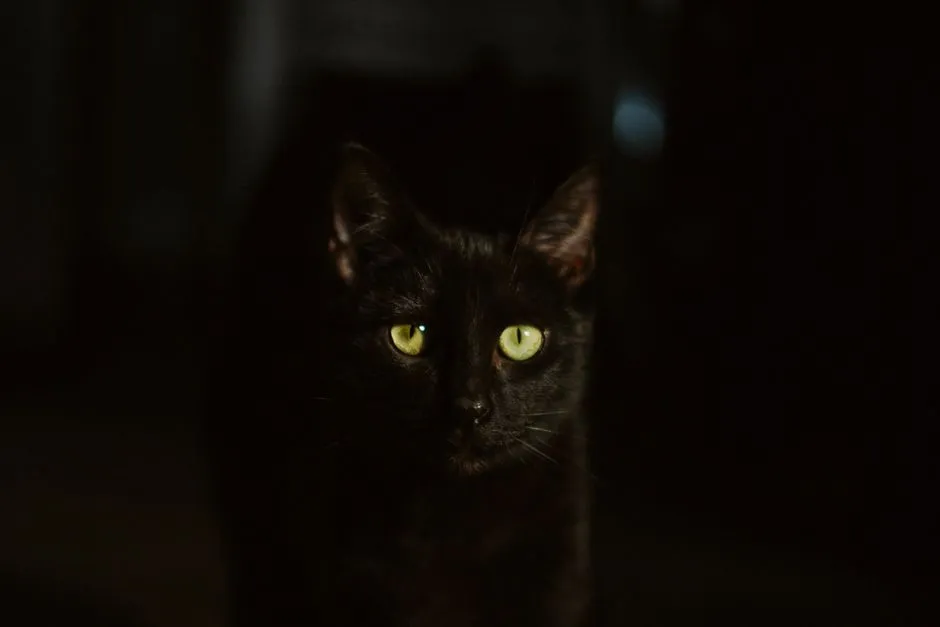
Friday the 13th is widely recognized in many Western cultures as a date of bad luck, similar to crossing paths with a black cat, walking under a ladder, or breaking a mirror. While some days are feared, other traditions focus on eating for luck during celebrations. The date occurs whenever the 13th day of a month in the Gregorian calendar falls on a Friday. This happens at least once a calendar year, and can occur up to three times, averaging out to once every 212.35 days according to Britannica.
For some, the dread associated with this date goes beyond a casual belief in bad luck and manifests as a genuine phobia. Psychotherapist Donald Dossey coined the term paraskevidekatriaphobia to describe the often paralyzing fear people experience relating to this specific date. The word is constructed from the Greek words Paraskevi for Friday, triskaideka meaning thirteen, and phobos for fear. Another term used by mental health professionals is friggatriskaidekaphobia, which merges the Norse goddess Frigg, for whom Friday is named, with the fear of the number thirteen.
The physical and psychological toll on those who suffer from this phobia is real. Anticipation of the day can cause severe anxiety, leading to symptoms such as an increased heart rate, rapid breathing, sweating, and trembling. Folklore specialists suggest these superstitions endure because humans naturally seek explanations for the chaotic, unpredictable experiences of life. By blaming a specific date, people create a sense of control over circumstances where they otherwise have none.
The unlucky number thirteen
Cultural and mathematical origins of the fear of the number 13
| Origin | Historical Context | Significance |
|---|---|---|
| Norse Mythology | Loki arrived uninvited as the 13th guest at Valhalla | Led to the death of Balder, the god of light |
| Christian Tradition | Judas Iscariot was the 13th guest at the Last Supper | Led to the betrayal and crucifixion of Jesus |
| Mathematics | 13 is a prime number following the highly divisible 12 | Disrupts the symmetry of 12 months, 12 zodiac signs, and 12 inches |
Researchers tracing the roots of the superstition note that the number 13 has long been regarded as unlucky independently of the day of the week. One of the earliest associations comes from Norse mythology and the story of Valhalla. According to the legend, twelve gods were at a banquet when Loki, the god of mischief, showed up uninvited. As the thirteenth guest, Loki orchestrated a trick that resulted in the blind god Höd shooting his brother Balder, the god of light and goodness, with an arrow as detailed by HISTORY.
In Christian traditions, the number thirteen became similarly tainted by its association with the Last Supper. The disciple Judas Iscariot, who betrayed Jesus and led to his crucifixion, is historically described as the thirteenth guest to arrive at the meal. Folklorists point out that 13 was not always viewed negatively in Christian history. Prior to the Reformation, having thirteen guests might have been considered auspicious, as Christians sought to emulate the gathering of the Last Supper. However, post-Reformation cultural shifts forbade such emulation as superstitious, flipping the number's reputation from sacred to sinister.
Beyond theology and myth, there is a mathematical hypothesis for why thirteen feels wrong to many cultures. The number twelve is significant and useful because it is divisible by several numbers. This is seen throughout human measurement and timekeeping, from the 12 months of the year and 12 zodiac signs to the 12 inches in a foot. Thirteen, by contrast, is a prime number that cannot be easily divided, making it feel jarring and out of place following the symmetry of twelve.
The fear of Fridays and historical convergence
Friday the 13th is an ancient superstition dating back to antiquity or biblical times.
While Friday and the number 13 carried separate negative associations for centuries, combining them into a single dreaded date originated in 19th-century France.
While the number thirteen has ancient baggage, Fridays have carried their own dark associations for centuries. Since the Middle Ages in the English-speaking world and much of Europe, Friday was broadly considered an unlucky day. This stems largely from the Christian belief that Jesus was crucified on a Friday, a day now observed as Good Friday. In older Catholic traditions, every Friday was a day of penance, solidifying the day's solemn and restrictive reputation.
Biblical lore further cemented Friday's status as a day of misfortune. According to various religious traditions, Friday was the day Adam and Eve ate the forbidden fruit from the tree of knowledge, committing humanity's first sin. It is also said to be the day Cain murdered his brother Abel, the day the Temple of Solomon was destroyed, and the day the Great Flood began.
Despite these ancient, parallel tracks of bad luck, the combination of Friday and the number 13 into a single dreaded event is a modern invention. The earliest recorded references to Friday the 13th as a specific date of misfortune originate in 19th-century France. In 1834, the French play Les Finesses de gribouille featured a character who bemoaned being born on Friday, December 13th, blaming the date for his life's misfortunes. That same year, Italian author Marquis de Salvo published an article in a French literary magazine about a Sicilian count who killed his daughter on the date, declaring that Fridays and the number 13 always bring bad luck according to NPR. The combined superstition did not appear in English print until the early 20th century, around 1913.
Defying the taboo and pop culture impact
As the superstition gained traction in the late 19th century, some groups sought to debunk the growing hysteria. In New York City, a former Civil War Union captain named William Fowler founded the Thirteen Club to challenge superstitious taboos. Fowler, who owned the Knickerbocker Cottage watering hole, gathered 13 members for a 13-course dinner in room 13 on the 13th day of each month. Their first meeting took place at 8:13 pm on Friday, January 13, 1882.
The Thirteen Club's meetings were theatrical affairs designed to tempt fate. Before dining, members walked under a ladder draped with a banner reading "Those of us who are about to die salute you" in Latin. During the meal, guests spilled salt without throwing it over their shoulders and used umbrellas indoors. The club proved its point, suffering no mystical calamities, and eventually had four U.S. presidents as honorary members, including Theodore Roosevelt and Grover Cleveland.
Despite these rationalist efforts, popular culture propelled Friday the 13th into a global phenomenon in the 20th century. A turning point arrived in 1907 with the publication of Thomas William Lawson's novel Friday, the Thirteenth, which detailed a stockbroker exploiting the superstition to crash Wall Street. Decades later, the 1980 release of the slasher film Friday the 13th introduced the hockey-masked killer Jason. The movie's success spawned a franchise of sequels, video games, and comic books, cementing the date in the modern cultural consciousness as a time of terror.
Global variations of unlucky days
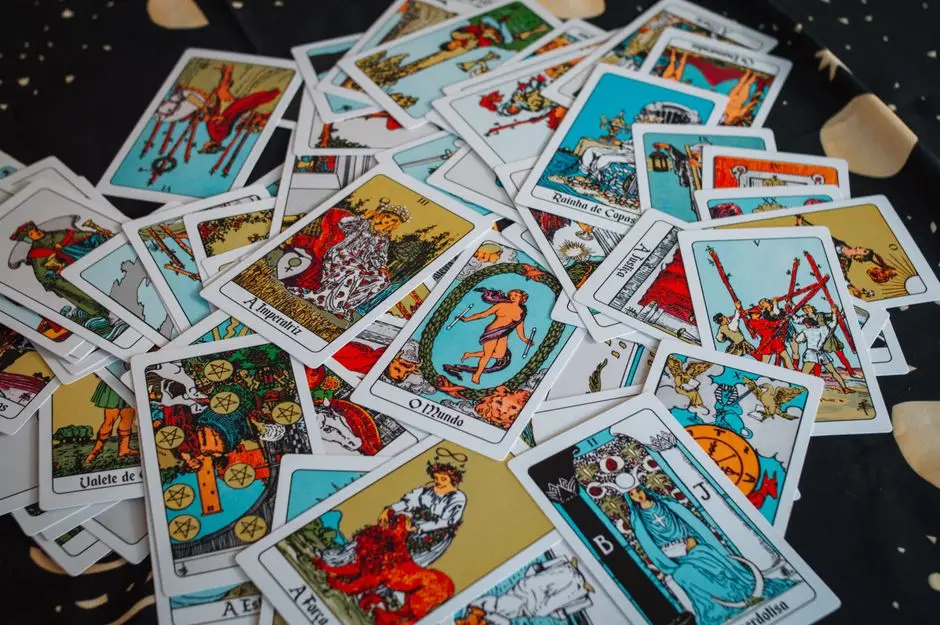
While Friday the 13th is the dominant day of dread in the United States and the United Kingdom, other cultures assign the same ominous weight to completely different dates. In Italy, it is not the 13th but Friday the 17th that provokes anxiety. This specific fear is rooted in Roman numerals. The number 17 is written as XVII, an anagram that can be reordered to spell the Latin word vixi. This translates directly to "I have lived," which is interpreted idiomatically as "My life is over," making it a potent symbol of death and misfortune.
In Greece and many Spanish-speaking countries, the number 13 is still feared, but it is paired with Tuesday instead of Friday. The reputation of Tuesday the 13th is largely linguistic and historical. The Spanish word for Tuesday, martes, is derived from Mars, the Roman god of war. Ancient Greeks similarly associated the day with Ares, the violent god of war. Consequently, marrying the number 13 with a day dedicated to conflict created the unlucky combination for these cultures.
Asian cultures approach unlucky dates through a different linguistic lens. In Japan and China, April 4th, representing the fourth day of the fourth month, is heavily stigmatized. This fear is driven by phonetics; when spoken aloud, the character for the number four sounds almost identical to the words for "death" in both Japanese and Chinese. Whether it is a fear of Tuesdays, the number four, or Friday the 13th, these variations highlight a universal human impulse to categorize the arbitrary nature of bad luck.
References

Understanding and overcoming Friday the 13th anxiety
Securing personal mobile devices against automated AI-driven cyber attacks

Related Posts
 LIFE
LIFEKeeping pets safe and stress-free during natural weather emergencies
A comprehensive guide on how to prepare emergency kits, establish evacuation plans, and minimize anxiety for pets during natural disasters.
 LIFE
LIFEEvaluating the best flood insurance policies for homeowners in flood zones
A comprehensive guide to evaluating and selecting the best flood insurance policies for homeowners in high-risk zones, comparing NFIP and private options.