Top virtual assistant apps that prioritize user privacy and local data processing
Discover the leading virtual assistant apps and platforms that prioritize user privacy, local data processing, and offline control over cloud storage.
The shift toward privacy-first virtual assistants
Criteria for Evaluating Privacy-First Assistants
- Verify local data processing — Ensure voice commands, files, and automated tasks remain on local hardware or within the local network.
- Inspect cloud communication boundaries — Confirm external dependencies are eliminated or strictly limited to audited, end-to-end encrypted channels.
- Check voice log and telemetry policies — Ensure the system prevents persistent voice logging, corporate data mining, and targeted advertising profiling.
Virtual assistants have changed as consumers become more aware of the costs associated with mainstream cloud-based ecosystems. Traditional voice assistants and AI tools rely on cloud architectures that continuously transmit voice recordings, contextual metadata, and sensitive personal commands to external corporate servers. While this model enables powerful natural language processing and broad integration, it creates substantial privacy vulnerabilities. Privacy-safe alternatives to Alexa and Google Home are becoming more prevalent as major platforms often retain voice logs for extended periods and use user interactions for machine learning and targeted advertising profiles.
As data breaches increase and surveillance concerns grow, privacy-conscious consumers are seeking alternatives that process data locally on-device. Local processing ensures that voice commands, personal documents, and automated actions never leave the user's local network or physical hardware, a shift that is increasingly improving mobile data privacy. This removes unauthorized access, corporate data mining, and external telemetry tracking. The market for privacy-focused tools has expanded, offering everything from offline smart appliances to open-source personal AI runners that execute complex workflows on local machines.
Evaluating these alternatives requires looking past marketing claims to see where data is actually stored and processed. True local-first systems remove cloud dependencies completely or restrict external communication to audited, end-to-end encrypted channels. By shifting computational workloads to local hardware, users reclaim control over their personal data without sacrificing the convenience of modern automation.
SmartVoice: Completely offline appliance control
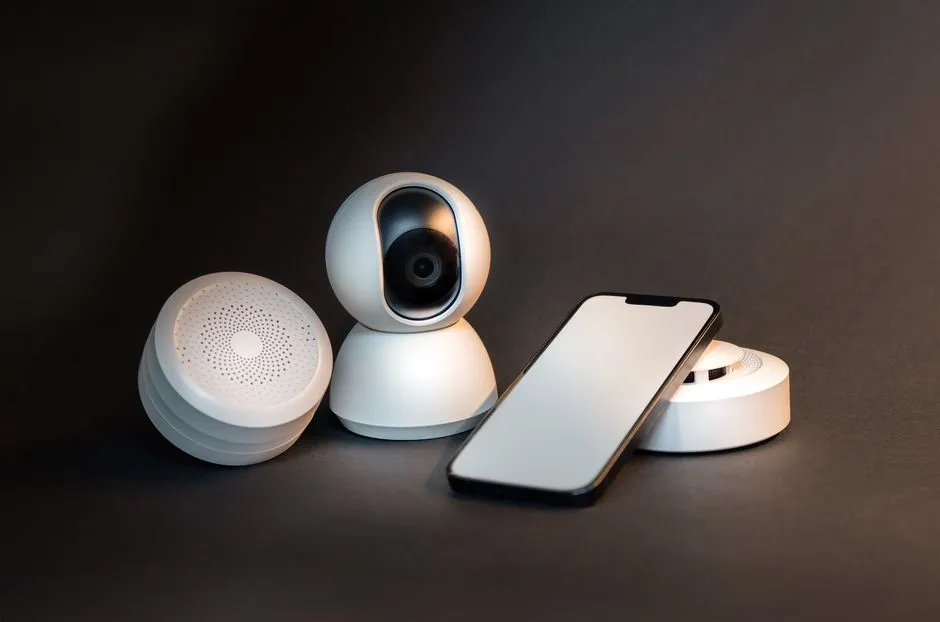
SmartVoice takes a strict approach to privacy by eliminating internet connectivity for voice-controlled home automation. Instead of routing commands through a centralized smart home hub or cloud server, SmartVoice embeds voice recognition hardware directly into appliances such as fans, heaters, air fryers, and smart plugs. This design allows the device to process all commands locally on its internal hardware with no data transmission to external networks.
The system relies on fixed preset voice commands activated by wake words like “Hey Fan” or “Hey Emerson.” Depending on the appliance, the hardware supports anywhere from 30 to over 1,000 preset commands, allowing users to adjust temperatures, change speeds, and set timers offline. Because the system requires no Wi-Fi network, smartphone app, or user registration, it creates an air-gapped environment where personal voice data cannot be intercepted, logged, or monetized.
Beyond eliminating network vulnerabilities, this architecture delivers performance benefits. Commands execute instantly without the latency of round-trip cloud communication, and audible voice confirmations replace screen interfaces. For households prioritizing privacy without complex technical configurations, SmartVoice is a secure solution that bypasses the cloud dependencies common to modern smart home technology.
Jan.ai: Local-first open-source AI assistants
For users seeking advanced conversational artificial intelligence without cloud telemetry, Jan.ai is an open-source solution. Designed for offline local privacy, Jan.ai allows users to run open-source language models 100% on-device on their desktop computers or local hardware. This is part of a wider array of personal assistant AI apps for Android users and desktop users that emphasize local control. By decoupling AI interaction from remote servers, the platform ensures that prompts, file uploads, and generated responses remain under user control.
The platform operates with no setup friction and no subscription costs, supporting thousands of community plugins and customizable model runners. Users can execute complex reasoning tasks, analyze private documents, and write code without worrying about data harvesting or third-party tracking. This local-first approach meets the auditability and control requirements of privacy advocates, ensuring that the software's behavior can be scrutinized and modified.
Jan.ai’s architecture shows a broader industry trend where local execution is no longer confined to niche developer environments. With millions of downloads, the application shows that mainstream users want AI tools that operate locally, mirroring the rise of on-device AI seen in the smartphone market. By keeping model weights and conversational memory on local storage, Jan.ai provides an alternative to cloud-dependent chatbots while maintaining robust functionality.
Apple HomePod: Mainstream ecosystem privacy
Apple HomePod
Pros
- +Processes everyday requests locally on-device using Apple Silicon (HomeKit control, timers, local media)
- +Decouples randomized query identifiers from the user's Apple ID after six months
- +Retains no default voice recordings without explicit user opt-in
- +Hardware-driven business model avoids user profiling for targeted advertising
Cons
- −Maintains cloud connectivity for web searches and third-party music streaming
- −Primarily benefits users already invested in the Apple ecosystem
Apple HomePod offers a balanced alternative for users who want a mainstream smart speaker ecosystem without sacrificing fundamental privacy protections. The HomePod and HomePod mini process most everyday requests—such as controlling HomeKit accessories, setting timers, and playing local media—directly on-device using Apple Silicon. This ensures that routine voice commands do not leave the physical home environment.
When complex queries require cloud processing, Apple uses randomized identifiers that are decoupled from the user's Apple ID after six months. Furthermore, Apple does not retain default voice recordings unless the user explicitly opts in to data sharing programs to improve Siri performance. This strategy contrasts with competitors that archive years of conversational history for algorithm training and commercial profiling.
While the HomePod maintains some cloud connectivity for web searches and third-party music streaming, its hardware-level security and data handling policies provide a middle ground. Users invested in the Apple ecosystem can enjoy seamless automation and high-end audio while benefiting from a business model driven by hardware sales rather than targeted advertising data collection.
Home Assistant Voice: Open-source customization
Technical Considerations Before Self-Hosting
- •Requires technical proficiency with hardware assembly (such as a Raspberry Pi or dedicated mini-PC)
- •Demands active local network configuration and ongoing server management
- •Requires a higher upfront time investment compared to off-the-shelf commercial alternatives
Home Assistant Voice caters to technical users and privacy enthusiasts who want autonomy over their smart home and automation pipelines. Operating on local hardware such as a Raspberry Pi or a dedicated mini-PC, the platform processes voice commands through a self-hosted server on the user's local network. This setup ensures that no voice data is transmitted to external cloud infrastructure or third-party corporations.
The platform achieves local speech-to-text and intent recognition by combining open-source software with local hardware accelerators, giving users ownership of their smart home ecosystem. Because the entire software stack is open-source, developers and privacy advocates can audit the code to verify that no hidden telemetry or unauthorized data exfiltration takes place.
Implementing Home Assistant Voice requires technical proficiency, including hardware assembly, network configuration, and local server management. However, the result is a customizable, secure smart home assistant that operates independently of corporate decisions, subscription price hikes, and cloud service shutdowns. It is a high-control option for those willing to invest the time required for self-hosting.
References

Essential safety guidelines for visiting UK zoos with children
How to disable AI assistants and background data collection on Android smartphones

Related Posts
 TECH
TECHIs Meta Muse Wonder AI worth the subscription cost for casual users?
An evaluation of Meta's Muse Wonder AI subscription costs, analyzing whether the pricing makes sense for everyday casual users.
TECHHow to disable AI assistants and background data collection on Android smartphones
A comprehensive guide on how to take back your privacy by disabling AI features, digital assistants, and background data collection across Android devices.