Low-impact strength training routine for men in their 50s to stay lean
Discover a joint-friendly, highly sustainable strength training routine tailored for men in their 50s to build muscle, boost metabolism, and stay lean.
Physical changes in your 50s
As men enter their 50s, the body undergoes natural changes that alter how it responds to exercise and nutrition. One of the most significant is the gradual decline in testosterone. Since testosterone helps maintain muscle mass and strength, this decline can contribute to sarcopenia—the progressive loss of muscle mass and functional power. This can lead to a slower metabolism, reduced energy, and increased body fat if left unaddressed. To combat this, incorporating structured resistance training into your weekly routine is necessary. Exercises that challenge the muscles help stimulate growth, slow tissue degeneration, and support an active lifestyle.
Alongside hormonal shifts, joint health and flexibility often require more attention during this decade. Years of wear and tear, combined with changes in connective tissue, mean that high-impact activities like heavy running or explosive jumping can stress the knees, hips, and lower back. Stiffness can make conventional workouts frustrating and increase the risk of injury. However, aging doesn't mean you have to stop exercising; it just means you need a smarter approach. Transitioning to low-impact strength training protects your joints while providing the mechanical tension needed to build muscle, improve mobility, and maintain physical independence.
Designing an effective fitness plan also requires understanding how recovery changes over time. Your bounce-back rate is not what it was in your 20s or 30s, meaning tissue repair and systemic recovery take longer. Consequently, workouts must be balanced to provide enough stimulus without overtraining. By focusing on safety, sustainability, and time efficiency, men in their 50s can create a routine that improves body composition without requiring hours in the gym or causing chronic joint pain.
Benefits of resistance training for men over 50
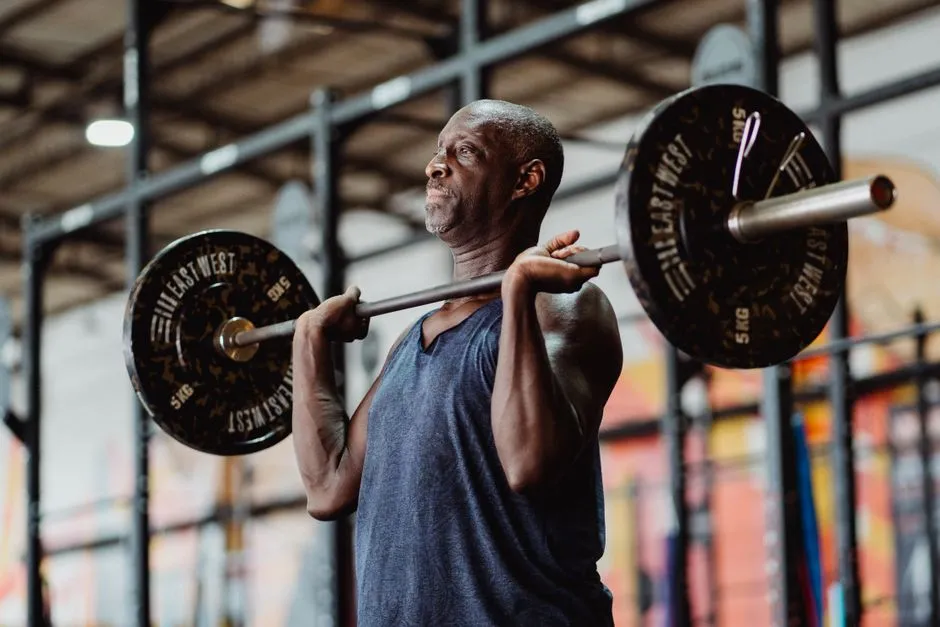
Regular resistance training improves metabolic rate and body composition. As natural muscle mass declines with age, the resting metabolic rate often follows, making it easier to accumulate body fat, especially around the midsection. Strength training helps reverse this by building and preserving lean tissue, which burns more calories at rest than fat. Consistent resistance work elevates metabolic output and helps reduce visceral belly fat, which is linked to chronic inflammation and lower testosterone production.
Beyond metabolism, weight-bearing and resistance exercises are important for maintaining bone mineral density. As men age, bone density naturally decreases, raising the risk of osteopenia, osteoporosis, and fractures. Resistance training applies progressive mechanical stress to the skeletal system, stimulating bone-forming cells to strengthen bone architecture. Combined with adequate calcium, vitamin D, and protein, this stimulation protects structural integrity and ensures you remain resilient against everyday physical demands.
A well-rounded strength routine also supports cardiovascular health and metabolic regulation. While aerobic activities like brisk walking, cycling, or swimming enhance heart function, pairing them with strength training provides better protection against chronic conditions like heart disease and type 2 diabetes. By improving insulin sensitivity and keeping the heart muscle strong, a strength routine supports longevity and sustained physical capability.
Dietary strategies to support lean muscle
Daily Nutrition Checklist for Preserving Lean Mass
- Include lean protein with every meal — Counters age-related declines in protein synthesis efficiency
- Prioritize healthy fats from olive oil, nuts, and fish — Supports natural testosterone production and lowers systemic inflammation
- Limit processed foods, refined sugars, and excess sodium — Protects cardiovascular health and assists in blood pressure control
- Maintain proactive, consistent hydration — Compensates for a diminished thirst reflex to support metabolic function
Staying lean and strong in your 50s requires more than just exercise; nutrition is just as important for body composition and recovery. Protein is essential for repairing muscle tissue after resistance training and stimulating muscle protein synthesis. Because the body becomes less efficient at processing protein with age, consistent intake throughout the day is key. Prioritize lean protein sources at every meal, such as fish, skinless poultry, eggs, low-fat dairy, and plant-based alternatives.
In addition to protein, a heart- and brain-healthy eating pattern, such as the Mediterranean diet, can impact hormonal balance and vitality. Healthy fats from olive oil, nuts, seeds, and fatty fish support testosterone production and reduce systemic inflammation. Conversely, cutting back on processed foods, added sugars, and excessive sodium protects cardiovascular health and helps manage blood pressure. Proper hydration is another factor that is frequently overlooked, as the thirst reflex can become less acute with age. Consistent water intake supports metabolic processes, digestion, and physical performance.
Designing a low-impact strength routine
A successful low-impact strength routine for men in their 50s should be productive, safe, sustainable, and time-efficient. You do not need complex equipment or hours of daily training to see results. Instead, two to three targeted, full-body sessions per week are usually enough to stimulate muscle growth and improve functional strength. Each session should prioritize controlled movements and proper form over speed, ensuring a stable stance with no jumping or hard landings.
To build a balanced routine, select fundamental exercises that target all major muscle groups while keeping stress off the spine and knees. Bodyweight variations, resistance bands, and dumbbells offer versatility without the risk associated with maximal barbell lifting. Begin each workout with light movement or dynamic stretching to prepare the joints, and consult a healthcare provider before starting any new program. Prioritizing consistency over intensity establishes a habit that keeps your physique lean and injury-free.
Five low-impact exercises for your routine
Low-Impact Strength Routine Exercise Breakdown
| Exercise | Target Muscles | Joint Advantage | Progression Option |
|---|---|---|---|
| Glute Bridge | Glutes, hamstrings, lower back | Eliminates vertical spinal compression | Single-leg variation or dumbbell across hips |
| Resistance Band Row | Upper back, rear shoulders, biceps | Reduces stress on the lower back | Thicker resistance band or slower tempo |
| Chair Squat | Quadriceps, hamstrings, glutes, core | Limits knee stress via controlled seat contact | Hold dumbbell at chest or pause at the bottom |
| Wall Push-Up | Chest, triceps, core | Alleviates pressure on wrists and shoulders | Step feet further back from the wall |
| Standing Band Bicep Curl | Biceps, elbow stabilizers | Matches joint strength curve without free-weight friction | Increase band resistance |
The glute bridge strengthens the glutes, hamstrings, and lower back without placing vertical compression on the spine. To perform a glute bridge, lie on your back with your knees bent and your feet flat on the floor, hip-width apart. Rest your arms by your sides with your palms facing upward. Squeeze your glutes, then press through your heels to lift your hips toward the ceiling until your body forms a straight line from your shoulders to your knees. Pause briefly at the top, then lower your hips back to the floor slowly. To increase the difficulty, you can transition to a single-leg bridge or place a dumbbell across your hips.
The resistance band row targets the upper back, rear shoulders, and biceps while protecting the lower back. Sit upright on the floor with your legs extended, looping a resistance band around the arches of your feet. Hold the handles with your arms extended forward, maintaining a straight posture and an engaged core. Pull the band backward toward your lower torso, driving your elbows back and squeezing your shoulder blades together. Slowly return to the starting position. You can scale the intensity by using a thicker band or slowing down the tempo.
The chair squat is a functional variation of the traditional squat that builds strength in the quadriceps, hamstrings, glutes, and core. Stand in front of a sturdy chair with your feet shoulder-width apart. Keeping your chest lifted and your back straight, hinge at your hips and bend your knees to lower yourself until your glutes lightly touch the seat. Without resting your full weight, push through your heels to stand back up. To add a challenge, hold a dumbbell at your chest or incorporate a two-second pause at the bottom.
The wall push-up is a scalable alternative to floor push-ups, targeting the chest, triceps, and core without excessive pressure on the wrists and shoulders. Stand facing a wall at arm's length, placing your hands flat against the surface at shoulder-width and slightly higher than your chest. Bend your elbows to bring your chest toward the wall, keeping your core engaged to maintain a straight line from your head to your heels. Push yourself back to the starting position. Adjust the difficulty by stepping your feet closer to or further from the wall.
The standing resistance band bicep curl builds arm strength and elbow stability without the joint friction sometimes caused by heavy free weights. Stand with both feet on the center of a resistance band, holding one end in each hand with your arms extended and palms facing forward. Keeping your elbows pinned to your ribs, curl the band upward toward your shoulders. Pause briefly at the top, then slowly lower your hands back down. This exercise provides a safe way to tone the arms, with resistance that matches the natural strength curve of the joints.
References

Building consistent morning habits to boost mental clarity and physical longevity
Simple everyday diet habits for maintaining youthful energy after 50

Related Posts
HEALTHBuilding consistent morning habits to boost mental clarity and physical longevity
Discover science-backed morning routines and daily habits that enhance cognitive clarity, emotional stability, and long-term physical longevity.
HEALTHSimple everyday diet habits for maintaining youthful energy after 50
Discover practical, research-backed everyday dietary habits to preserve muscle mass, support bone health, and maintain vibrant energy after 50.