It's a tale that has haunted sailors for centuries—a monster of impossible size lurking in the ocean's abyss. But where did the legend of the Kraken actually come from? The answer is as deep and mysterious as the sea itself.
There’s a certain feeling you get when you stand at the edge of the ocean, watching the waves crash against the shore. It’s a sense of awe, of course, but underneath it, there’s often a quiet, primal hum of fear. What, exactly, is down there in the crushing, inky blackness? For centuries, sailors and storytellers have tried to answer that question, and one of the most terrifying answers they came up with was the Kraken.
Honestly, it’s a name that conjures immediate and vivid imagery: colossal tentacles, splintering ships, and a monstrous form rising from the depths to drag unsuspecting souls to a watery grave. We’ve seen it in movies, read about it in books, and maybe even shuddered at the thought of it during a late-night swim. But the Kraken is so much more than a modern movie monster. Its story is ancient, woven into the very fabric of maritime folklore, a legend born from the very real fears of those who made their living on the vast, unpredictable sea. It’s a story that blurs the line between myth and the startling reality of what our oceans can hide.
Whispers on the Northern Winds
The legend of the Kraken wasn't born in the sunny Caribbean or the calm Mediterranean. Its origins are rooted in the cold, treacherous waters of the North Atlantic, first whispered among the Norse and Scandinavian sailors who navigated the unforgiving seas off the coasts of Norway, Iceland, and Greenland. For these seafarers, the ocean was both a source of life and a constant, looming threat. It’s only natural that their folklore would be filled with creatures that embodied its immense and terrifying power.
The earliest accounts didn't always use the name "Kraken," but they described a similar horror. The 13th-century Icelandic saga, Örvar-Oddr, speaks of a massive sea-beast called the Hafgufa, so enormous that it was often mistaken for an island. Sailors would reportedly land on its back, only to be dragged to their doom when the creature submerged. These tales, passed down through generations, painted a picture of a monster of almost incomprehensible scale, a living, breathing piece of the ocean itself that could swallow ships whole.
The word "Kraken" itself is believed to have entered the lexicon from the Norwegian word krake, meaning something malformed or twisted, like a gnarled tree. It’s a fitting description for a creature whose tentacles were said to resemble a chaotic mass of roots rising from the abyss. It wasn't until the 18th century, however, that the Kraken was truly codified and introduced to the wider world, transforming from a regional superstition into a global phenomenon of nautical terror.
The Bishop Who Made a Monster Famous
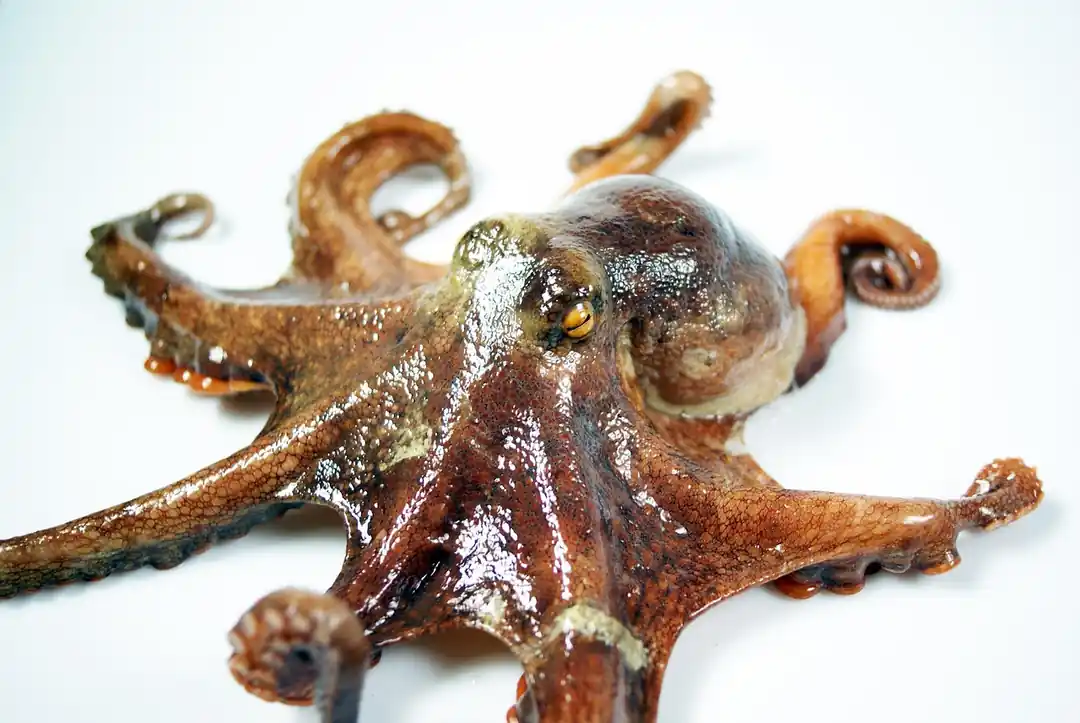
While the Kraken was a staple of Scandinavian folklore for ages, it was a Danish bishop and naturalist named Erik Pontoppidan who cemented its place in history. In his work, The Natural History of Norway (1752-53), Pontoppidan didn't just recount sailor stories; he presented the Kraken as a real, albeit rarely seen, animal. He described it as a "polypus," or octopus-like creature, of staggering size—a mile and a half in circumference, according to some of the more breathless accounts he collected.
Pontoppidan’s descriptions were both scientific and sensational. He wrote that the greatest danger the Kraken posed wasn't even its direct attack, but the violent whirlpool it created when it submerged, capable of sucking down any nearby vessel. He claimed that fishermen could often tell when the Kraken was below them because the water would become shallow and fish would boil to the surface. For these fishermen, the monster was a double-edged sword: a sign of immense danger, but also of a bountiful catch.
By documenting these tales with such earnest detail, Pontoppidan gave the legend an air of legitimacy it had never had before. His book was widely read across Europe, and suddenly, the Kraken was no longer just a Norse nightmare. It was a subject of serious (if speculative) academic discussion and a creature that haunted the imagination of sailors far beyond the cold northern seas.
When Myth Meets Reality: The Giant Squid
So, was there any truth to these wild stories? Was there really a monster of impossible size lurking in the depths? As it turns out, yes. Kind of. For a long time, the giant squid (Architeuthis dux) was considered just as mythical as the Kraken. But as science progressed, and as more and more carcasses of these colossal creatures washed ashore, the connection became undeniable.
The giant squid is a true monster of the deep, reaching lengths of up to 43 feet and possessing eyes the size of dinner plates—the largest in the animal kingdom. Imagine being a sailor in a relatively small wooden ship, hundreds of miles from land, and seeing one of these behemoths surface. Its sheer size, its alien appearance, its powerful tentacles capable of clinging to your vessel—it’s the stuff of nightmares. It’s not hard to see how a sighting of a giant squid, perhaps exaggerated by fear and the passage of time, could evolve into the legend of the Kraken.
While there’s no evidence that a giant squid has ever actually sunk a large ship, their power is undeniable. They are known to battle with sperm whales, their only natural predator, in titanic struggles that take place thousands of feet below the surface. The scars from squid suckers found on the bodies of whales are a testament to these deep-sea brawls. The Kraken, then, may not have been a myth at all, but rather a folkloric interpretation of one of the planet's most magnificent and mysterious animals.
The Kraken's Enduring Legacy
From its origins in Norse sagas to its validation through the discovery of the giant squid, the Kraken has never lost its power to fascinate and terrify. It has become a permanent fixture in our cultural lexicon. Alfred, Lord Tennyson’s 1830 sonnet, "The Kraken," imagines the beast sleeping in the "abysmal sea" until the apocalypse. Jules Verne pitted it against the submarine Nautilus in Twenty Thousand Leagues Under the Sea. And, of course, who could forget the thunderous command, "Release the Kraken!" from the 1981 film Clash of the Titans?
The Kraken represents our enduring fear and respect for the ocean. It’s a symbol of the untamed, unexplored wilderness that still exists on our own planet. Even with all our technology, we have only mapped a tiny fraction of the ocean floor. Down in the dark, there are still monsters.
The story of the Kraken is a perfect storm of human experience: the real-life terror of facing the open ocean, the awe of encountering a creature beyond our comprehension, and our innate need to tell stories to make sense of it all. It’s a legend that will likely endure as long as we continue to look out at the waves and wonder what lies beneath.

The Art of Safe Violence: Basic Techniques for Stage Combat
Beyond the Trend: The Best Sustainable Brands for Your Real Life

Related Posts
 HOBBIES
The Beginner's Guide to Reading the Night Sky: How to Spot Your First Constellations
A friendly, grounded guide to navigating the night sky, understanding stellar movements, and spotting iconic constellations without expensive gear.
 PETS
PETSSniffle-Free Snuggles: America's Most-Loved Hypoallergenic Dogs
Dreaming of a furry friend but dreading the sneezes? You're not alone. Let's dive into the wonderful world of popular hypoallergenic dog breeds in the US.

Popular Posts

Rethinking Non-Profit Promotion: Creative Strategies That Actually Drive Event Impact

Beyond Stark White: The Best Interior Paint Colors to Light Up Your New Space

The Simple Pre-Workout Fueling Strategy That Saved My Long Runs