Navigating the Digital Maze: What Parents Really Need to Know About Screen Time
It feels like a constant battle, doesn't it? Let's cut through the noise and look at what the experts say about screen time limits for kids, from toddlers to teens.
The glow of a screen is one of the most familiar sights in a modern home. It’s the backdrop to our mornings, a tool for our work, and often, a source of quiet for our kids. If you've ever found yourself wondering—or, let's be honest, worrying—about how much screen time is too much for your children, you are far from alone. It’s a conversation happening in households all across the country, a delicate balancing act between embracing the digital world and protecting the magic of childhood.
I used to get tangled up in the numbers, constantly clock-watching and feeling a wave of guilt every time my kids went over some arbitrary limit I’d set. It was exhausting and, frankly, not very effective. What really changed my perspective was diving into the research and understanding that the conversation is much more nuanced than just "how many hours?" The American Academy of Pediatrics (AAP), a go-to resource for many parents, has shifted its guidance over the years from rigid time limits to a more holistic approach. It’s less about a strict "no" and more about a thoughtful "how."
The core of their message isn't to demonize screens but to ensure they don't push aside the critical activities kids need for healthy development. We're talking about things like face-to-face interaction, outdoor play, homework, and perhaps most importantly, sleep. The goal is to find a sustainable balance, and that balance looks different for every age and every family.
For the Little Ones (Under 2 Years)
When it comes to our youngest children, those under 18 months, the expert advice is refreshingly simple: avoid screen media as much as possible. This isn't about depriving them; it's about giving them what their rapidly developing brains crave most—real-world, sensory experiences. Babies and young toddlers learn by touching, tasting, shaking, and, most of all, interacting with the people who love them. A screen, no matter how "educational" it claims to be, is a passive experience that can't replicate the responsive, back-and-forth connection with a caregiver.
There is one significant exception, and it’s one that has become a lifeline for many families: video-chatting. Connecting with grandparents across the country or a parent who is traveling is a wonderful use of technology. Because it's interactive and relational, it's considered a meaningful social experience, not just passive screen time.
For toddlers between 18 and 24 months, the AAP suggests that if you choose to introduce digital media, it should be high-quality programming, and you should watch it with them. This concept of "co-viewing" is a game-changer. It transforms the experience from a digital babysitter into a shared activity. You can point things out, sing along, and help them connect what they're seeing on the screen to the world around them.
Preschoolers (Ages 2 to 5)
As children enter the preschool years, their world expands, and so does their curiosity. For this age group, the recommendation is to limit screen use to about one hour per day of high-quality programming. Again, the emphasis on "high-quality" and "co-viewing" is key. Shows and apps from trusted sources like PBS Kids are designed with child development experts to be genuinely educational and age-appropriate.
This is the age where the habits we build really start to stick. Using a tablet to calm a tantrum every single time can prevent a child from learning how to manage their own big feelings. That’s why the AAP advises against using media as the only way to soothe your child.
Instead, think of that one hour as a tool for connection. Watching a show about animals can spark a trip to the zoo or a conversation about the family dog. Playing a simple learning game together can reinforce numbers and letters in a fun, low-pressure way. It’s all about being present and engaged, turning what could be an isolating activity into a shared one.
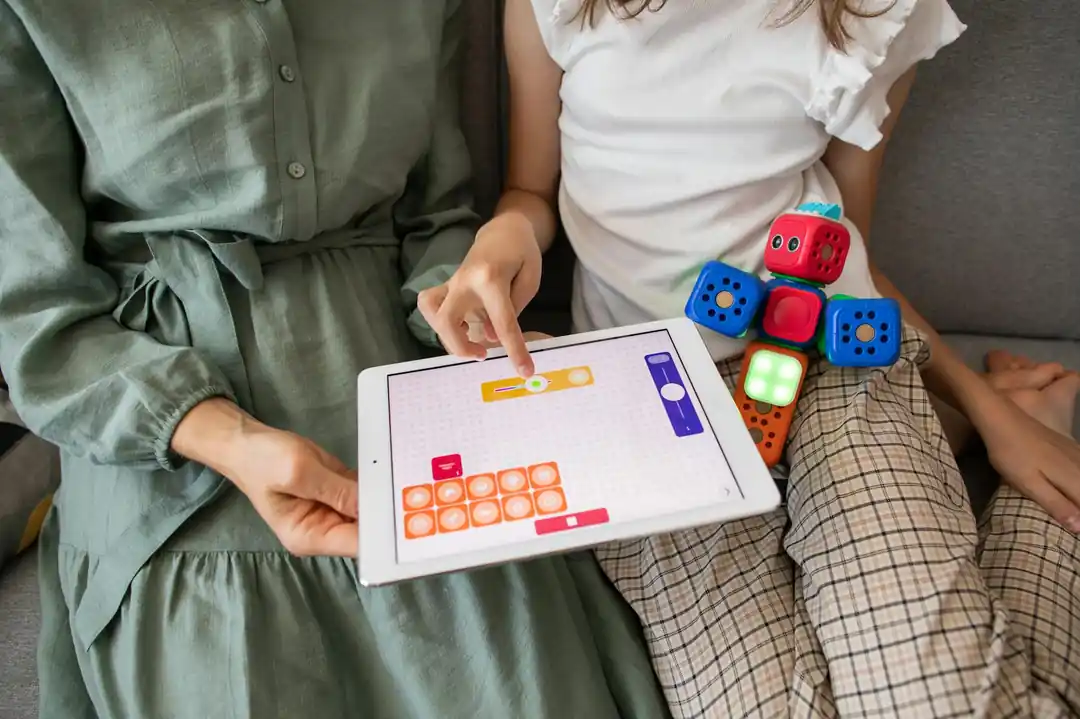
School-Aged Kids and Teens (Ages 6 and Up)
Once kids hit elementary school, a single time limit becomes almost impossible to enforce. Between homework, creative projects, and socializing with friends, screens become a more integrated part of their lives. This is where the focus shifts from strict limits to creating a family media plan that works for everyone. It’s about teaching our kids to think critically about their own media consumption and find a healthy balance.
The AAP encourages parents to place consistent limits on the time spent using media and the types of media, and to make sure it doesn't take the place of adequate sleep, physical activity, and other behaviors essential to health. This means having ongoing conversations about what they're watching, who they're talking to online, and how to be a good digital citizen.
Creating "screen-free" zones and times can be incredibly effective. For example, maybe all devices are put away during dinner, or phones are charged overnight in the kitchen instead of in bedrooms. This is crucial because the blue light from screens can seriously interfere with sleep quality. Ultimately, our role as parents is to model a healthy relationship with our own devices. If we're constantly scrolling through our phones, we can't be surprised when our kids do the same.
It’s a journey, and it’s not always easy. There will be days you feel like you’ve nailed it and days you feel like the screens have won. But by focusing on connection over consumption and balance over bans, we can guide our children toward a healthy, happy relationship with the digital world.

Finding Your Legal Co-Pilot: How to Choose the Right Lawyer For Your Startup
Little Worries, Big Feelings: How to Recognize Anxiety in Young Children

Related Posts
 NUTRITION
The Simple Pre-Workout Fueling Strategy That Saved My Long Runs
Discover how timing your carbohydrates and embracing simple foods can eliminate mid-workout fatigue and unlock your true endurance potential.
 FITNESS
No Gym, No Problem: The Ultimate Guide to Bodyweight Fitness at Home
Forget expensive memberships. Discover how to build serious strength and transform your body using the most powerful tool you already own: yourself.
Popular Posts

Rethinking Non-Profit Promotion: Creative Strategies That Actually Drive Event Impact

Beyond Stark White: The Best Interior Paint Colors to Light Up Your New Space

How to Actually Master a New Language on Your Own (No Magic Gene Required)