Beyond the Taj: A Journey Through the Mughal Empire's Greatest Hits
Think you know Mughal architecture because you've seen the Taj Mahal? Think again. Let's go on a journey to explore the forts, tombs, and abandoned cities that tell the full, breathtaking story of one of history's most creative dynasties.
There are certain places in the world that feel less like destinations and more like portals to another time. You step through a gate, and suddenly, the noise of the 21st century fades, replaced by the whispers of history. For me, the architectural legacy of the Mughal Empire in India is the ultimate time-traveling experience. It’s a story of power, romance, and artistic genius written in sandstone and marble, stretching across the plains of northern India.
When we, as Americans, think of Mughal landmarks, our minds usually jump straight to one image: the Taj Mahal. And for good reason—it’s a global icon, a testament to a love so profound it was immortalized in stone. But what I discovered on my own journey is that the Taj, as breathtaking as it is, is just one chapter in a much grander story. The empire, which ruled for over 300 years, left behind a trail of forts, tombs, and entire cities that are just as awe-inspiring.
Honestly, to truly appreciate the grandeur of the Mughals, you have to go beyond that one perfect dome. You have to walk the imposing walls of their forts, wander through the gardens of their ancestral tombs, and stand in the silent courtyards of a city they built and then abandoned. It’s a journey that pieces together the evolution of an empire, one architectural marvel at a time. So, let’s look past the world’s most famous monument and explore the other essential stops on a Mughal-themed adventure.
Humayun's Tomb, Delhi: The Precursor to Perfection
Long before the Taj Mahal was even a glimmer in an emperor’s eye, there was Humayun's Tomb. Located in the heart of Delhi, this stunning mausoleum is, in many ways, the architectural blueprint for the Taj. Commissioned in the 1560s by Empress Bega Begum for her late husband, the second Mughal emperor Humayun, it was a revolutionary structure for its time. It was the very first garden-tomb on the Indian subcontinent, a concept imported from Persia that would become a signature of Mughal design.
Walking into the complex is a lesson in serene geometry. The tomb sits at the center of a charbagh, a four-part paradise garden divided by flowing water channels. This design wasn't just for beauty; it was symbolic of the gardens of Paradise described in the Quran. The building itself, a grand symphony of red sandstone and white marble, exudes a sense of calm and majesty. It was the first time red sandstone was used on such a massive scale, and its combination with the pristine white marble of the dome became a hallmark of the early Mughal style.
I remember feeling a sense of quiet awe here. It’s less crowded than the Taj, allowing you to really absorb the details—the intricate lattice screens (jaalis) that filter light so beautifully, the grand arches, and the massive central dome. It’s a UNESCO World Heritage site, and you can feel its historical weight. Knowing that this tomb laid the groundwork for the Taj Mahal gives it a special significance. It’s like watching the rough draft of a masterpiece; all the core ideas are there, waiting to be perfected.

The Red Fort, Delhi: The Seat of Imperial Power
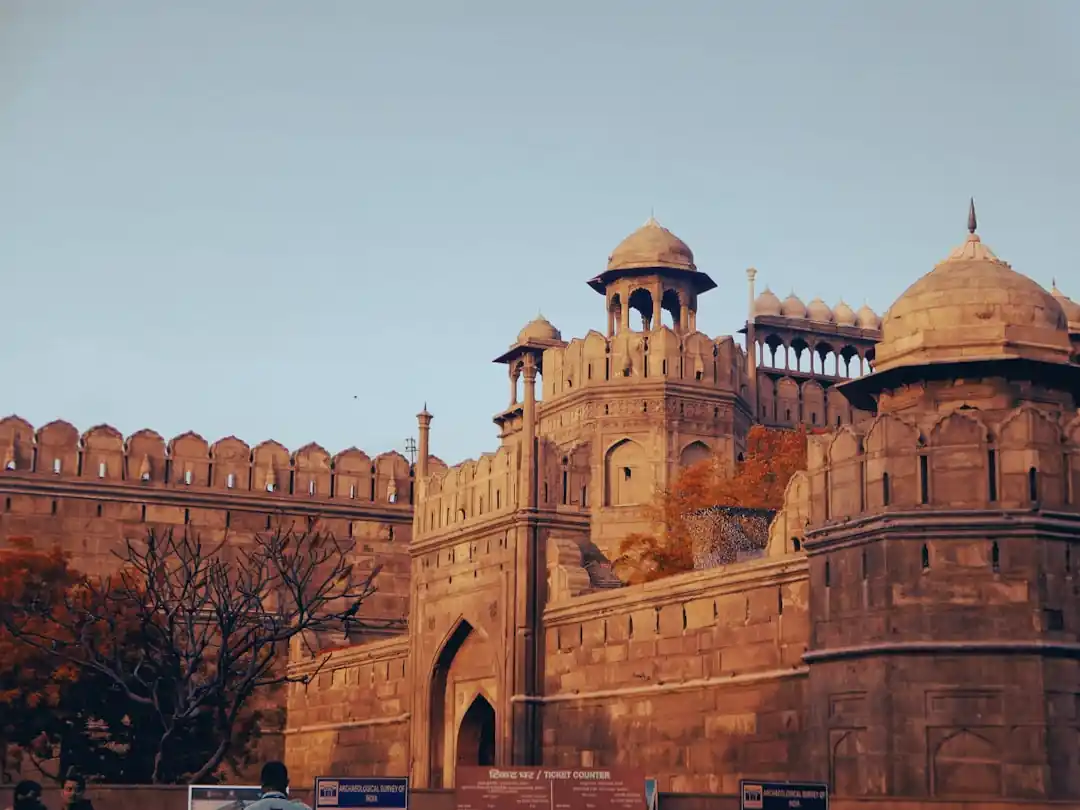
If Humayun’s Tomb is a poem of love and loss, the Red Fort (Lal Qila) is an epic of power and glory. This was the nerve center of the Mughal Empire at its zenith. Built by Shah Jahan—the very same emperor who would later build the Taj—in the mid-17th century when he moved the capital from Agra to his newly founded city of Shahjahanabad (today's Old Delhi). For nearly 200 years, this was where the emperor lived, held court, and projected his immense power across the subcontinent.
The moment you see its massive, red sandstone walls, you understand why it’s called the Red Fort. They are incredibly imposing, stretching for over a mile and a half. But once you step inside, the fortress gives way to a world of delicate, almost ethereal beauty. You find elegant pavilions, audience halls, and private apartments, many inlaid with precious stones and intricate marble carvings. The Diwan-i-Khas (Hall of Private Audience), with its famous (though now absent) Peacock Throne, was once said to be so magnificent that it bore the inscription: "If there is a paradise on earth, it is this, it is this, it is this."
Exploring the Red Fort feels like walking through a city within a city. You can almost imagine the hustle and bustle of the court, the parades of elephants, and the emperor seated in the Diwan-i-Aam (Hall of Public Audience), listening to the petitions of his subjects. It’s a powerful symbol not just of Mughal history, but of India itself. Every year on India's Independence Day, the Prime Minister addresses the nation from its ramparts, a tradition that connects the country's modern identity to its imperial past.
Fatehpur Sikri, Uttar Pradesh: The Ghost City of an Emperor's Dream
Just an hour's drive from Agra is one of the most fascinating and haunting sites in all of India: Fatehpur Sikri. This was Emperor Akbar’s grand dream, a magnificent new capital he built from scratch in 1571. For fourteen years, it was the vibrant heart of the Mughal Empire. And then, just as quickly as it was built, it was abandoned, likely due to a lack of a stable water source. Today, it stands as a perfectly preserved ghost city, an architectural time capsule of Akbar's reign.
Walking through Fatehpur Sikri is surreal. The city is a unique fusion of Mughal, Persian, and Indian Hindu and Jain architectural styles, a direct reflection of Akbar's famously tolerant and inclusive philosophy. The sprawling complex includes one of the largest mosques in India, the Jama Masjid, as well as three palaces built for each of his favorite wives—one Hindu, one Muslim, and one Christian. The level of detail in the carvings is just staggering, especially in the palace of his Hindu wife, Jodha Bai.
The heart of the city is the Diwan-i-Khas, which contains one of the most unusual and symbolic structures in Mughal architecture: a central pillar, intricately carved, that blossoms out to support a circular platform where Akbar would sit and debate matters of faith and philosophy with scholars from different religions. Standing in that silent hall, you can almost feel the intellectual energy of Akbar's court. Fatehpur Sikri is a beautiful, melancholic place that tells a story of grand ambition and the harsh realities that can bring even an emperor's dream to an end.
These landmarks are more than just tourist spots; they are the soul of an empire. They show us a dynasty that was not only defined by military might but also by an unparalleled passion for art, beauty, and legacy. To visit them is to understand that the story of the Mughals is a journey, and the Taj Mahal, as glorious as it is, is just one incredible stop along the way.
A History Lover's Guide to India: More Than Just the Taj Mahal
Is Investing in a Daycare Franchise a Good Idea? A Deep Dive

Related Posts
 TRANSPORT
Beyond the Highway: Finding Canada's Soul on a Western Rail Adventure
Forget road trips. I'm talking about rediscovering the romance of travel on Via Rail's most scenic routes through the heart of the Canadian West. It’s an experience that changes you.
 TRAVEL TIPS
The Unwritten Rules of the North: What to Know Before Camping in Canada
Heading to the Great White North for a camping trip? It's an amazing idea. But from campfire etiquette to wildlife wisdom, here’s what you need to know before you go.

Popular Posts

Rethinking Non-Profit Promotion: Creative Strategies That Actually Drive Event Impact

Beyond Stark White: The Best Interior Paint Colors to Light Up Your New Space

How to Actually Master a New Language on Your Own (No Magic Gene Required)
