An in-depth look at Moonshot AI's long context window architecture, pricing models, and ecosystem development for the Kimi platform.
Evolution of Moonshot AI and long-context architectures
Moonshot AI, a Beijing-based foundation model company founded in March 2023 by Tsinghua alumni Yang Zhilin, Zhou Xinyu, and Wu Yuxin, entered the market by focusing on lossless long-context capabilities. Traditional transformer models relied on fixed-length context windows, which limited their ability to process, analyze, and synthesize large volumes of text in a single inference pass. To overcome these constraints, Moonshot AI used architectural innovations derived from research such as Transformer-XL and XLNet. These frameworks introduced mechanisms to extend context lengths and improve attention models, forming the technical basis for the company's conversational and developer assistant, Kimi.
The practical deployment of these long-context capabilities began in October 2023 when the Kimi assistant launched with support for 200,000 Chinese characters according to its specifications. Subsequent architectural updates drove rapid growth in input thresholds. By March 2024, Moonshot AI expanded Kimi's capacity to 2 million characters, leading to wider adoption across consumer and enterprise segments. This allows users to ingest entire codebases, long research documents, or massive data logs at once, removing the need for fragmented retrieval-augmented generation loops or complex text chunking strategies.
Scaling context windows required optimizing computational infrastructure to prevent latency degradation and high serving costs. To address this, Moonshot AI developed specialized infrastructure like Mooncake, a KV-cache-centric disaggregated serving system presented at FAST 2025 as a way to manage scale. By decoupling compute and memory layers for Key-Value caches, Moonshot ensured that serving extreme context lengths remained economically viable. This technical foundation allowed for subsequent model generations, moving from early context-tiered API structures to multimodal architectures that handle million-token inputs natively.
The Kimi model lineup and technical capabilities
Moonshot AI's models have grown quickly in scale and capability, moving from the initial moonshot-v1 variants to the K2 family and the flagship K3 architecture. Released in July 2025, Kimi K2 introduced a 1-trillion-parameter Mixture-of-Experts (MoE) design with 32 billion active parameters, which gained traction on developer platforms like Hugging Face. This was followed by updates including K2.5 and K2.6, alongside specialized variants like K2.7 Code, tailored for software engineering workloads and developer tooling.
In July 2026, Moonshot AI introduced Kimi K3, scaling the architecture to 2.8 trillion total parameters as reported by VentureBeat. K3 is built on internal breakthroughs, including Kimi Delta Attention—a hybrid linear attention mechanism—and Attention Residuals, designed to yield consistent scaling gains without destabilizing training runs. Unlike systems that rely on external context compression, K3 features a native 1,048,576-token context window and a reasoning configuration termed "thinking mode." These capabilities allow the model to manage complex, multi-day autonomous tasks, such as automated chip design pipelines and astrophysical calculations, acting more like an agent than a single-turn conversational assistant.
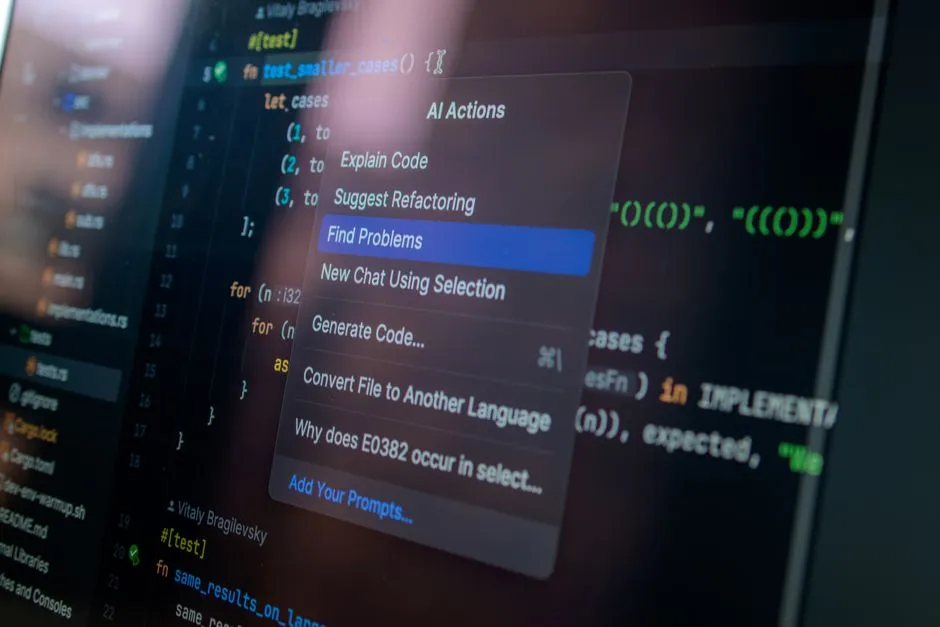
The Kimi Code command-line agent ecosystem provides direct integrations into development environments like VSCode, Cursor, and Zed. The coding agent platform incorporates subagent tooling, background task management, plan modes, and nested execution loops. These features enable the agent to handle multi-layered software engineering projects independently. By combining high-capacity context windows with agentic subroutines, Moonshot AI aims to compete with Western developer tools in enterprise development workflows.
Comprehensive per-token API and consumer pricing structure
Moonshot AI offers its technology through two primary channels: a tiered consumer subscription for the Kimi assistant and a per-token developer API. The consumer platform features multiple pricing tiers. The entry tier (Adagio) is free, while professional subscriptions—Plus, Pro, Max, and Ultra—range from $19 to $199 per month. These tiers provide different levels of agent credits, deep research capabilities, and specialized features like Kimi Claw and Goal mode, with annual billing offering discounts of approximately 20 percent.
For enterprise buyers, Kimi Business offers a self-serve subscription priced at $600 per year per seat (minimum two seats), providing an isolated workspace and data privacy guarantees. Meanwhile, the developer API uses a usage-based, per-token billing framework. Following the retirement of the legacy moonshot-v1 API and Kimi K2.5 on August 31, 2026, the active API catalog consists of Kimi K3 alongside the K2.6 and K2.7 Code variants.
API pricing is designed to be competitive within the global AI market. The flagship Kimi K3 model is priced at $3.00 per million input tokens and $15.00 per million output tokens, supporting its 1-million-token context window based on current pricing. The K2.6 and K2.7 Code models are priced more economically at $0.95 per million input tokens and $4.00 per million output tokens, with a 262,144-token context window. Additionally, Moonshot AI introduced automated context caching for LLM APIs, reducing cache-hit input costs by 80 to 90 percent compared to cache-miss rates. For K3, cache write costs are billed by duration: $3.00 per million tokens for a 5-minute cache and $6.00 per million tokens for a 1-hour cache, giving developers a way to optimize high-context spending.
References

Related Posts
 TECH
TECHPrivacy in your pocket: how on-device edge AI changes mobile data protection
Discover how edge AI processing directly on mobile devices is eliminating cloud dependency, enhancing digital trust, and revolutionizing data privacy.
 TECH
TECHEssential secure coding practices for safe API data handling
A comprehensive guide to securing your APIs through input validation, output encoding, strong authentication, and architecture-specific best practices.