Beyond the Runway: A Guide to Milan's Must-See Art Museums
Think Milan is just about fashion? Think again. I used to, and I was missing out on a world of breathtaking art. Let's explore the city's incredible museum scene together.
Honestly, for the longest time, whenever I thought about a trip to Italy for the art, my mind would jump straight to Florence or Rome. Milan? That was the city for fashion week, for sleek design, for a certain kind of modern, fast-paced energy. I’d mentally filed it under "business and style," completely overlooking the deep, rich artistic soul hiding in plain sight. It turns out, I was making a huge mistake.
On a recent trip, I decided to finally look past the storefronts of the Quadrilatero della Moda and see what else the city had to offer. What I found was a collection of museums so powerful and diverse it completely changed my perspective. Milan isn’t just a fashion capital; it’s a city that has been at the forefront of artistic innovation for centuries, from the Renaissance masters who worked under the Sforza dukes to the fiery Futurists who wanted to burn the museums of the past (and then, ironically, ended up in them).
It’s a city where you can spend a morning with a High Renaissance masterpiece and an afternoon with a provocative contemporary installation, all within a few blocks. The art scene here is a conversation between the old and the new, and it’s absolutely captivating. So, if you’re like I was, and you’ve been sleeping on Milan as an art destination, it’s time to wake up. Let’s dive into the places that will make you see this incredible city in a whole new light.
Pinacoteca di Brera: The Heart of Italian Masterpieces
If you only have time for one classical art museum in Milan, make it the Pinacoteca di Brera. Housed in a stunning palazzo in the bohemian Brera district, this gallery is an experience before you even see a single painting. The courtyard, with its grand statue of a Napoleon depicted as a Roman god, sets a dramatic tone. You’re not just entering a museum; you’re entering a temple to art, which makes sense, as it shares the building with the Brera Academy of Fine Arts.
The collection itself is a jaw-dropping survey of Italian painting, with a heavy focus on Venetian and Lombard masters. I found it to be one of the most important collections in Italy, yet it feels more intimate and less overwhelming than the Uffizi in Florence. You can actually get close to the works and spend time with them. Standing in front of Andrea Mantegna’s Lamentation over the Dead Christ is a profoundly moving experience; the use of perspective is so radical and emotional, it feels like it could have been painted yesterday.
But the showstopper, the painting that has become a symbol of Italian Romanticism, is Francesco Hayez's The Kiss. It’s so much more than just a beautiful image; it’s a quiet symbol of the political turmoil and yearning for unity in 19th-century Italy. Seeing it in person, you can feel the passion and the silent story it tells. Brera is filled with these moments—quiet, powerful encounters with some of the greatest works in Italian history.
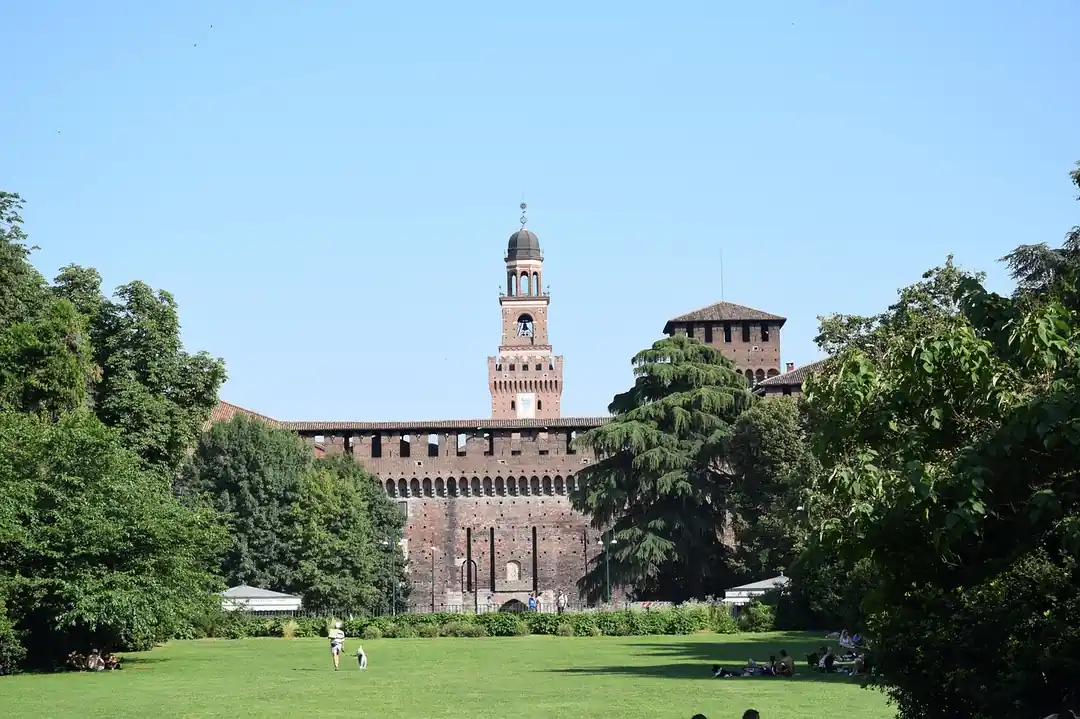
Castello Sforzesco: A Fortress of Art and History
You can’t miss the Castello Sforzesco. It’s a massive, imposing fortress right in the center of Milan that was once the seat of the city's ruling family. Today, it’s not just one museum but a complex of civic museums, and you could easily spend a full day exploring its ramparts and courtyards. It feels less like a curated gallery and more like a treasure hunt through history.
The castle houses everything from ancient artifacts in its Archaeological Museum to an incredible collection of musical instruments. But for art lovers, the main draws are the Pinacoteca del Castello Sforzesco, with beautiful works by artists like Canaletto and Titian, and the Museum of Ancient Art. It’s here, in a quiet, specially designed room, that you’ll find the castle’s most precious treasure: Michelangelo’s final, unfinished sculpture, the Pietà Rondanini.
Seeing it is an almost spiritual experience. He worked on it until his final days, and you can feel the raw, desperate energy in the marble. It’s so different from his polished, perfect Pietà in Rome. This one is elongated, ghostly, and deeply personal. It’s a testament to an artist grappling with his own mortality and faith. To stand in front of it is to witness the final creative act of a genius. It’s a moment that will stay with you long after you’ve left the castle walls.
Museo del Novecento: A Modern Viewpoint
Perfectly positioned next to the Duomo, the Museo del Novecento (Museum of the Twentieth Century) offers a visual and intellectual counterpoint to Milan's classical side. Housed in the Palazzo dell'Arengario, the museum's collection is a fantastic journey through 20th-century Italian art, starting with the explosive energy of Futurism. Umberto Boccioni's Unique Forms of Continuity in Space, a sculpture that seems to be striding powerfully into the future, is a highlight and perfectly embodies the movement's obsession with dynamism and speed.
The museum's layout is brilliant. A spiral ramp takes you on a chronological journey upwards, offering stunning, perfectly framed views of the Piazza del Duomo along the way. It’s a constant reminder of the dialogue between Milan’s past and its modern identity. The collection is a who's who of Italian modernism, but the top floor is dedicated to the master of the slash, Lucio Fontana. Seeing his "Spatial Concepts" here, with the cathedral's spires in the background, feels like the perfect Milanese moment.
What I love most about this museum is its accessibility. It makes modern art feel exciting and relevant, not intimidating. It tells the story of a century of radical change, of artists who were breaking all the rules and inventing new ways of seeing the world. It’s a must-visit for understanding how Milan became the capital of modern design and thought.
Milan surprised me. It’s a city that doesn’t lay all its cards on the table at once. You have to look for its treasures, but when you find them, they are deeply rewarding. It’s a place where art isn’t just something hanging on a wall; it’s woven into the fabric of the city’s past, present, and future. I hope you get the chance to explore it for yourself.

From Canals to Mountains: Your Perfect One-Week Northern Italy Itinerary
Can Mindfulness and Meditation Help Manage Injury Pain? A Deeper Look
Related Posts
 TRANSPORT
Beyond the Highway: Finding Canada's Soul on a Western Rail Adventure
Forget road trips. I'm talking about rediscovering the romance of travel on Via Rail's most scenic routes through the heart of the Canadian West. It’s an experience that changes you.
 TRAVEL TIPS
The Unwritten Rules of the North: What to Know Before Camping in Canada
Heading to the Great White North for a camping trip? It's an amazing idea. But from campfire etiquette to wildlife wisdom, here’s what you need to know before you go.
Popular Posts

Rethinking Non-Profit Promotion: Creative Strategies That Actually Drive Event Impact

Beyond Stark White: The Best Interior Paint Colors to Light Up Your New Space

How to Actually Master a New Language on Your Own (No Magic Gene Required)
