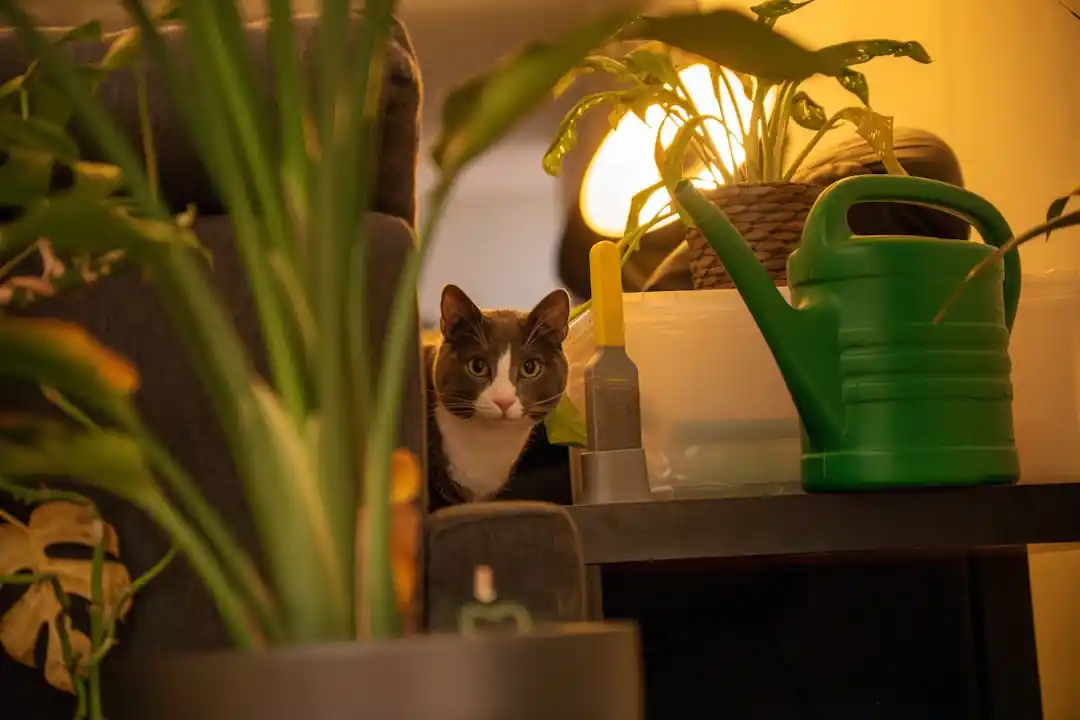
Love plants but worried about your curious cat? You're not alone. Discover a world of beautiful, non-toxic houseplants that let you create a lush indoor jungle without compromising your furry friend's safety.
There’s a certain magic to filling your home with living things. For me, it’s the quiet companionship of my cat curled up in a sunbeam and the vibrant, silent growth of my houseplants reaching for the light. But for a long time, I felt like these two joys were mutually exclusive. The fear of bringing home a plant that could harm my furry best friend was real. Every trip to the nursery involved frantic googling on my phone, trying to cross-reference beautiful foliage with the ASPCA's toxic plant list.
Honestly, it can feel like a minefield. You see a stunning Fiddle Leaf Fig or a dramatic Monstera and imagine it in that perfect corner of your living room, only to discover it’s a no-go for your nibble-happy cat. It’s a common frustration for those of us who are both pet parents and plant enthusiasts. We want to cultivate a green, serene space, but our primary responsibility is to ensure the safety and well-being of our animal companions.
The fantastic news is that you absolutely do not have to choose between a stylish, plant-filled home and a happy, healthy cat. The world of houseplants is vast and varied, and it includes a huge selection of gorgeous, interesting, and completely non-toxic options. It’s all about knowing what to look for. Let's dive into some of my favorite cat-safe plants that will bring life to your space without bringing worry to your mind.
Foliage Stars That Won't Cause a Fuss
When you want that lush, jungle-like feel, foliage is your best friend. These plants are all about texture, pattern, and shades of green, and thankfully, many of the most beautiful ones are perfectly safe for your feline friends.
A classic for a reason, the Spider Plant (Chlorophytum comosum) is a must-have. With its gracefully arching leaves and the little "spiderettes" it sends out, it’s visually interesting and incredibly low-maintenance. Cats are famously drawn to their dangling leaves, which are perfect for batting, but you can rest easy knowing a little chew won't land you in the vet's office.
For a touch of the tropics, the Parlor Palm (Chamaedorea elegans) is an excellent choice. It has that classic palm look but stays a manageable size indoors, and it's completely non-toxic. Similarly, the Prayer Plant (Maranta leuconeura) and its close relatives in the Calathea family are renowned for their stunning, patterned leaves that often look hand-painted. They have a fascinating habit of folding their leaves up at night, like hands in prayer, adding a dynamic element to your collection.
A Pop of Color: Cat-Safe Flowering Plants
Who doesn't love a bit of bloom to brighten up a room? While some of the most common flowering plants (I'm looking at you, lilies and tulips) are a major hazard for cats, there are still plenty of beautiful, safe options to choose from.
African Violets (Saintpaulia) are a delightful choice. They are compact, have charmingly fuzzy leaves, and produce clusters of vibrant flowers in shades of purple, pink, and white. They thrive in the same indoor conditions that we do, making them relatively easy to care for. Another fantastic option is the Orchid. While they may seem exotic and difficult, many varieties, like the popular Phalaenopsis orchid, are surprisingly resilient and, most importantly, non-toxic to cats.
If you're looking for something truly unique, consider a Hoya, also known as the Wax Plant. These trailing plants have thick, waxy leaves and produce stunning, star-shaped clusters of fragrant flowers. They are beautiful, safe, and a real conversation starter.
A Note on "Safe" vs. "Edible"
It's important to remember that while these plants are non-toxic, they aren't intended to be a salad bar for your cat. Ingesting a large amount of any plant material can cause mild stomach upset, vomiting, or diarrhea. The goal is to choose plants that won't cause a toxic reaction if your cat does decide to have a curious nibble.
If you have a particularly determined plant-chewer, it can be helpful to provide them with their own personal plant. A small pot of cat grass (usually oat, rye, or wheat grass) can give them a safe and healthy outlet for their chewing instincts, often saving your more decorative plants from unwanted attention. Strategic placement, like using hanging planters or placing plants on high shelves, can also go a long way in keeping your green friends and your furry friends living in harmony.
Creating a home that reflects your love for both nature and animals is a deeply rewarding experience. It’s about curating a space that is not only beautiful but also a safe, nurturing environment for everyone who lives there. So go ahead, build your indoor jungle with confidence, and enjoy the peace of mind that comes with it.

Beyond the Steppe: Why Kazakhstan's Cities Are the Next Big Thing
The High-Rise Handbook: Potty Training Your Puppy in an Apartment

Related Posts
 LIFE
Accessible seating and travel logistics for international VALORANT events in Seoul
A comprehensive guide covering travel logistics, venue access, and ticket booking for international VALORANT esports tournaments held at LoL Park in Seoul.
 LIFE
Best streaming platforms and schedule optimization tips for watching Seoul Masters VALORANT games
Discover the top streaming platforms and effective schedule optimization tips for catching every thrilling moment of the Valorant Champions 2024 playoffs in Seoul.

Popular Posts

Best Valorant aim training tools and software for high-level play in 2027

Valorant Champions Tour Pacific Cup 2027: Venue details and tournament format analysis
Accessible seating and travel logistics for international VALORANT events in Seoul