Best Valorant aim training tools and software for high-level play in 2027
A comprehensive guide to the top aim trainers, in-engine practice routines, and mechanical methodologies used to optimize precision in high-level Valorant play.
Core mechanical pillars of high-level Valorant aim
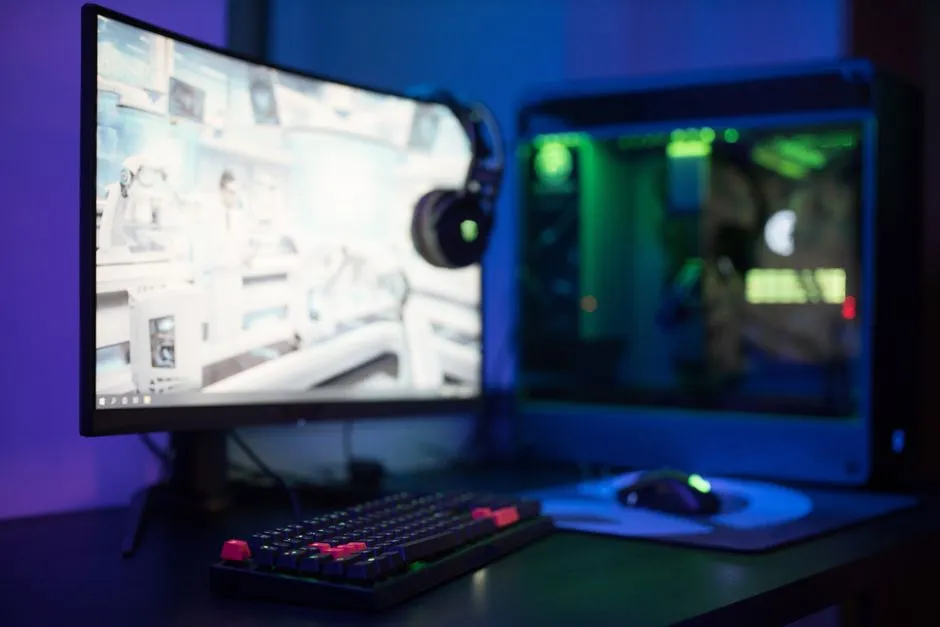
Tactical first-person shooters operate on a mechanical foundation different from movement-heavy arena titles. In competitive Valorant, duels are often decided by a single high-velocity engagement where lethal headshot multipliers dictate the outcome of a round. Success depends on mastering gunplay mechanics, primarily dividing weapon fire into deliberate tapping, controlled two-to-three round bursting, and selective close-quarters spraying. Long-range engagements require single-tap precision to exploit first-shot accuracy, while medium-range combat relies on disciplined bursts that allow recoil recovery to reset before weapon spread becomes unpredictable. Spraying is reserved for close-range duels where full recoil compensation can overcome bullet deviation, making strict firing discipline necessary across every rank.
Among all mechanical competencies, crosshair placement is the most impactful determinant of duel success. Keeping the crosshair at head height minimizes the physical distance the mouse must travel upon spotting an adversary, substituting rapid reflexes with predictive positioning. This skill is divided into two methods: pre-aiming and tracing. Pre-aiming involves visualizing an opponent's position behind cover, aligning the crosshair with that predicted coordinate through the wall, and swinging out to execute the engagement with minimal angular correction. Tracing requires gliding the reticle along the geometry of a corner while advancing, ensuring readiness if an opponent swings unpredictably. Slicing the pie—methodically clearing individual angles one by one with calculated jiggle-peeks—ensures that an entering player is never exposed to multiple firing vectors at once.
Beyond static positioning, elite execution requires isolating flicking, dynamic tracking, and target switching. Flicking is a corrective mechanism for when an opponent appears outside the anticipated crosshair placement, requiring an explosive initial movement that decelerates into a stable micro-correction. Tracking is less frequent due to stationary shooting mechanics, but it is vital when stabilizing against mobile opponents, tracking targets through movement abilities, or adjusting during spray transfers. Target switching governs the transition between multiple targets during rapid site hits or defensive holds, requiring players to confirm an elimination and immediately snap to the next target. Underpinning these actions is clean counter-strafing, which stops character movement instantaneously to eliminate movement error before the trigger is pulled.
Software analysis: Aimlabs and KovaaK's
Aimlabs is an industry benchmark for tactical shooter preparation, supported by its official partnership with the Valorant Champions Tour (VCT). The platform features specialized tasks built around exact weapon models, recoil profiles, and map assets that mirror the competitive environment. A primary asset is the Voltaic Valorant benchmark suite, a curated collection of 21 scenarios designed to evaluate tactical FPS mechanics according to a guide for improving faster. These scenarios break aiming profiles into quantifiable metrics, testing micro-adjustments, horizontal click-timing, and target acquisition speeds. Automated diagnostic reporting in Aimlabs pinpoints specific performance deficits—such as poor micro-correction accuracy or lagging visual reaction times—allowing players to bypass generic routines and target their actual mechanical weaknesses.
KovaaK’s provides a deeply customizable, sandbox-style training environment favored by competitive FPS purists. Its extensive scenario library includes community standards such as Fuglaa XYZ, Ground Plaza, and specialized click-timing maps like Shim Hip Fire. KovaaK’s differentiates itself through scenario scripting, allowing users to configure custom AI bot movement routines, acceleration curves, and reactive evasion patterns that simulate unpredictable player movement. Precision-oriented tasks, such as Hip Fire Extra Small, train hit confirmation by forcing players to synchronize visual identification with click timing rather than firing prematurely. Additionally, variations like Pokeball tasks require holding down the fire input continuously, training tension regulation in the hand to prevent over-gripping during high-speed transitions.
Both platforms offer data tracking that elevates training above simple mechanical repetition. Instead of relying on subjective feelings of improvement, players analyze quantitative data, including hit percentages, score baselines, and temporal tracking graphs. Features such as side-by-side leaderboard replay comparisons allow players to evaluate their mouse paths directly against top-ranking competitors, identifying excessive curving, overshooting, or inefficient deceleration. By isolating physical mechanics outside the tactical noise of a live match, these tools enable thousands of high-intensity repetitions within minutes, establishing motor habits that transfer into competitive play.
Lightweight and alternative trainers: Aimbeast and 3D Aim Trainer
Aimbeast has a dedicated following among competitive players due to its streamlined design, high-performance engine, and low visual latency. The platform prioritizes minimalist graphics, removing visual clutter to keep players focused on target acquisition, contrast tracking, and spatial orientation. Beyond its integrated ranking structure, Aimbeast provides an intuitive map creation and editing toolset. This allows players to construct geometric layouts that duplicate specific Valorant bomb sites, choke points, and vertical elevation angles, enabling scenario practice that mirrors in-game sightlines.
3D Aim Trainer provides an accessible, rapid-deployment solution available through dedicated clients and web browsers. This allows players to engage in structured click-timing and tracking exercises without requiring high-end system allocations or extensive software setups. The software includes scenario playlists designed to align with common tactical shooter engagements, paired with progression charts that track performance across weeks of play. Its lightweight footprint makes it viable for rapid warmup sessions on secondary machines or restricted network environments where full desktop installations are impractical.
Using alternative training software helps prevent motor adaptation plateaus. When a player trains exclusively within one software ecosystem, muscle memory can adapt to specific target colors, textures, and predictable bot spawn algorithms rather than building generalized hand-eye coordination. Introducing different visual engines, target scales, and lighting models forces the nervous system to maintain dynamic visual acuity and adaptive physical control. Integrating tools like the best aim trainers for Valorant, Aimbeast or 3D Aim Trainer broadens mechanical fluency, ensuring that fine motor control remains resilient across different visual contexts.
In-engine training modes: The Range, Deathmatch, and Team Deathmatch
Comparison of Valorant In-Engine Practice Environments
| Mode | Primary Focus | Engagement Density | Recommended Protocol |
|---|---|---|---|
| The Range | Engine physics and raw weapon mechanics calibration | Controlled solo repetitions | Max-distance tapping, two-round bursts, and bot spray transfers |
| Deathmatch | Crosshair placement, movement deceleration, and angle isolation | 30–40 duels per 10-minute match | Process-oriented clearing using slice-the-pie technique and calm aim |
| Team Deathmatch | Utility navigation, dynamic crossfires, and site retakes | High-frequency combat across tiered arenas | Guardian or Sheriff restriction to enforce first-shot headshot precision |
Valorant's native practice environment, The Range, provides a space for calibrating raw in-game mechanics directly with engine physics and weapon behavior. The environment allows players to drill stationary and moving bots across varying armor ratings and speed profiles. A standard daily protocol involves using the bot spawn interface to drill tapping cadences from maximum distance, stepping forward to practice two-round bursts, and using mid-range positioning to refine spray transfers across multiple bot targets. Players also use the floating target sequences outside the main firing bay to practice vertical tracking and horizontal spray transfers against targets moving in three-dimensional space.
Deathmatch serves as the primary bridge between isolated aim drills and live competitive play, offering high-density dueling without the downtime of standard matches. In a 40-minute competitive game, a player may engage in only 15 to 20 gunfights; by contrast, a single 10-minute Deathmatch presents between 30 and 40 active engagements. This high repetition volume creates a setting to test crosshair positioning, pre-firing angles, and movement deceleration against human opponents. The objective in Deathmatch is process-oriented rather than winning the match; players isolate specific techniques, such as clearing angles using the slice-the-pie methodology or adopting calm aim styles to avoid panic-firing.
Team Deathmatch (TDM) expands upon standard deathmatch by integrating stage-based weapon progression, map utility usage, and multi-angle site takes. TDM requires players to navigate dynamic obstacles, avoid projectile utility, and handle fast-paced crossfires across tiered arenas that mimic competitive site retakes. To maximize skill acquisition, high-level players often restrict their weapon selection to discipline-heavy firearms like the Guardian or Sheriff. Emulating the single-shot methodologies used by professional players forces strict first-shot accuracy, as missing the initial headshot results in immediate elimination, conditioning players to eliminate rushed, low-accuracy firing habits.
Structuring periodized practice and warm-up regimens
Sequential Aim Training Session Progression
1. Smoothness & Wrist Loosening
Start with drills like Smooth Your Wrist and Anti Centering to relax hand muscles and establish fluid mouse control.
2. Precision Clicking & Micro-Adjustments
Drill high-precision click-timing and controlled micro-corrections to reinforce first-shot headshot accuracy.
3. Tracking & Target Switching
Conclude with high-intensity tracking and rapid target snaps to simulate fast-paced defensive holds and site hits.
For long-term mechanical development, it is important to keep a strict distinction between aim training sessions and pre-match warm-ups. A warm-up is designed solely to loosen hand and wrist muscles, establish visual tracking focus, reduce the risk of repetitive strain injuries, and build confidence before entering ranked competition. Warm-ups should remain light and non-fatiguing, incorporating physical stretches, light target tapping in The Range, and one or two rounds of Team Deathmatch. Conversely, true aim training functions like physical resistance training—similar to how athletes use a routine for peak performance—it must deliberately challenge the player, target identified mechanical flaws, push speed and precision boundaries, and induce the kind of cognitive and physical fatigue that stimulates neuromuscular adaptation.
Effective practice routines adhere to structured volume constraints to prevent burnout and ensure consistency. A common benchmark allocates approximately one-fifth (20 percent) of total daily gaming time to mechanical training. Under this model, a two-hour gaming block incorporates 25 minutes of dedicated aim training, whereas a four-hour block allocates roughly 45 minutes to mechanical routines. Training beyond these parameters yields diminishing returns, taking time away from tactical game sense, positioning study, and team coordination. A standard playlist should progress sequentially: beginning with smoothness and wrist loosening (e.g., Smooth Your Wrist, Anti Centering), moving into precision clicking and micro-adjustments, and concluding with high-intensity tracking and target switching.
Sustainable skill progression relies on systematic periodization, scheduled recovery, and neurological consolidation. High-intensity motor skill acquisition requires planned rest days to prevent repetitive strain injuries such as carpal tunnel syndrome and to allow central nervous system recovery. To avoid hitting a plateau, players can implement a weekly athletic conditioning plan for their physical health to support their gaming. A standard high-level weekly schedule incorporates three days of fundamental mechanic drills, two days of targeted weakness correction, and two days for passive benchmarking or complete physical rest. Furthermore, scheduling aim training sessions closer to sleep enhances motor skill retention, as the brain consolidates movement pathways during slow-wave sleep. Pairing these regimens with foundational health practices—including consistent sleep, early morning sunlight exposure, and physical hand stretches—optimizes reaction time and visual processing under high-pressure conditions.
Biomechanical control and advanced calibration techniques
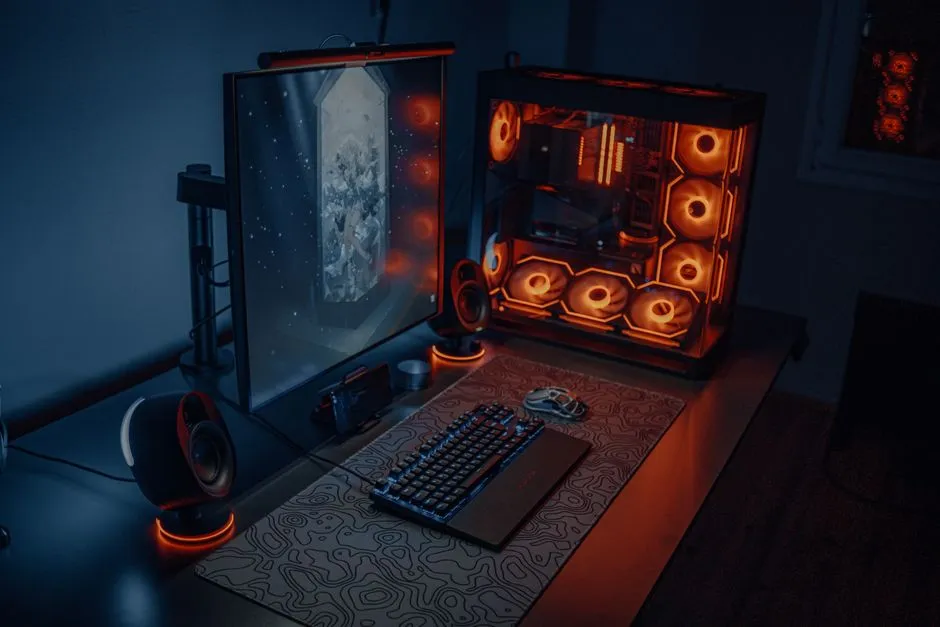
Mechanical consistency requires optimizing the physical interface between the player, the hardware, and the desk surface. Mouse grip geometry should align the thumb and pinky in parallel with the optical sensor, ensuring that lateral hand movements correspond to linear horizontal lines in the game engine without diagonal drifting. Maintaining forearm contact with the mouse pad or desk provides stability, whereas a floating wrist posture allows for wider range-of-motion sweeps during large-angle turns. Gross navigational movements are executed primarily through the elbow and shoulder, leaving the wrist and fingers for fine, sub-pixel headshot micro-corrections at the end of a flick.
To break mechanical plateaus, high-level players frequently use sensitivity manipulation to force neuro-motor adaptation. When a player becomes overly reliant on whole-arm movements and neglects micro-corrections, temporarily increasing mouse sensitivity by 50 to 100 percent creates artificial difficulty. In this state, small physical errors cause significant on-screen crosshair deviation, forcing the hand, wrist, and fingertips to develop better stabilization and tension control. After training through this instability across several sessions, reverting to baseline sensitivity makes target acquisition and micro-adjustments feel more controlled and effortless.
Finally, high-level aiming requires managing visual focal points and muscle tension during duels. Players calibrate their vision based on engagement distance: focusing directly on the crosshair reticle when engaging distant, pixel-thin targets to ensure alignment, while shifting focus to the moving target during close-range engagements where peripheral tracking speed is paramount. Throughout these transitions, players must manage grip tension to ensure that rapid flicks do not end in rigid, shaking mouse stops. The objective of an integrated aim training framework is not just to elevate a player's peak performance, but to raise their baseline skill floor—ensuring mechanical precision and headshot execution even under high-pressure competitive conditions.
References
Related Posts
 TECH
Valorant Champions Tour Pacific Cup 2027: Venue details and tournament format analysis
An in-depth look at the Valorant Champions Tour Pacific Cup 2027, covering the venue announcement in Manila, the restructured tournament format, and open qualification pathways.
 TECH
Recommended tablet apps and mobile exercises to maintain brain agility in a digital world
Explore evidence-based tablet apps and mobile exercises designed to maintain cognitive agility, improve focus, and combat digital distraction.
Popular Posts
Valorant Champions Tour Pacific Cup 2027: Venue details and tournament format analysis
Accessible seating and travel logistics for international VALORANT events in Seoul
Best streaming platforms and schedule optimization tips for watching Seoul Masters VALORANT games