The Secret Language of Light: How Color Temperature Shapes Your Home
Ever walk into a room and feel it's just 'right'? The secret might not be the furniture, but the light itself. Let's dive into color temperature and how it shapes the soul of your space.
Have you ever walked into a room and just felt… instantly at ease? Or, on the flip side, have you ever been in a space that, despite being beautifully decorated, felt a little cold or sterile? We spend so much time picking out the perfect sofa or the right shade of paint, but I’ve learned that one of the most powerful tools in interior design is one we often overlook: the color temperature of our lighting. It’s a subtle force, but it has a massive impact on how a room feels.
Honestly, for years I thought a light bulb was just a light bulb. If it lit up the room, it was doing its job. It wasn't until I was trying to create a cozy reading nook and it ended up feeling more like a hospital waiting room that I realized my mistake. The bulb I had chosen was casting a harsh, bluish light that was completely at odds with the vibe I wanted. That little mishap sent me down a rabbit hole, and I discovered the fascinating world of color temperature.
It turns out, mastering the color of your light is like learning the secret language of ambiance. It’s the difference between a house and a home, a kitchen that’s just for cooking and one that’s the heart of the party.
So, What Is Color Temperature Anyway?
Let's get the technical bit out of the way, but I promise to make it painless. Color temperature is measured on a scale called Kelvin (K). You’ve probably seen numbers like "2700K" or "5000K" on lighting packages. In simple terms, this number tells you how "warm" (yellowish) or "cool" (bluish) the light from a bulb will appear.
Think about a flame. The lowest, deepest part of the flame is a rich, warm orange-yellow. As it gets hotter, the color becomes a brighter, purer white, and eventually, it can even turn blue. The Kelvin scale works in a similar way, though a bit counterintuitively. A lower Kelvin number (say, 2200K to 3000K) means the light is warmer, more like that candlelight glow. As the Kelvin number increases (4000K to 6500K and beyond), the light becomes cooler, crisper, and more like bright, direct daylight.
It’s a common mix-up to think "warm light" is for hot weather and "cool light" is for cold weather, but it has nothing to do with the actual temperature in the room. It’s all about the visual warmth—the feeling, the mood, the ambiance. Understanding this simple scale is the first step to becoming the master of your home's atmosphere.
Matching the Light to Your Life
The real magic happens when you start intentionally choosing color temperatures based on the function and desired feeling of each room. Our bodies are naturally programmed to react to light; the warm glow of a sunset tells us it's time to wind down, while the bright, cool light of mid-day tells us to be alert and productive. You can use this to your advantage.
For spaces dedicated to relaxation and comfort—like your living room and bedroom—you’ll almost always want to lean into warm white light. A range of 2700K to 3000K is the sweet spot. This is the light that makes you want to curl up with a blanket and a good book. It creates an intimate, inviting atmosphere that encourages conversation and relaxation. It’s no coincidence that high-end restaurants and cozy cafes use this type of lighting to make you feel welcome and want to stay a while.
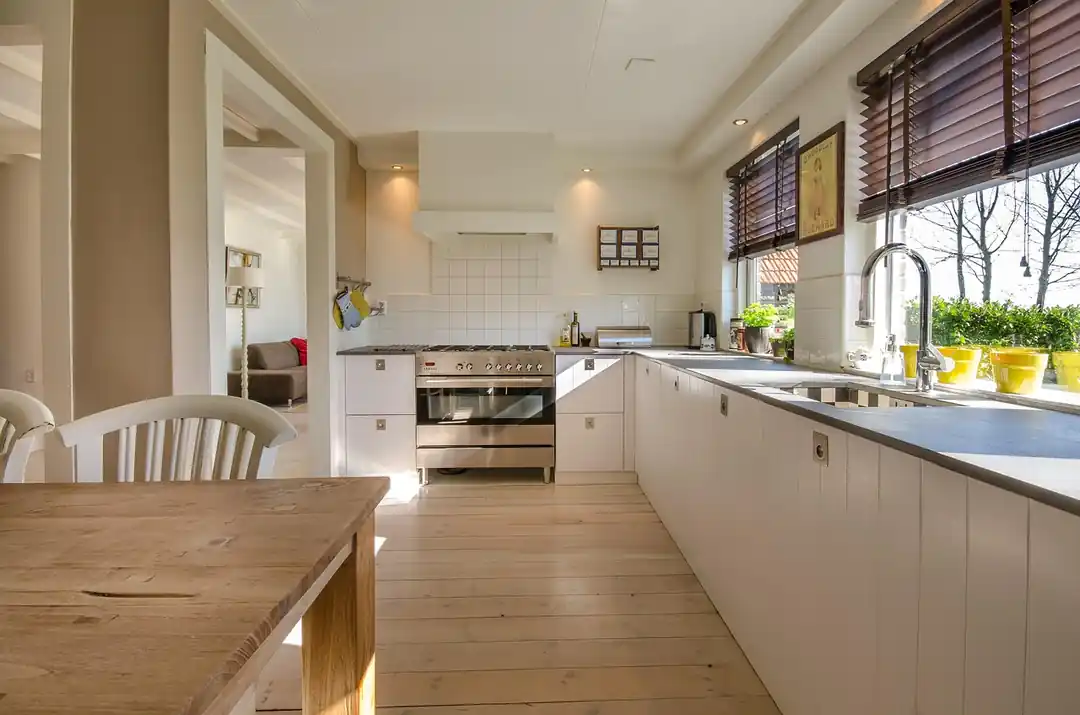
On the other hand, for task-oriented areas like kitchens, home offices, and bathrooms, a more neutral or cool-toned light is often better. In a kitchen, you need to see what you’re doing clearly, so a 3000K to 4000K light can provide that clarity without feeling too clinical. For a home office where focus is paramount, a cooler 4000K to 5000K can actually help you feel more awake and concentrated. The same goes for a bathroom vanity, where you need accurate light for getting ready in the morning.
It's All About Creating a Feeling
Ultimately, lighting is one of the most personal and transformative elements of your home. There are no unbreakable rules, only guidelines to help you craft spaces that feel right to you. Don't be afraid to experiment. Maybe you prefer a slightly cooler light in your living room for a more modern, crisp feel. Or perhaps a very warm, almost amber light in your bedroom feels like the ultimate sanctuary.
The next time you change a light bulb, take a moment to consider the Kelvin number. Think about the room it's in and how you want to feel when you're there. You’re not just making a practical choice; you’re making a design choice, an emotional one. You're deciding whether that corner of your home will be a place for quiet contemplation, energetic activity, or warm connection. And that is a beautiful, powerful thing to control.

From Scratch: The Ultimate Guide to Homemade Everything Bagels
The Unsung Hero: How Home Insulation Creates Perfectly Consistent Room Temperatures
Related Posts
 INTERIOR IDEAS
Beyond Stark White: The Best Interior Paint Colors to Light Up Your New Space
Discover how moving away from flat white walls to soft pale blues, earthy sage greens, and cozy warm neutrals can naturally brighten your home.
 HOME IMPROVEMENT
The Honest Winter Energy Guide: How I Cut Heating Costs Without Freezing
Practical, research-backed ways to keep your home warm and your utility bills reasonable this winter, from simple DIY sealing to smart habits.

Popular Posts

Rethinking Non-Profit Promotion: Creative Strategies That Actually Drive Event Impact
Beyond Stark White: The Best Interior Paint Colors to Light Up Your New Space

How to Actually Master a New Language on Your Own (No Magic Gene Required)