That 'Polar Vortex' You Heard About? Here's How It Freezes Your Flight Plans
It's more than just a buzzword for 'really cold.' We're diving into what the polar vortex actually is and how this powerful weather phenomenon can ground flights and cause travel chaos.
You’ve seen the headlines. A news anchor, with a very serious expression, points to a swirling mass of purple and blue on a weather map and utters the two words that can make any traveler’s heart sink: “polar vortex.” It sounds like something straight out of a disaster movie, a frozen hurricane descending from the Arctic. And while it’s not quite that cinematic, the reality for anyone with a plane ticket can feel just as dramatic.
I used to think it was just a media-hyped term for a nasty cold front. But after having a flight from Chicago delayed by a full day due to what the airline vaguely called “weather operations,” I decided to dig deeper. What is this phenomenon, really? And how does it have the power to ground an entire fleet of advanced aircraft designed to fly at 35,000 feet? The answers are a fascinating mix of atmospheric science and the very real, on-the-ground logistics of running an airport.
It turns out, the polar vortex is a real and persistent feature of our planet's atmosphere. It’s a large area of low pressure and extremely cold air that swirls around the North and South Poles year-round. For most of the year, and especially when it's strong and stable, a powerful jet stream acts like a fence, keeping this frigid air mass contained way up in the Arctic. We don't hear about it because it's just doing its job, keeping the coldest air on the planet locked away.
The trouble starts when that vortex weakens or is disrupted. Imagine a spinning top starting to wobble. When that happens, the containing fence of the jet stream can buckle and become wavy. This allows lobes of that intensely cold Arctic air—we're talking temperatures that can feel like another planet—to sag southward, deep into North America, Europe, and Asia. That’s when you get a "polar vortex event," and suddenly, cities like Minneapolis or Boston are experiencing temperatures colder than parts of Mars.
The Domino Effect: From Icy Air to Grounded Planes
So, a blast of cold air arrives. Why is that such a big deal for aviation? An airplane is a marvel of engineering, built to withstand incredible temperature extremes. The problem isn't so much the plane in the air, but the entire ecosystem of the airport on the ground. The impact is a cascade of logistical nightmares, each one compounding the last.
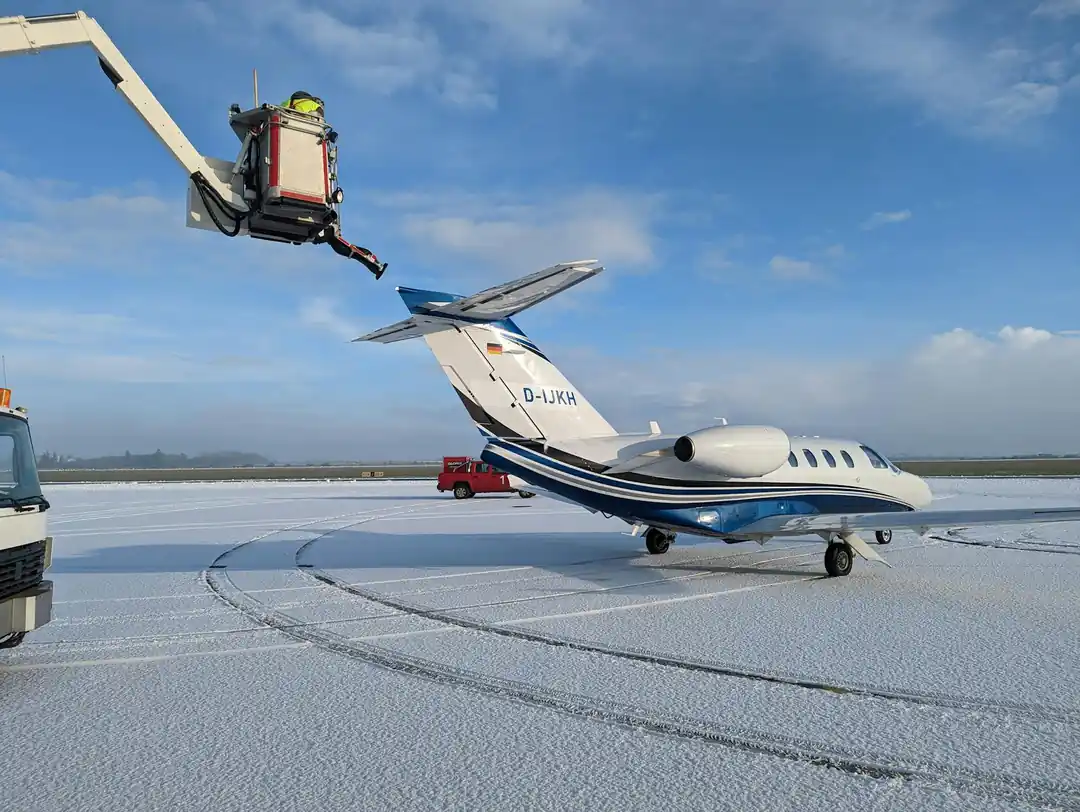
First, there's the most direct consequence: ice. When precipitation falls in these sub-zero temperatures, it can coat an aircraft in a layer of snow or ice in minutes. Even a thin, seemingly insignificant layer of ice can be incredibly dangerous. It disrupts the smooth flow of air over the wings, reducing lift and increasing drag. To combat this, planes must undergo a de-icing procedure, where they are sprayed with a special fluid. This process takes time, requires specialized equipment and personnel, and creates a bottleneck. When dozens of planes all need to be de-iced at once, the line can be immense, leading to the first wave of delays.
Then there is the human element. Ground crews—the people who load your bags, guide the plane, and refuel it—are exposed to these brutal conditions. For safety, their work has to slow down. They need to take frequent breaks to warm up, and there's a higher risk of injury on icy surfaces. The specialized equipment they use can also start to fail. Fuel and hydraulic lines can freeze, and even the tugs that push planes back from the gate can struggle for traction. It’s a slow, grinding battle against the elements that ripples through the entire airport schedule.
More Than Just Cold: Turbulence and Rerouting
The impact of a polar vortex isn't limited to the ground. That wobbling, wavy jet stream I mentioned? That has a huge effect on the flight itself. The jet stream is a high-altitude river of air that planes often use to fly faster and more efficiently. When the polar vortex is stable, the jet stream is relatively straight. But when it becomes wavy, it can create significant turbulence.
This isn't your typical light chop. The sharp temperature and pressure differences associated with these atmospheric waves can create severe clear-air turbulence (CAT), which is invisible to radar and can occur without warning. Pilots are, of course, highly trained to handle this, but it can make for an extremely uncomfortable and nerve-wracking ride. In some cases, flight paths are altered to avoid the worst of these turbulent zones, which can add time to the journey and burn more fuel.
Furthermore, the sheer scale of these cold air outbreaks can force airlines to cancel flights proactively. If a major hub like Denver or New York is expecting a polar vortex event, airlines will often cancel hundreds of flights in advance. They know that the airport's capacity will be drastically reduced, and it's better to cancel and rebook passengers ahead of time than to have thousands stranded. This creates a massive ripple effect, delaying and canceling flights in sunny, warm cities that are supposed to connect through the affected hub.
How to Survive a Polar Vortex Travel Day
If you find yourself with a ticket to fly when a polar vortex is in the forecast, don't despair. You can’t change the weather, but you can absolutely change how you react to it. The key is to be proactive, prepared, and patient.
First, become an obsessive flight-checker. Download your airline’s app and enable notifications. Check the flight status before you even think about leaving for the airport. Also, check the airport's website and social media feeds, as they often provide updates on overall operations. If it looks bad, and you have flexibility, it might be worth calling the airline to see if you can change your flight to a day earlier or later without a fee; many airlines offer this during major weather events.
Second, pack your carry-on as if you might be spending the night with it. This means all essential medications, a phone charger and a portable power bank, a change of clothes, and some snacks and a reusable water bottle. Airport food is expensive, and stores can close during major disruptions. Having your own supplies can make a long delay much more bearable.
Finally, try to keep a level head. The gate agents, flight attendants, and ground crews are not the cause of the weather. They are on the front lines of a logistical challenge and are often just as stressed as you are. A little bit of kindness and patience can go a long way. The situation is frustrating, but safety is the reason for the delays. After all, it’s far better to be stuck on the ground wishing you were in the air, than to be in the air wishing you were on the ground.
Beyond the Slopes: The Ultimate US Winter Getaways for Non-Skiers
Unlocking Your Backhand: A Guide to Generating Effortless Power

Related Posts
 TRANSPORT
Beyond the Highway: Finding Canada's Soul on a Western Rail Adventure
Forget road trips. I'm talking about rediscovering the romance of travel on Via Rail's most scenic routes through the heart of the Canadian West. It’s an experience that changes you.
 TRAVEL TIPS
The Unwritten Rules of the North: What to Know Before Camping in Canada
Heading to the Great White North for a camping trip? It's an amazing idea. But from campfire etiquette to wildlife wisdom, here’s what you need to know before you go.
Popular Posts

Rethinking Non-Profit Promotion: Creative Strategies That Actually Drive Event Impact

Beyond Stark White: The Best Interior Paint Colors to Light Up Your New Space

How to Actually Master a New Language on Your Own (No Magic Gene Required)
