An in-depth look at how Street Fighter handles control schemes, fighting game modes, and how traditional arcade inputs compare to modern analog and hybrid control systems.
The evolution of fighting game control systems
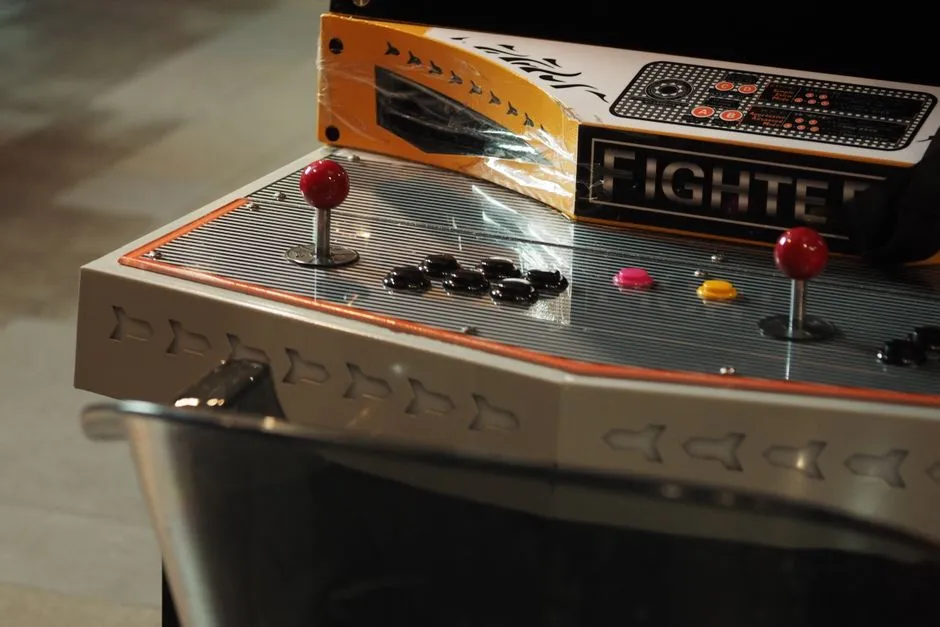
Control schemes in fighting games have changed significantly since the early arcade era. Titles like Street Fighter set the foundation for 2D fighters, relying on directional inputs and a multi-button layout. Moving from arcade cabinets—which might inspire some to build a retro gaming room inspired by Street Fighter aesthetics—to home consoles raised questions about hardware precision—specifically whether players should use traditional directional pads or analog movement. In classic 2D fighters, the control layout governs everything from basic walking and crouching to spatial defense.
Command inputs need to be clear, which is why historical arcade parts and precision D-pads became the standard for competitive players. Using an analog stick for traditional 2D execution often introduces dead zones and imprecise travel, making rapid inputs like dashes or special move motions harder to register consistently. At the same time, alternative game modes and modern subgenres have embraced different approaches to movement. Seeing how modern versions accommodate various inputs shows how different control profiles change the flow of combat.
This evolution extends beyond hardware into how developers design software-level control tiers. Street Fighter 6, for instance, puts its core combat engine inside the Fighting Ground mode, offering Classic, Modern, and Dynamic layouts. These options change how a player interacts with the battle mechanics, lowering the execution barrier for casual players. Comparing these modes with analog movement shows the design philosophy regarding player expression and the barrier to entry.
Street Fighter 6 Fighting Ground and control archetypes

The Fighting Ground mode in modern entries uses advanced combat systems and integrates resource mechanics like the Drive System with flexible input configurations. The Drive Gauge manages the match and dictates offensive and defensive options through the management of Overdrive Arts, Drive Parries, and Drive Rushes. Mastering these mechanics requires precise resource tracking, traditionally handled through the Classic control type. The Classic layout uses the historical six-button configuration, giving high-level players full control over normal and special attacks.
To lower the execution barrier found in traditional motion inputs, modern fighting games have introduced simplified schemes. The Modern control type in Street Fighter 6 lets players execute special attacks using simplified button combinations, removing the need to practice quarter-circle or dragon punch motions. While Modern controls include slight damage scaling to balance this, they allow newcomers to focus immediately on spacing, defense, and punishes. The Dynamic control type provides an automated assist system for local casual play, where the AI suggests attacks based on spatial positioning.
These variations highlight a tension in fighting game design between technical mastery and accessibility. Some argue that execution barriers preserve the depth and flavor of character differentiation, where input precision is a rewarded skill. Others feel that simplified inputs open the genre to a broader audience without losing the psychological layers of high-level mind games, spacing, and reads.
Movement precision: D-pads, analog sticks, and leverless controllers
Comparison of fighting game movement controllers
| Device | Input Type | Key Characteristics |
|---|---|---|
| D-Pad | Digital | Provides unambiguous directional inputs for crisp movement, crouching, and rapid dashing. |
| Analog Stick | Analog | Subject to travel range and dead zones, increasing the risk of unintended inputs during precise execution. |
| Leverless Controller | Digital (Buttons) | Eliminates mechanical switch travel for faster input transitions; requires muscle memory recalibration. |
Hardware choices affect player performance in traditional 2D fighting games. The D-pad provides digital inputs, ensuring that commands like crouching, jumping, and back-dashing register without ambiguity. Attempting precise dashes or complex charge partitions on a standard analog stick often results in unintended inputs because of the stick's range of motion. Digital inputs are generally preferred because high-level play relies on instantaneous defensive reactions and crisp movement.
The need for digital precision also led to the popularization of leverless controllers, commonly known as hitboxes. By replacing joysticks or D-pads with four arcade buttons for movement, leverless controllers offer faster input transitions and eliminate the travel time of a mechanical switch. This allows players to perform complex techniques with less physical effort. However, switching controllers—whether moving from a gamepad, arcade stick, or leverless layout—requires recalibrating muscle memory, which impacts how a player executes spacing and blocking.
The choice of input device and control mode changes how a player interacts with the game engine. Whether using a classic arcade layout, a simplified configuration, or specialized hardware, the goal is to reduce the gap between a player's tactical intent and the execution on screen. As fighting games add hybrid control options and better training tools, the genre can accommodate different player preferences while maintaining its competitive depth.
References

How to handle in-flight emergencies step by step during your next cross-country flight
How to build a retro gaming room inspired by Street Fighter aesthetics

Related Posts
LIFEHow to build a retro gaming room inspired by Street Fighter aesthetics
Transform your space into a nostalgic 1990s arcade haven with authentic cabinets, industrial design, and vibrant neon lighting inspired by Street Fighter.
 LIFE
LIFERanking the best Street Fighter movie characters from 1994 to today
A comprehensive look at the evolution of Street Fighter on the big screen, ranking the best live-action characters from the 1994 classic to the highly anticipated 2026 reboot.

Popular Posts

Navigating in-flight emergencies: Turbulence and landing gear failures
How to handle in-flight emergencies step by step during your next cross-country flight
How to build a retro gaming room inspired by Street Fighter aesthetics