Beyond the usual stocks and bonds, there's a world of alternative assets. We're diving deep into whether silver deserves a place in your long-term financial strategy.
When you picture your retirement portfolio, what comes to mind? For most of us, it’s a familiar landscape of stocks, bonds, and mutual funds. We’re taught from our first 401(k) signup to trust in the power of the market, to diversify across sectors, and to play the long game. And for the most part, that’s solid advice. But what if there’s an asset class that’s been quietly humming in the background, one with a history stretching back millennia, that could offer a different kind of security?
I’m talking about silver. Honestly, for a long time, I dismissed it as gold’s less glamorous cousin. It seemed more at home in a jewelry box than in a serious investment portfolio. But the more I dug into the nuances of building a truly resilient retirement plan, the more I realized I might be overlooking a powerful tool. Silver isn't just a shiny metal; it's a unique asset that sits at the crossroads of monetary history and industrial innovation.
Thinking about retirement isn't just about growth; it's about preservation. It's about building a financial foundation so solid that it can withstand the inevitable shocks the economy throws our way. In that context, exploring assets that don't move in lockstep with the stock market isn't just a good idea—it's essential. So, let's pull back the curtain and have an honest conversation about silver. Does it really have a role to play in securing your golden years?
The Two Faces of Silver: A Store of Value and an Industrial Powerhouse
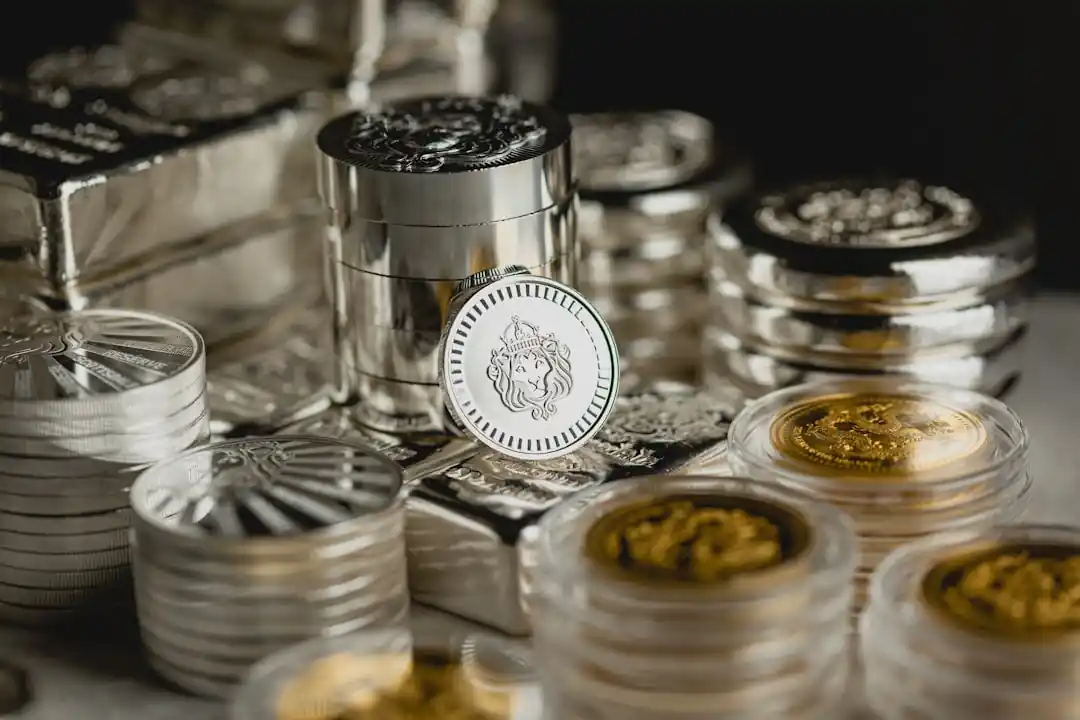
What makes silver so fascinating as an investment is its dual personality. On one hand, it has been used as money for thousands of years. Like gold, it's a tangible, finite resource that can't be printed into oblivion by a central bank. This gives it an intrinsic value and a historical reputation as a hedge against inflation and currency devaluation. When investors get nervous and lose faith in paper assets, they often flock to precious metals, and silver is right there to catch that wave of uncertainty.
But unlike gold, whose primary use is for investment and jewelry, silver is an industrial workhorse. It is one of the most conductive and reflective metals on the planet, making it absolutely indispensable in modern technology. Your smartphone, your laptop, the solar panels powering clean energy initiatives, and the complex electronics in electric vehicles—they all rely on silver. This industrial demand creates a floor for its price that is completely separate from its role as a safe-haven asset.
This means you have two different engines driving its potential value. In times of economic turmoil, its monetary value can shine. In times of economic growth and technological advancement, its industrial value comes to the forefront. This unique combination is something that very few other assets can claim, offering a multi-faceted approach to diversification that can help balance a portfolio against various economic conditions.
How Silver Behaves in a Portfolio (and Why It’s Different from Gold)
So, we know silver is versatile, but how does it actually behave when you add it to the mix with your other investments? The key here is correlation—or rather, the lack of it. The ideal diversifier is an asset that doesn't always move in the same direction as your stocks and bonds. Research has shown that precious metals often have a low or even negative correlation to traditional financial assets. When the stock market is down, assets like silver can hold their value or even rise, cushioning the blow to your overall net worth.
Now, how does it stack up against gold? While they often trend in the same general direction, silver is famously more volatile. Its market is smaller than gold's, so it takes less money moving in or out to cause significant price swings. This is why you'll often hear it called "gold on steroids." When precious metals are in a bull market, silver often outperforms gold on a percentage basis. Of course, the reverse is also true; in a bear market, it can fall harder and faster.
This volatility isn't necessarily a bad thing, as long as you're prepared for it. It means silver can offer greater growth potential, but it comes with higher risk. Many investors view it as a way to add a little more horsepower to their precious metals allocation. While gold acts as the stable anchor, a small allocation to silver can provide an extra kick. It’s a trade-off between stability and potential growth, and finding the right balance is a personal decision based on your own risk tolerance.
The Not-So-Shiny Side: Risks and Considerations
Of course, no investment is without its risks, and it would be irresponsible to talk about silver without acknowledging the downsides. As we just discussed, that volatility can be a double-edged sword. If you have a low tolerance for risk or a short time horizon, the sharp price swings of silver might keep you up at night. It requires a long-term perspective and the stomach to ride out the inevitable downturns.
Another practical consideration, especially if you're buying physical silver, is storage and insurance. Unlike a stock, which exists as a digital entry, physical bullion is a tangible asset that needs to be kept safe from theft or damage. Whether you choose a home safe or a third-party depository, these security measures come with their own costs that can slightly eat into your overall returns.
Finally, it's important to remember that silver, like gold, does not produce any income. It doesn't pay dividends or interest. Its entire return comes from price appreciation. This is a fundamental difference from stocks or bonds, and it's why most financial advisors recommend that precious metals should only be one component of a diversified portfolio, not the entire thing. A common rule of thumb is to allocate somewhere between 5% and 15% of your total portfolio to precious metals.
A Thoughtful Place for a Timeless Asset
So, where does that leave us? Silver is not a magic bullet for your retirement plan. It's not going to replace the slow-and-steady growth of a well-diversified stock portfolio. But it doesn't have to. Its true strength lies in its ability to be different, to provide a layer of protection and a source of potential growth that isn't tied to the whims of the traditional market.
By combining the ancient security of a monetary metal with the modern utility of an industrial commodity, silver offers a compelling case for inclusion in a diversified retirement portfolio. It’s a hedge against inflation, a shield during economic uncertainty, and a bet on future technological innovation all rolled into one.
Thinking of it as portfolio insurance can be a helpful mental model. You hope you never have to use it, but you'll be incredibly glad you have it if things go south. For the thoughtful investor looking to build a truly robust financial future, a small allocation to silver might just be the unsung hero your portfolio has been waiting for.
The Unseen Engine: How Industrial Thirst for Silver Shapes Its Price
Beyond the Piggy Bank: Weaving Precious Metals into Your Long-Term Savings
Related Posts
 BUSINESS
Rethinking Non-Profit Promotion: Creative Strategies That Actually Drive Event Impact
Discover modern, research-backed strategies for promoting non-profit fundraisers, from experiential marketing to hyper-local micro-influencers and cross-sector partnerships.
 BUSINESS
Is the TV Ad Dead? A Deep Dive into Cost and Effectiveness in 2024
In an age of streaming and scrolling, is a TV commercial still a smart bet for brands? We're breaking down the real costs and surprising effectiveness of television advertising today.

Popular Posts
Rethinking Non-Profit Promotion: Creative Strategies That Actually Drive Event Impact

Beyond Stark White: The Best Interior Paint Colors to Light Up Your New Space

How to Actually Master a New Language on Your Own (No Magic Gene Required)
