Cracking the Code: How Simple Mnemonics Can Help You Master Morse
Ever felt the pull to learn Morse code but got stuck on the dits and dahs? It’s easier than you think. Let's explore some brain-hacks to finally make it stick.
There’s something undeniably romantic about Morse code. It feels like a secret language from a bygone era, conjuring images of wartime spies, lonely lighthouse keepers, or grizzled ship captains tapping out messages into the vast, silent night. For years, I filed it under the category of "fascinating but probably too hard," a skill reserved for dedicated ham radio operators or history reenactors. The wall of dots and dashes just seemed impenetrable.
But then I fell down a rabbit hole of learning techniques and discovered the world of mnemonics. It was a complete game-changer. Suddenly, the abstract patterns of dits and dahs weren't so abstract anymore. They were transforming into words, rhythms, and images that my brain could actually hold onto. It turns out, you don't need to be a genius to learn Morse code; you just need to trick your brain into making connections.
Honestly, the thought of memorizing 26 unique sequences (and that's before you even get to numbers and punctuation) through brute force is enough to make anyone quit. It’s like trying to memorize a phone book. Mnemonics are the secret sauce. They act as a bridge between the foreign language of Morse and the language your mind already understands, turning a tedious memorization task into a creative and surprisingly fun puzzle.
The Rhythm of Words: Auditory Mnemonics
This is perhaps the most popular and, in my opinion, the most effective method for truly internalizing Morse code. Instead of just looking at dots and dashes on a chart, this technique teaches you to hear the letters. The idea is to associate each letter's Morse code pattern with a word or phrase that mimics its rhythmic structure. The first syllable of the word corresponds to the first sound in the code, and so on.
Let's take the letter "A" (dit-dah or ·−). A common mnemonic is the word "a-GAIN." The short "a" is your dit, and the longer, stressed "GAIN" is your dah. Say it out loud: a-GAIN, a-GAIN, a-GAIN. You're literally speaking in Morse code. For "B" (dah-dit-dit-dit or −···), you could use "BEAR is a big bear." The long "BEAR" is the dah, followed by three short dits. It feels a little silly at first, but it's incredibly effective because it anchors the abstract sound to a concrete idea.
The beauty of this system is its flexibility. While there are common lists of mnemonic words, the most powerful ones are often those you create yourself. For "C" (−·−·), "CO-ca CO-la" is a classic. For "D" (−··), maybe "DANG-er-ous." For "R" (·−·), I like "ro-TA-ry." The goal is to find a word that starts with the letter you're learning and has a syllabic rhythm that matches the code. This process turns passive learning into an active, creative exercise, which helps cement the memory much more deeply.
Seeing the Pattern: Visual and Grouping Methods
While hearing the code is the ultimate goal for practical use, visual aids can be a fantastic stepping stone. Many people struggle with the sheer volume of information, and organizing it visually can bring a sense of order to the chaos. One popular method is to group letters with similar or opposite structures. For instance, you could group all the letters that are only dits ('E', 'I', 'S', 'H') and all the letters that are only dashes ('T', 'M', 'O').
Another powerful visual trick is to look for "opposites." The letter "A" (·−) is the reverse of "N" (−·). "W" (·−−) is the reverse of "G" (−−·). "D" (−··) is the reverse of "U" (··−). Studying these pairs together can effectively cut your memorization workload in half. You learn one, and you automatically have a hook for its partner. You can create flashcards with these pairs to drill them into your memory.
Some learners also benefit from a "Morse Code Tree," a dichotomous chart where you start at the top and move down a path of dits and dahs to find each letter. Going left at each junction might be a dit, and going right a dah. This creates a logical map of the entire alphabet, showing how each character is related. It transforms the alphabet from a long, arbitrary list into a structured, interconnected system, which can be much easier for the brain to process and retain.
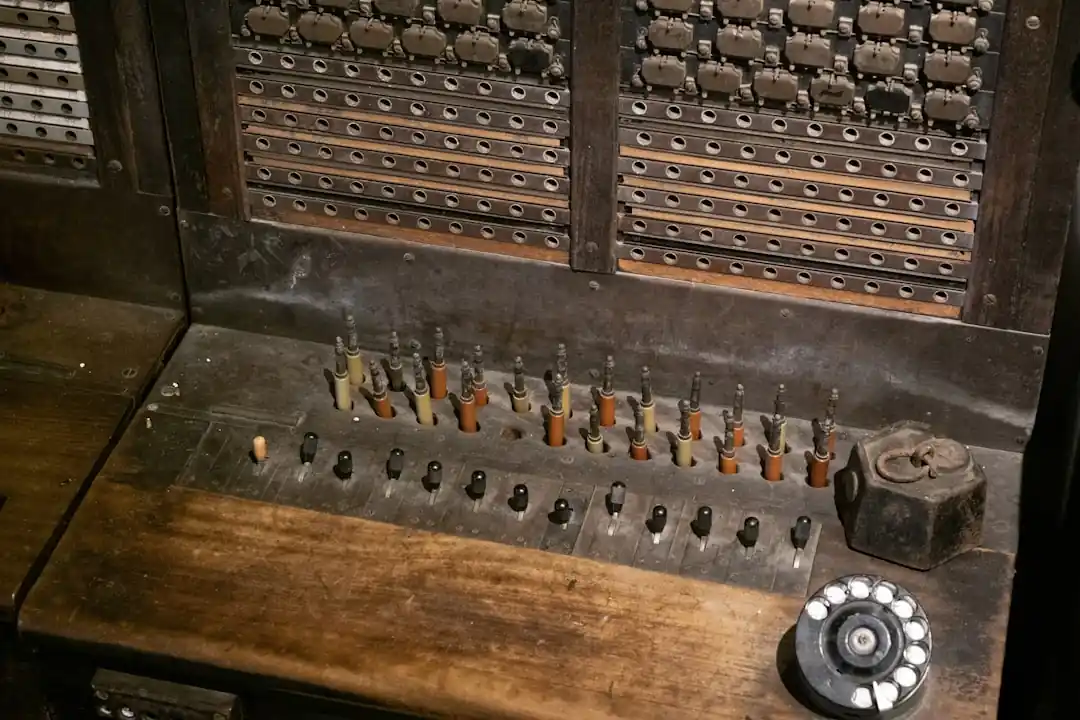
From Mnemonics to Fluency: The Role of Practice
Mnemonics are your training wheels. They're essential for getting started and building that initial foundation, but the ultimate goal is to ride without them. Fluency in Morse code, like any language, comes from consistent and deliberate practice. You need to expose your brain to the code so frequently that it begins to recognize the patterns automatically, without having to consciously translate them through a mnemonic word.
There are countless resources out there to help you practice. Websites like the Long Island CW Club or apps like Morse Mania turn practice into a game. They allow you to start slow, focusing on just a few letters at a time (a technique known as the Koch Method), and gradually increase your speed and character set as you improve. The key is consistency. A little bit of practice every day is far more valuable than a multi-hour cram session once a week.
Try integrating Morse code into your daily life in small ways. Spell out street signs in your head as you're walking. Tap out a message to a friend on the table while you're waiting for coffee. The more you force your brain to use the code in different contexts, the faster you'll move from conscious translation ("Okay, 'W' is 'what-GOD-hath-wrought,' so that's dit-dah-dah...") to instant recognition. It's a rewarding journey, and with the right tools and a little patience, you'll be decoding messages in no time.
Do You Need Morse Code for a Ham Radio License? The Surprising Answer
Unlocking the Rhythm: Daily Exercises to Master Morse Code Speed

Related Posts
 LANGUAGES
How to Actually Master a New Language on Your Own (No Magic Gene Required)
Discover research-backed self-study strategies to break through fluency plateaus, build real confidence, and learn a new language on your own terms.
 STUDY TIPS
Your Unshakeable Foundation: Understanding the Most Important Legal Rights for US Citizens
Ever wonder what truly protects you as a American citizen? Let's dive into the fundamental legal rights that form the bedrock of our society, making sure you know your power.

Popular Posts

Rethinking Non-Profit Promotion: Creative Strategies That Actually Drive Event Impact

Beyond Stark White: The Best Interior Paint Colors to Light Up Your New Space
How to Actually Master a New Language on Your Own (No Magic Gene Required)
