Minsk's Enduring Echoes: A Journey Through History's Heartbeat
Minsk, a city often misunderstood, holds a captivating narrative etched into its very foundations. Join me as we uncover the historical landmarks that tell its resilient story.
Minsk. The name itself often conjures images of a certain Soviet-era mystique, a city perhaps shrouded in a quiet dignity. But honestly, stepping onto its wide avenues and exploring its hidden corners reveals something far more profound: a city that has not just survived, but has been meticulously, almost lovingly, rebuilt and reimagined through centuries of tumultuous history. It’s a place where every brick seems to hold a memory, a testament to resilience and an unwavering spirit. I used to think of it as just another Eastern European capital, but my recent dive into its past has completely shifted my perspective.
What truly sets Minsk apart is its unique architectural tapestry, a direct consequence of its devastating wartime experiences. Imagine a city almost entirely razed to the ground, only to rise again with a grand, unified vision. That's Minsk after World War II, when an astonishing 80-90% of its buildings lay in ruins. Instead of merely patching things up, the city was reborn with a monumental Stalinist Empire style, particularly evident along its central artery, Independence Avenue. This isn't just architecture; it's a statement, a bold declaration of rebirth and a fascinating, if sometimes imposing, aesthetic.
The Grandeur of Rebirth: Stalinist Architecture and War Memorials
Walking down Independence Avenue (Praspyekt Nezavismosti) is like stepping onto a living museum of post-war urban planning. The sheer scale of it all is breathtaking. You're greeted by the iconic "Gates of Minsk," two symmetrical towers that stand guard at the railway station, a ceremonial welcome to the city. These structures, built in the early 1950s, are adorned with Soviet-era symbols and even feature a massive clock, one of the largest in Belarus. It’s a powerful first impression, setting the tone for the monumental journey ahead.
Further along, you encounter the imposing Government House and the stern, yet architecturally significant, KGB Headquarters, all part of this grand ensemble. These buildings, with their ornate facades, high ceilings, and impressive colonnades, speak volumes about the era's aspirations and ideologies. It’s a style that blends neoclassical elements with socialist realist motifs, creating a truly unique urban landscape that you won't find replicated in many other places. It’s a stark reminder of a powerful past, yet somehow, it feels integrated into the city's modern pulse.
Perhaps the most poignant of these landmarks is Victory Square, dominated by its majestic 38-meter granite obelisk, crowned with the Order of Victory. Unveiled in 1954, this monument stands as a solemn tribute to the soldiers and partisans who perished during the Great Patriotic War. At its base, an Eternal Flame flickers, inviting quiet reflection. It’s a space designed for reverence, a place where the city collectively remembers its immense sacrifices and triumphs. The surrounding circular square, with streets converging like rays, further emphasizes its symbolic importance as the city's core.
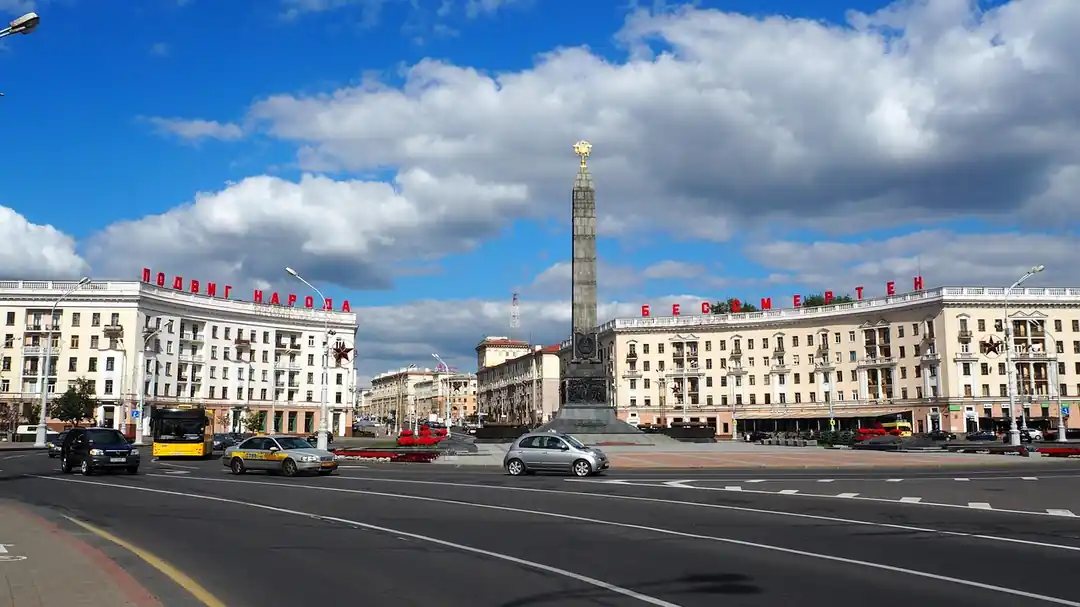
Whispers of the Past: Trinity Suburb and Religious Sanctuaries
While the Stalinist grandeur is undeniable, Minsk also offers glimpses into its deeper, more intimate past, particularly in the charming Trinity Suburb (Troitskoye Predmestye). Tucked away on the banks of the Svislach River, this area is often described as Minsk's "old town," a picturesque collection of 19th-century buildings with pastel-colored facades and tiled roofs. It’s a delightful contrast to the city's broader, more monumental architecture, offering a sense of quaintness and historical charm.
Though much of it was reconstructed after the 1809 fire and later restoration efforts, Trinity Suburb still evokes a strong sense of history. Here, you can wander through quiet streets, discover small museums like the Maksim Bahdanovič Literary Museum, and soak in an atmosphere that feels distinctly European, yet uniquely Belarusian. It’s a place where you can imagine horse-drawn carriages clattering over cobblestones, a stark difference from the bustling avenues just a short walk away.
Beyond the secular, Minsk's spiritual heritage is beautifully preserved in its religious landmarks. The Holy Spirit Cathedral, with its baroque twin towers, stands proudly in the Upper Town, serving as the main Orthodox church in Belarus. Inside, it houses valuable icons, including the revered Minsk icon of the Mother of God, acquired as far back as 1500. Then there's the striking Church of Saints Simon and Helena, affectionately known as the Red Church due to its vibrant red brick walls. Built in 1910, its neo-Gothic architecture and poignant backstory—commemorating two children lost prematurely—make it a deeply moving and visually arresting landmark.
Modern Icons and Cultural Hubs: The National Library and Beyond
Minsk isn't just about echoes of the past; it's also a city that embraces the future, with modern landmarks that have quickly become iconic. The National Library of Belarus is perhaps the most striking example. This 72-meter-high, 23-story building, shaped like a giant rhombicuboctahedron (yes, you read that right!), is a truly unique architectural marvel. It symbolizes the material and spiritual values accumulated by humanity and stands as a testament to modern Belarusian ambition.
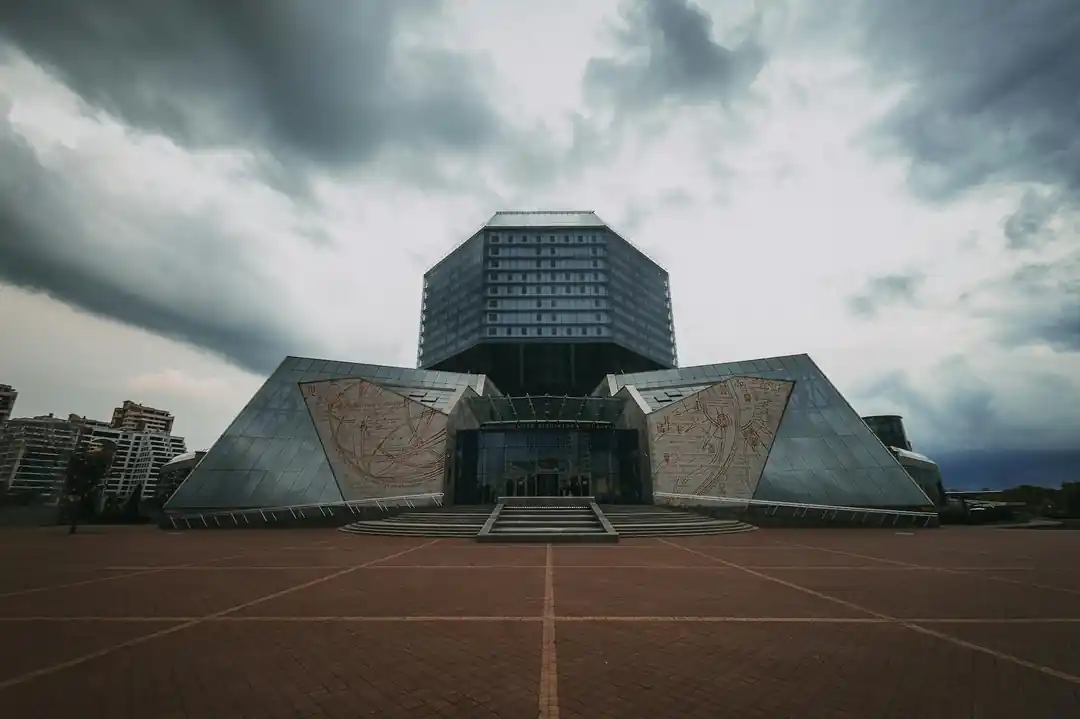
While its design might spark debate, it's undeniably a significant cultural and informational hub, offering panoramic views from its observation deck. It’s a bold statement, a modern counterpoint to the city’s older structures, and a clear indication that Minsk is a city constantly evolving. This blend of the old and the new, the monumental and the intimate, is what makes Minsk such a compelling destination.
From the solemn memorials that honor its wartime sacrifices to the charming, reconstructed streets that whisper tales of centuries past, and the bold modern structures that point towards its future, Minsk offers a truly unique historical journey. It’s a city that has faced immense challenges, yet has consistently risen, rebuilt, and redefined itself, leaving an indelible mark on anyone who takes the time to truly explore its depths.

Thinking of Traveling to Belarus? The U.S. Government Says 'Don't'
Planes, Trains, and the Endless Steppe: The Best Way to Travel Kazakhstan
Related Posts
 TRANSPORT
Beyond the Highway: Finding Canada's Soul on a Western Rail Adventure
Forget road trips. I'm talking about rediscovering the romance of travel on Via Rail's most scenic routes through the heart of the Canadian West. It’s an experience that changes you.
 TRAVEL TIPS
The Unwritten Rules of the North: What to Know Before Camping in Canada
Heading to the Great White North for a camping trip? It's an amazing idea. But from campfire etiquette to wildlife wisdom, here’s what you need to know before you go.

Popular Posts

Rethinking Non-Profit Promotion: Creative Strategies That Actually Drive Event Impact

Beyond Stark White: The Best Interior Paint Colors to Light Up Your New Space

The Simple Pre-Workout Fueling Strategy That Saved My Long Runs