Ever wonder how elite drummers play with such effortless speed and power? The secret might just be the Moeller Method, a technique that transforms your playing from forceful to fluid.
There's a certain kind of magic you see when you watch a truly great drummer. It’s not just about the noise or the complex rhythms; it's the way they move. They have a certain flow, a liquid grace that seems to defy the sheer physicality of the instrument. You see their sticks dancing across the heads and cymbals, a blur of motion that produces everything from thunderous cracks to whispering ghost notes, all without a hint of struggle. If you've ever asked yourself, "How do they make it look so easy?" the answer, more often than not, is the Moeller method.
Honestly, for years I thought that faster, more powerful drumming simply meant more muscle, more tension, and more sweat. I was stuck in a cycle of hitting a speed wall and feeling my forearms burn after just a few minutes of intense playing. It was frustrating. The idea that you could actually play faster by relaxing seemed completely counterintuitive. But diving into the Moeller method was a complete game-changer. It’s less a rigid set of rules and more a philosophy of movement, one that’s rooted in the natural physics of your own body.
This isn't just another technical exercise to add to your practice routine. It's a fundamental shift in your entire approach to the drum kit. It’s about efficiency, endurance, and ultimately, musicality. So, if you're tired of fighting your kit and ready to unlock a new level of freedom in your playing, you've come to the right place. We're going to break down what this legendary technique is, why it’s so effective, and how you can start incorporating it into your own playing today.
What Exactly Is This "Whipping Motion"?
The Moeller method isn't some new-age invention. Its origins trace back to the American Civil War, where a drummer named Sanford A. Moeller observed the old-school military drummers. He was fascinated by how these players could drum for hours on end, producing incredible volume for signals and marches, all without showing signs of fatigue. They weren't muscling through it; they were using a relaxed, fluid technique that looked almost like they were cracking a whip. Moeller dedicated himself to analyzing, understanding, and codifying this approach, eventually publishing his findings in his seminal work, "The Moeller Book."
At its heart, the method is about using gravity and rebound to do most of the work for you. Instead of using a separate muscle movement for every single drum stroke, you use a single, smooth "whipping" motion of your arm to get multiple notes. This primary motion creates a chain reaction, flowing from your shoulder, through your elbow, into your wrist, and finally to your fingers. It’s a holistic movement that conserves an immense amount of energy.
The core idea is to group notes into a single gesture. The main, accented stroke is powered by the arm, but the subsequent, unaccented notes are essentially freebies—they are the result of controlled bounces and smaller wrist or finger motions that happen as the arm returns to its starting position. This is why drummers who have mastered the Moeller technique can play with such blistering speed and endurance; they are physically doing less work to produce more sound. It’s the ultimate drumming life-hack.
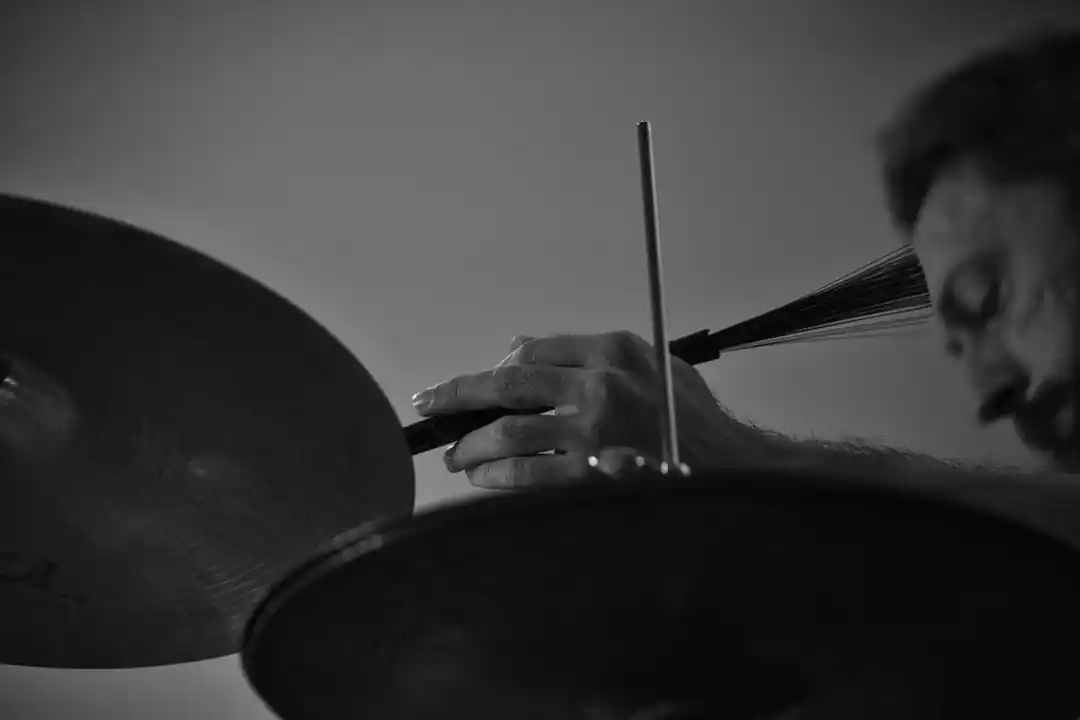
The Building Blocks: Full, Up, and Tap Strokes
To really get the Moeller method, you have to understand its three core components: the Full Stroke, the Up Stroke, and the Tap Stroke. These aren't just different ways to hit the drum; they are interconnected movements in a continuous flow. Thinking of them as separate entities at first is helpful for practice, but the goal is to blend them into one seamless motion.
The Full Stroke is the primary, powerful motion. It’s your main accent. You start with the stick high and use that whipping motion of your arm to bring it down onto the drum. The key is to let gravity do the work and allow the stick to rebound all the way back up to the starting position. It’s a big, open, and relaxed movement. There should be no tension in your arm or wrist as you strike the drum.
Next is the Up Stroke. This is where the efficiency of the Moeller method really shines. The Up Stroke is a quiet, unaccented note that you play as your arm is returning to the high starting position after a stroke. So, you hit the drum on the way down, and you can also get a stroke on the way up. This is achieved with a quick flick of the wrist while the arm is in motion. It feels a bit strange at first, but it’s the key to getting two or more notes out of one primary arm movement.
Finally, there's the Tap Stroke. This is another quiet, unaccented note, but it's played from a low position. After a main stroke, you can let the stick rebound and stay close to the drum head, then use a light tap from the wrist or fingers to produce another note without a full arm motion. When you combine these—a full stroke down, a tap while the stick is low, and an upstroke as the arm comes back up—you get the classic three-note Moeller grouping (often felt as a triplet) from a single, fluid, circular motion.
Getting Started: Your First Moeller Exercises
Ready to give it a try? The best way to start is on a practice pad with a single hand. Forget about speed for now; the only goal is to feel the fluid motion and remain completely relaxed. Speed is a natural byproduct of efficiency, not a goal in itself.
Start by just practicing the main whipping motion without even trying to play multiple notes. Hold the stick loosely. Let your arm hang relaxed at your side, then bring it up as if you're about to ask a question in class, with your elbow bent. Now, lead with your elbow and let your forearm and wrist follow in a smooth, downward wave, like casting a fishing line. Let the stick strike the pad and, most importantly, let it bounce back up freely. Do this over and over until the motion feels natural and completely tension-free. Your wrist should feel like a hinge.
Once you're comfortable with the basic arm motion, you can start to incorporate the other strokes. Try for the classic three-note Moeller lick.
- Start with the stick high.
- Play a Full Stroke, letting the arm's weight do the work. Let the stick rebound, but only halfway up.
- As the stick hangs in the middle, use a quick wrist turn to get a Tap Stroke.
- Immediately after the tap, continue the upward momentum with an Up Stroke (another wrist flick) that brings the stick all the way back to the starting position.
It should feel like a fluid, circular motion: DOWN-tap-up, DOWN-tap-up. Don't worry if it feels clumsy at first. Record yourself on your phone to see what your arm is actually doing. Is it stiff? Is your wrist locked? The visual feedback is incredibly valuable. Practice slowly, then gradually increase the tempo, always backing off if you feel any tension creeping in. This journey is about unlearning bad habits as much as it is about learning new ones, but the payoff in speed, endurance, and control is more than worth the effort.

Winter's Silent Split: How to Protect Your Trees From Frost Cracking
Your First Perfect Batch: A Beginner's Guide to Classic Southern Fried Chicken

Related Posts
 HOBBIES
The Beginner's Guide to Reading the Night Sky: How to Spot Your First Constellations
A friendly, grounded guide to navigating the night sky, understanding stellar movements, and spotting iconic constellations without expensive gear.
 PETS
PETSSniffle-Free Snuggles: America's Most-Loved Hypoallergenic Dogs
Dreaming of a furry friend but dreading the sneezes? You're not alone. Let's dive into the wonderful world of popular hypoallergenic dog breeds in the US.

Popular Posts

Rethinking Non-Profit Promotion: Creative Strategies That Actually Drive Event Impact

Beyond Stark White: The Best Interior Paint Colors to Light Up Your New Space

How to Actually Master a New Language on Your Own (No Magic Gene Required)
