Decoding the Cosmos: A Friendly Guide to the NOAA Space Weather Scale
Ever heard about a 'solar storm' and wondered if you should unplug everything? Let's break down what NOAA's Space Weather Scale actually means for us here on Earth.
Have you ever been scrolling through the news and seen a headline about a "geomagnetic storm" or a "solar flare" and just… kept scrolling? I get it. For a long time, I mentally filed "space weather" under the category of things that were probably important to astronauts and scientists, but not so much to me. It felt distant, abstract, and frankly, a little like science fiction. But the more I looked into it, the more I realized that the sun's activity has a very real, tangible impact on the technology we depend on every single day.
That's where the NOAA Space Weather Scales come in, and honestly, they're a game-changer for understanding what's happening up there. Created by the experts at the National Oceanic and Atmospheric Administration's Space Weather Prediction Center, these scales are designed to do for space weather what the Saffir-Simpson scale does for hurricanes. They take incredibly complex solar events and translate them into a simple 1-to-5 rating of severity, making the information accessible to everyone, from power grid operators to pilots, and yes, even curious people like us.
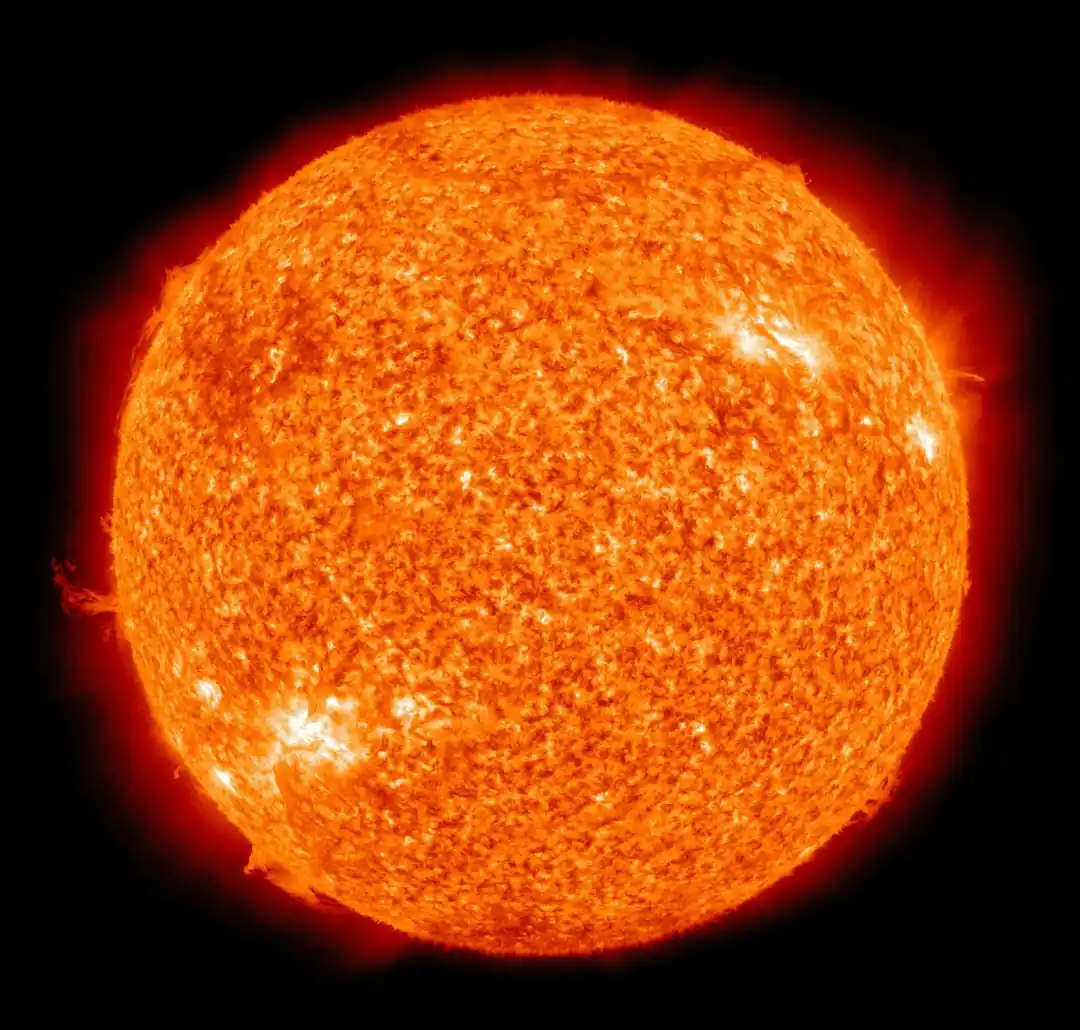
At its heart, space weather refers to the changing conditions in space, primarily driven by the sun. Our sun isn't just a steady, burning ball of light; it's a dynamic star with an 11-year cycle of activity. It constantly sends out a stream of charged particles called the solar wind. Sometimes, it unleashes much more dramatic events, like massive explosions of energy called solar flares or enormous clouds of solar material known as coronal mass ejections (CMEs). When these events are aimed at Earth, they interact with our planet's magnetic field and can cause some serious disruptions.
The Three Flavors of Space Weather: G, S, and R
The first thing to know is that the NOAA scale isn't just one scale; it's three separate ones that measure different types of events: Geomagnetic Storms (G), Solar Radiation Storms (S), and Radio Blackouts (R). Each has its own 1-to-5 scale, from minor to extreme, and each affects our planet in a unique way.
G is for Geomagnetic Storms
This is the one you've most likely heard about, as it's the phenomenon responsible for the beautiful aurora (Northern and Southern Lights). A geomagnetic storm happens when a CME—a massive cloud of plasma and magnetic field—slams into Earth's magnetic field. This collision rattles our magnetosphere, causing it to fluctuate and generating what are known as geomagnetically induced currents (GICs) on the ground.
On the low end, a G1 (Minor) storm might cause weak fluctuations in the power grid and have a minor impact on satellite operations. But the big upside is that this is when the aurora starts becoming visible at higher latitudes, like in the northern US. As you climb the scale to G3 (Strong), you might see intermittent problems with satellite navigation (GPS) and low-frequency radio. At this level, power grid operators may need to take corrective actions. A G5 (Extreme) storm is a much more serious affair. These have the potential to cause widespread voltage control problems, and some grid systems could experience complete collapse or blackouts. It's a stark reminder of how our terrestrial technology is connected to cosmic events.
S is for Solar Radiation Storms
While geomagnetic storms are about the magnetic field, Solar Radiation Storms are about the particles. These events occur when a solar eruption accelerates a flood of energetic particles, mostly protons, toward Earth. These particles can travel at incredible speeds, sometimes reaching us in just a matter of minutes. The S-scale measures the intensity of this particle storm.
The biggest concern here is radiation. For astronauts on a spacewalk, a severe solar radiation storm is a major health risk. It can also affect passengers and crew on commercial airline flights, especially those flying polar routes where Earth's magnetic field offers less protection. At the S1 (Minor) level, the effects are minimal. But at an S5 (Extreme) level, the radiation can cause memory errors in satellites, damage their electronics, and degrade the efficiency of their solar panels. It's a silent threat that can have very expensive consequences for the orbital infrastructure we rely on for everything from weather forecasts to credit card transactions.
R is for Radio Blackouts
Finally, we have the R-scale, which measures radio blackouts caused by solar flares. A solar flare is an intense burst of radiation, and the X-rays it emits travel at the speed of light, reaching Earth in just over eight minutes. When this intense energy hits the sunlit side of our planet, it dramatically disrupts the ionosphere—the upper layer of our atmosphere that high-frequency (HF) radio waves normally bounce off of to travel long distances.
An R1 (Minor) event might cause a brief and minor degradation of HF radio signals. But an R3 (Strong) blackout can cause a complete loss of HF radio contact for about an hour over a large area. This is a huge deal for airlines and ships that use HF radio for communication over oceans and other remote areas. An R5 (Extreme) event means a total HF radio blackout on the entire sunlit side of Earth for several hours. It also affects the low-frequency navigation signals that some marine and aviation systems use, potentially leading to significant positioning errors.
Why Should You Keep an Eye on It?
So, why does this matter to you? Unless you're a pilot or a satellite operator, you might not feel the direct effects of a minor space weather event. But a strong one? That's a different story. A severe geomagnetic storm could potentially disrupt the power grid, and a major radio blackout could impact communications. On a more positive note, knowing a G1 or G2 storm is happening gives you a heads-up that you might be able to see the aurora if you're far enough north and have clear skies!
Understanding these scales gives you a new appreciation for the invisible forces that shape our technological world. It's not about being alarmed; it's about being aware. The sun is a powerful and sometimes volatile neighbor, and knowing its moods is becoming increasingly important. You can follow the latest updates directly on NOAA's Space Weather Prediction Center website, which offers real-time data and forecasts. It’s a fascinating peek into our dynamic connection with the cosmos, a reminder that our world is part of a much larger, interconnected system.

Chasing the Ghostly Light: The Best Aurora Alert Apps for Your Phone
Forecasting Fire: How AI is Becoming Our Early Warning System for Space Weather
Related Posts
 MOBILE
The Great Console Debate: How to Choose the Right Gaming System for Your Family
Feeling stuck between a Switch, a PlayStation, and an Xbox? Let's break down which gaming console is the perfect fit for your family's game nights.
 MOBILE
From Fragile to Formidable: The Surprising Evolution of Foldable Phone Durability
Remember when the idea of folding a smartphone screen in half felt like a disaster waiting to happen? Let's talk about how far they've come, because the story is pretty incredible.

Popular Posts

Rethinking Non-Profit Promotion: Creative Strategies That Actually Drive Event Impact

Beyond Stark White: The Best Interior Paint Colors to Light Up Your New Space

How to Actually Master a New Language on Your Own (No Magic Gene Required)
