San Francisco's architecture is a story of survival and innovation. This is how the city learned to build for the shake, turning devastating earthquakes into catalysts for architectural evolution.
Living in San Francisco is to be keenly aware that the ground beneath your feet is not as solid as it seems. It’s a city built on the edge of a continent, a place of stunning beauty and constant, subtle motion. The same tectonic forces that created the dramatic hills and sweeping bay views are a persistent, latent threat. But this isn't a story of fear. It's a story of resilience, innovation, and how a city, shaken to its core time and again, has learned to build not just for beauty, but for survival.
I’ve always been captivated by the way San Francisco’s buildings tell a story. You can see it in the bones of the city, from the ornate survivors of a bygone era to the sleek, soaring towers of today. This evolution wasn't just a matter of changing styles; it was a hard-won education in engineering and architecture, with each lesson paid for by the violent tremors of the earth. The city's skyline is not just a collection of buildings; it's a timeline of our ever-evolving understanding of how to coexist with earthquakes.
The Great Fire and Shake of 1906: A Brutal Awakening
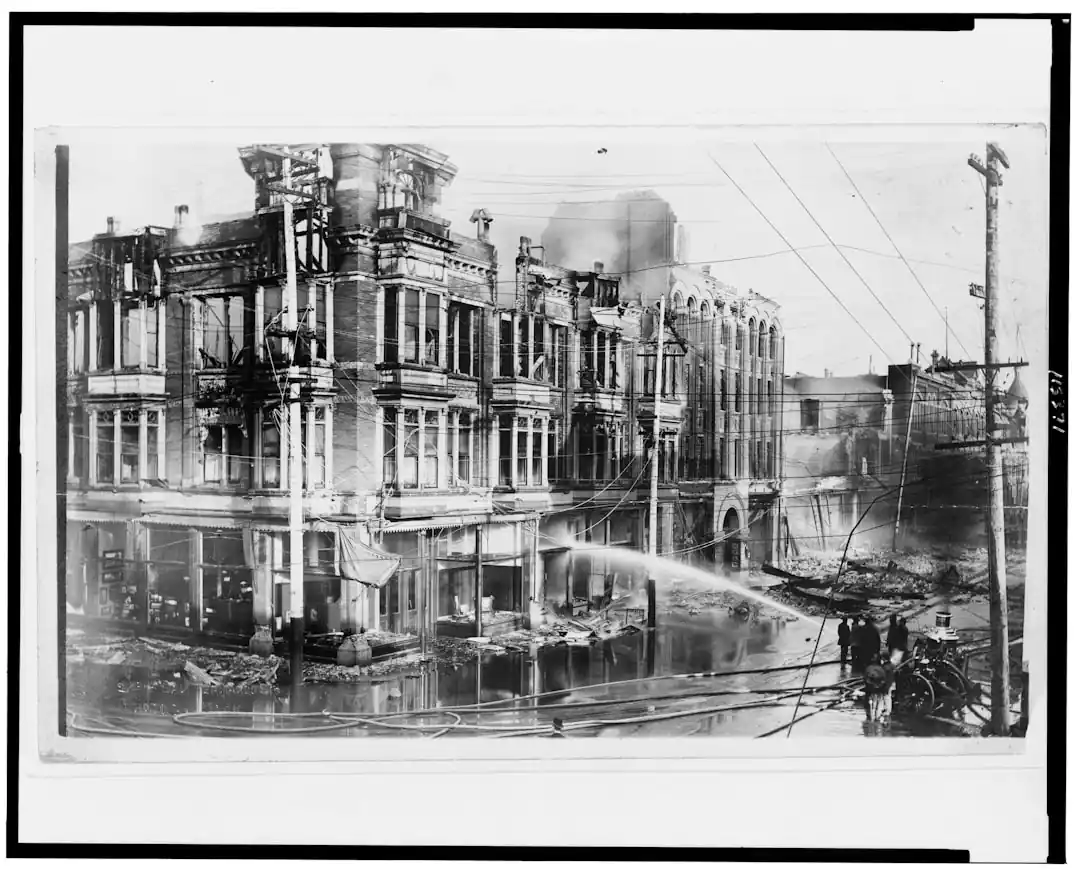
Everything changed on April 18, 1906. At 5:12 AM, a massive earthquake, now estimated to have been a magnitude 7.9, tore through the sleeping city. The shaking lasted for less than a minute, but it was violent enough to topple buildings and rupture gas and water lines across the city. What followed was, in many ways, even more catastrophic: fires broke out and, with firefighters unable to draw water, merged into an inferno that raged for three days. By the time the smoke cleared, over 80% of the city had been destroyed, and hundreds of thousands were left homeless.
In the smoldering ruins, a few truths were laid bare. While the shaking had caused significant damage, it was the subsequent fire that had truly annihilated the city. But engineers and observers also noted something else: buildings of a certain type had fared better than others. Structures with steel frames, though often gutted by fire, had remained standing, while unreinforced masonry buildings had crumbled. It was a brutal, large-scale, real-world experiment.
The 1906 quake was the single most important event in shaping San Francisco's approach to seismic safety. It was the catalyst for the first serious, widespread conversations about earthquake-resistant design in the United States. Though the immediate rebuilding effort was rushed, and many lessons were initially ignored in the haste to recover, the seeds of change had been planted. The disaster gave birth to a new field of study: seismic engineering.
From Theory to Practice: The Rise of Seismic Codes
For decades after 1906, progress was slow. Building codes began to incorporate requirements for structures to resist lateral (sideways) forces, but these were often based on wind-load calculations and didn't fully capture the violent, dynamic nature of an earthquake. It wasn't until the 1933 Long Beach earthquake, which caused catastrophic damage to unreinforced masonry schools, that California passed the Field Act, mandating earthquake-resistant standards for school construction. This was a landmark moment, marking the first time seismic safety was truly enshrined in law.
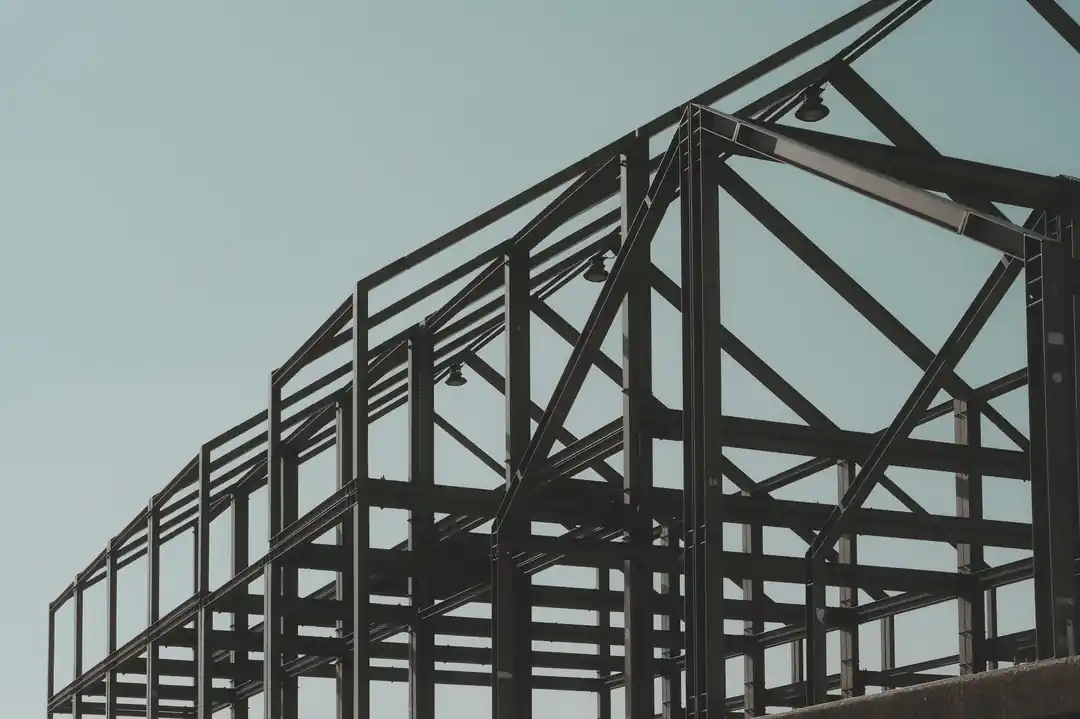
The latter half of the 20th century saw an explosion in our understanding of how buildings behave in an earthquake. Engineers developed new systems to make buildings both stronger and more flexible. The concept of ductility—the ability of a material to deform and absorb energy without fracturing—became central. Steel-frame buildings were designed with moment-resisting frames, which allow the structure to bend and sway, dissipating the energy of an earthquake. Reinforced concrete, when detailed correctly, could also be made ductile.
This period also saw the development of base isolation, a revolutionary technology that essentially decouples a building from the ground. The structure is built on a system of flexible bearings or pads that absorb the earthquake's motion, allowing the ground to move violently underneath while the building itself moves much more gently. San Francisco's City Hall, a grand Beaux-Arts survivor of the 1906 quake, was retrofitted with base isolation in the 1990s, a massive undertaking that now protects the historic landmark.
The Loma Prieta Wake-Up Call and the "Soft-Story" Problem
On October 17, 1989, just as the Bay Area was settling in to watch the World Series, the magnitude 6.9 Loma Prieta earthquake struck. While not as powerful as the 1906 quake, it was centered closer to a major urban area and it exposed a critical, widespread vulnerability in San Francisco's housing stock: the "soft-story" building. These are typically multi-story apartment buildings with large, unreinforced openings on the ground floor for garages or retail space. When the shaking started, the weak ground floors of these buildings collapsed, causing the upper stories to pancake downwards.
The Marina District, built on landfill that amplified the shaking, was hit particularly hard. The images of collapsed apartment buildings, with cars crushed underneath, were a wake-up call. Loma Prieta made it painfully clear that while new, modern high-rises were being built to ever-higher standards, thousands of residents were living in older, vulnerable buildings. The earthquake spurred the city to action, leading to the creation of a mandatory soft-story retrofit program that has since strengthened thousands of these buildings.
The retrofits typically involve adding steel moment frames or new plywood shear walls to the ground floor, providing the lateral resistance that was missing. It's a complex and expensive process, but one that has made a huge portion of the city's housing stock significantly safer. Loma Prieta, like the 1906 quake before it, was another painful but necessary lesson that directly translated into a safer city.
The Resilient City of the Future
Today, San Francisco is a world leader in seismic design and engineering. New skyscrapers, like the Salesforce Tower, are built with performance-based design, a sophisticated approach where engineers use computer models to simulate how the building will perform in a major earthquake, designing it not just to avoid collapse, but to be usable shortly after a major event. These modern towers use a combination of high-strength materials, advanced damping systems that act like giant shock absorbers, and deep foundations drilled into bedrock.
The evolution continues. From the brute force of unreinforced masonry that crumbled in 1906, to the ductile steel frames that bent but didn't break, to the sophisticated, computer-modeled, base-isolated structures of today, San Francisco's architecture tells a story of a city learning to dance with the earth. It's a story of profound loss, but also of incredible ingenuity and an unwavering commitment to building a safer, more resilient future. The next big one is not a question of if, but when. And when it comes, the city will be more ready than it has ever been.

The Unspoken Promise: Your Pet's Earthquake Plan in a High-Rise World
The City on the Fault Line: A Journey Through San Francisco's Earthquake History
Related Posts
 HOBBIES
The Beginner's Guide to Reading the Night Sky: How to Spot Your First Constellations
A friendly, grounded guide to navigating the night sky, understanding stellar movements, and spotting iconic constellations without expensive gear.
 PETS
PETSSniffle-Free Snuggles: America's Most-Loved Hypoallergenic Dogs
Dreaming of a furry friend but dreading the sneezes? You're not alone. Let's dive into the wonderful world of popular hypoallergenic dog breeds in the US.

Popular Posts

Rethinking Non-Profit Promotion: Creative Strategies That Actually Drive Event Impact

Beyond Stark White: The Best Interior Paint Colors to Light Up Your New Space

How to Actually Master a New Language on Your Own (No Magic Gene Required)
