Riding the Market's Tides: How the Economic Cycle Shapes Your Investment Strategy
Ever feel like your investments are on a rollercoaster you can't control? It's not just you. Understanding the economy's natural rhythm can transform how you build your portfolio, turning anxiety into a strategic advantage.
I used to think that investing was all about finding that one magic stock, the diamond in the rough that would make all my financial dreams come true. I’d read articles, watch market news until my eyes glazed over, and still feel like I was just guessing. It was honestly pretty stressful. The real turning point for me wasn't a hot stock tip, but a simple, powerful realization: the economy has a pulse. It breathes in and out in a rhythm known as the economic cycle.
Understanding this cycle has been a complete game-changer. It’s like being given a weather forecast in a world where I was previously just looking out the window and hoping for the best. It doesn’t mean I can predict the future with perfect accuracy—let’s be real, no one can. But it does provide an invaluable framework for making smarter, more informed decisions. It helps me understand why certain parts of my portfolio are doing well while others are struggling, and it gives me the confidence to stick to a plan instead of making emotional decisions when things get choppy.
So, if you've ever felt a little lost at sea with your investments, I get it. Let's walk through this together. We'll break down the four distinct phases of the economic cycle and explore how you can tailor your investment strategy to navigate each one, not just to survive, but to potentially thrive.
The Four Seasons of the Economy
Just like a year has its seasons, the economy moves through a cycle of four distinct phases: expansion, peak, contraction, and trough. Each phase has its own unique characteristics and tells a different story about what's happening with businesses, jobs, and our money. Recognizing which season we're in is the first step to investing with intention.
First up is the expansion. This is the springtime of the economy. Businesses are growing, new jobs are being created, and people are generally feeling optimistic and spending more. Corporate profits are up, and the stock market often reflects this positive sentiment with a healthy upward trend. It’s a period of growth and prosperity, and it can feel like the good times will last forever.
Eventually, this growth reaches its highest point, which we call the peak. Think of this as the height of summer. The economy is running at full capacity, and unemployment is low. However, this is also when things can start to get a little overheated. Inflation—the rate at which prices for goods and services rise—often starts to accelerate. To keep things in check, central banks like the Federal Reserve might start raising interest rates, making it more expensive to borrow money. This is a sign that the season is about to change.
After the peak comes the contraction, or recession. This is the autumn of the cycle. Economic activity slows down, some businesses might struggle, and unemployment unfortunately starts to rise. People become more cautious with their spending, and corporate profits decline. The stock market usually reflects this uncertainty, and it can be a challenging and nerve-wracking time for investors.
Finally, the cycle hits its lowest point, the trough. This is the winter. But just as winter gives way to spring, the trough marks the end of the decline and the beginning of a new recovery. Government and central bank policies enacted during the contraction (like lowering interest rates) start to take effect, and the seeds of the next expansion are sown. It's often in this period of maximum pessimism that the best opportunities are born.
How to Invest in Each Season
So, how do we translate this knowledge into action? The key is to align your investment strategy with the current economic season, favoring assets that tend to perform well in that specific environment.
During an expansion, you want to lean into growth. This is the time to have more exposure to stocks, especially in sectors that thrive when the economy is booming. Technology, consumer discretionary (think cars, vacations, and luxury goods), and industrial companies often do very well. I’ve found that this is when my more growth-oriented funds really shine. Real estate also tends to perform strongly as demand for housing and commercial space increases.
As the economy approaches its peak, a little prudence goes a long way. This isn't necessarily the time to sell everything, but it might be a good moment to start trimming some of the high-flying stocks that have had incredible runs and rebalancing your portfolio. Shifting some assets into more defensive sectors can be a smart move. Think about companies that provide essential goods and services, like healthcare, utilities, and consumer staples (food, soap, etc.). These are businesses that people rely on no matter what the economy is doing.
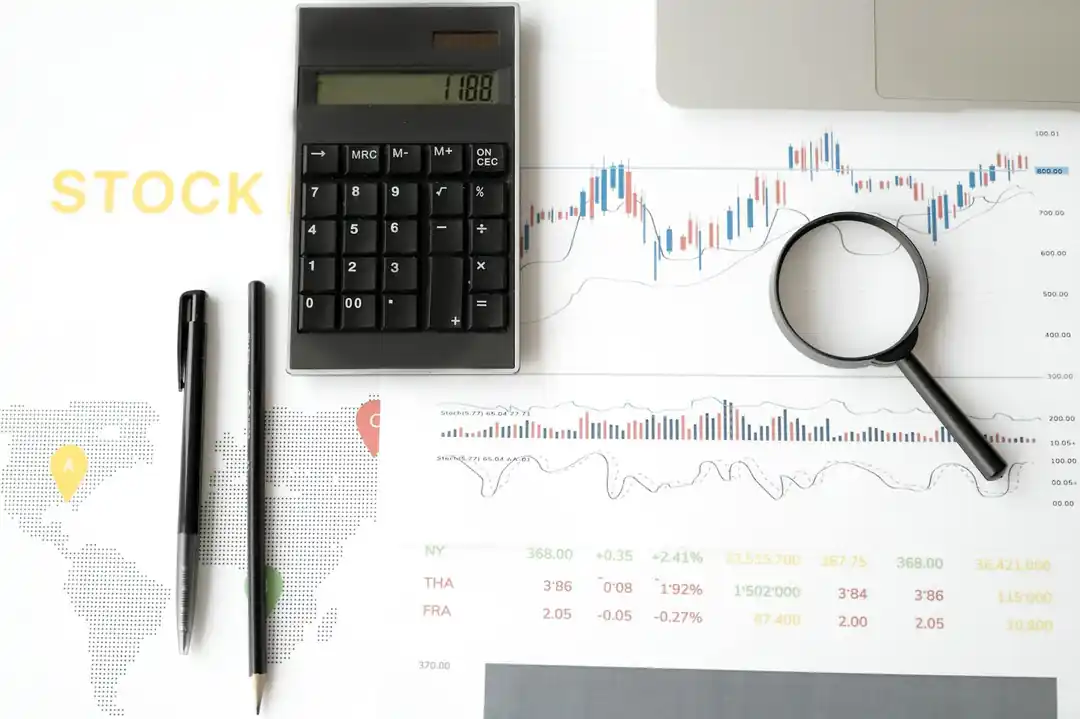
When the contraction phase hits, capital preservation becomes the name of the game. This is when those defensive stocks and high-quality bonds really prove their worth. Bonds, particularly government bonds, are often seen as a safe haven during recessions. As the stock market falls, investors tend to flock to the safety of bonds, which can help cushion your portfolio. It’s also a time when cash is not trash; having some on the sidelines gives you the flexibility to take advantage of opportunities.
And opportunities will arise, especially as we move into the trough. This is when you can be a bit of a contrarian. When fear is at its highest and prices are at their lowest, it can be the best time to start buying quality assets at a discount. This is where having that cash comes in handy. You can begin to slowly rotate back into the growth-oriented sectors that were hit hard during the downturn but are poised to lead the recovery.
The All-Weather Strategy: Stay the Course
Now, trying to perfectly time these shifts is incredibly difficult, and for many people, it's not a realistic goal. A much more accessible and less stressful approach is to build an "all-weather" portfolio through diversification and dollar-cost averaging. This means you're not trying to be a market timer, but a time-in-the-market investor.
By diversifying across different asset classes—stocks, bonds, real estate, and maybe even some commodities—you create a portfolio that has something for every economic season. Some parts will do well when others are struggling, smoothing out your returns over time. Dollar-cost averaging, which simply means investing a fixed amount of money at regular intervals, is another powerful tool. It forces you to buy more shares when prices are low and fewer when they are high, which is exactly what you want to be doing.
Ultimately, understanding the economic cycle isn't about having a crystal ball. It's about having a map and a compass. It empowers you to understand the forces shaping the market, to make strategic adjustments when necessary, and to have the conviction to stay invested for the long term. The tides will ebb and flow, but with a solid plan, you can be confident that you're sailing in the right direction.
The Silent Thief: How Inflation is Quietly Eroding Your Savings
The Unsung Hero: Mastering the Art of Hand Wrapping for Your Boxing Journey

Related Posts
 BUSINESS
Rethinking Non-Profit Promotion: Creative Strategies That Actually Drive Event Impact
Discover modern, research-backed strategies for promoting non-profit fundraisers, from experiential marketing to hyper-local micro-influencers and cross-sector partnerships.
 BUSINESS
Is the TV Ad Dead? A Deep Dive into Cost and Effectiveness in 2024
In an age of streaming and scrolling, is a TV commercial still a smart bet for brands? We're breaking down the real costs and surprising effectiveness of television advertising today.

Popular Posts
Rethinking Non-Profit Promotion: Creative Strategies That Actually Drive Event Impact

Beyond Stark White: The Best Interior Paint Colors to Light Up Your New Space

How to Actually Master a New Language on Your Own (No Magic Gene Required)
