Dreaming of an epic train journey across India but baffled by the booking process? I've been there. Here’s a real-talk guide to navigating the system, from the official IRCTC site to foreigner-friendly alternatives.
There’s a certain magic to train travel in India that you just can’t find anywhere else. It’s more than just getting from point A to point B; it’s a full-blown sensory experience. The rhythmic clatter of the wheels on the track, the constant parade of vendors selling everything from spicy samosas to sweet, milky chai, the kaleidoscope of landscapes unfolding outside your window—it’s the stuff of travel legend. But let’s be honest: for a foreigner, the idea of actually booking a ticket on this vast, chaotic, and wonderful network can be seriously intimidating.
I remember my first attempt. I felt like I’d been thrown into the deep end of a bureaucratic ocean with no life raft. The official websites seemed confusing, the payment options were a puzzle, and the different class types felt like a secret code. It’s a common story. Many travelers from the US and Europe get so overwhelmed that they give up on the dream of an authentic rail journey. But I’m here to tell you that it is absolutely possible, and with the right strategy, it’s not nearly as hard as it looks.
You don’t have to default to expensive private cars or domestic flights. You can, and should, experience the joy of an Indian train ride. This guide is the friend I wish I’d had—a straightforward, no-nonsense breakdown of exactly how to secure your seat and start the adventure of a lifetime.
The Great Divide: IRCTC vs. Third-Party Agents
When it comes to booking Indian train tickets online, you have two main paths: going direct through the official source, the Indian Railway Catering and Tourism Corporation (IRCTC), or using a third-party agent. Each has its distinct pros and cons, and the right choice for you really depends on your patience, budget, and tech-savviness.
The IRCTC website is the government-run mothership of all train bookings. The biggest advantage here is that you are getting the ticket directly from the source, which means no markups or commission fees. It gives you access to every single train, every class, and every quota, including the all-important Foreign Tourist Quota. However, its reputation for being difficult to navigate is well-earned. The registration process for foreigners requires an international mobile number, a small fee (around ₹100 + tax), and a verification process that can sometimes feel like a trial by fire. Many users report issues with receiving the OTP (One-Time Password) needed to activate their account.
This is where third-party agents like 12Go.asia, MakeMyTrip, or even local travel agencies come in. These platforms are built with a Western user experience in mind. Their interfaces are clean, the process is intuitive, and they accept international credit cards and PayPal without a fuss. The trade-off? You'll pay a commission for this convenience. A ticket might be a few dollars more expensive than on the IRCTC site. For many, this small premium is well worth avoiding the potential frustration of the official portal. Think of it as paying a small service fee for a much smoother ride.
Your Step-by-Step Guide to Booking
Ready to dive in? Let’s break down the process. My recommendation for most first-time travelers to India is to start with a user-friendly third-party agent. It simplifies things immensely. However, if you're a DIY enthusiast or planning extensive travel, setting up an IRCTC account is a worthy investment of your time.
Method 1: Using a Third-Party Agent (The Easier Way)
- Choose Your Platform: Head to a site like 12Go.asia. It's one of the most popular and trusted options for foreigners.
- Search Your Route: Enter your departure city, arrival city, and travel date. Use station codes if you know them (e.g., NDLS for New Delhi, BCT for Mumbai Central), but the city name usually works fine.
- Select Your Train and Class: You’ll see a list of available trains. This is where you choose your travel class. For overnight journeys, AC 2-Tier (2A) or AC 3-Tier (3A) offer a great balance of comfort and value. For daytime travel, an AC Chair Car (CC) is perfect.
- Enter Passenger Details: Fill in your name exactly as it appears on your passport, your age, and your nationality.
- Pay: Complete the payment using your international credit card or PayPal. The platform will then book the ticket on your behalf with IRCTC.
- Wait for Confirmation: This is key. Your booking isn't instant. The agent has to process it. You'll receive a confirmation email with your e-ticket, usually within a few hours. This e-ticket will have your coach and seat/berth number.
Method 2: Registering on IRCTC (The Cheaper, More Complex Way)
- Start Registration: Go to the official IRCTC website and find the "Register" link.
- Fill Out the Form: Enter your details. Crucially, for the mobile number, select your country and enter your international number. There is a registration fee of ₹100 + GST for international users.
- Verify Email and Mobile: You will receive OTPs to both your email and your mobile phone. You must enter both to activate your account. This is where many people get stuck if the mobile OTP doesn't arrive.
- Log In and Book: Once your account is active, you can search for trains, select your class, and book. You'll need to use one of their designated international payment gateways.
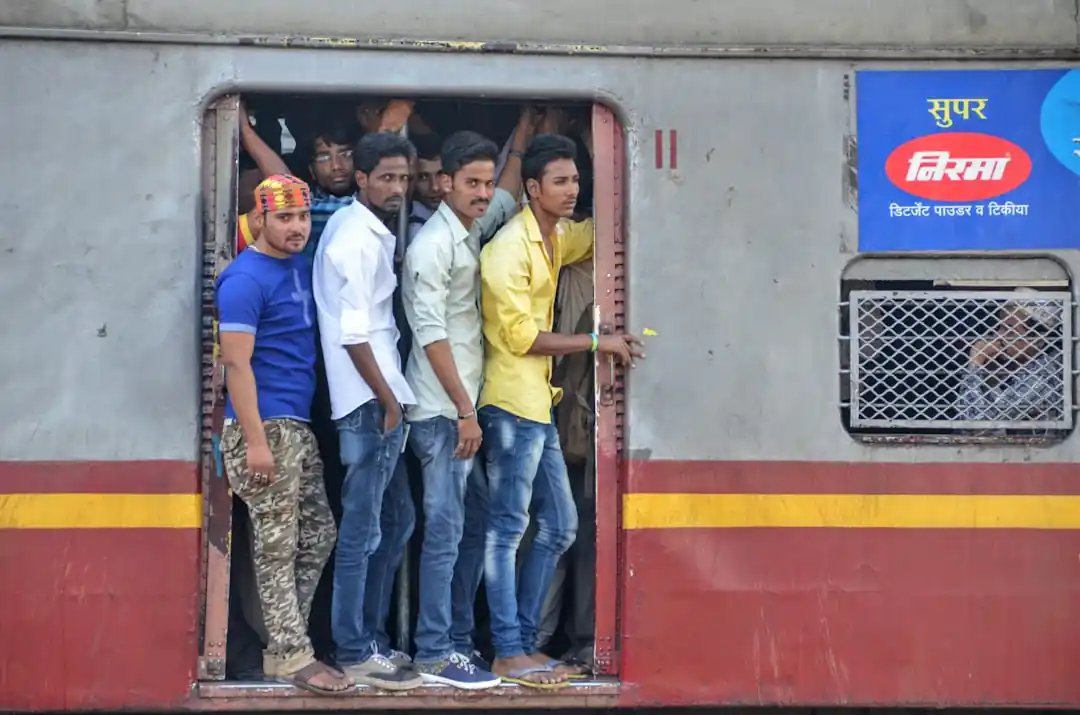
Understanding Classes, Quotas, and Waitlists
Navigating the terminology is half the battle. Let's demystify it. Indian Railways is a world unto itself, with a vocabulary to match. Understanding these key terms will make your booking process infinitely smoother.
Train Classes:
- AC First Class (1A): The most premium class. Lockable, private compartments with two or four berths. Bedding is included. It's comfortable but available on only the most popular routes.
- AC 2-Tier (2A): Open-plan carriages with bays of four berths and two berths along the side. Each berth has a curtain for privacy. Bedding is included. This is often the sweet spot for comfort and price for foreign travelers.
- AC 3-Tier (3A): Similar to 2A, but with six berths in the main bays instead of four. It's a bit more crowded but still comfortable and air-conditioned. Bedding is included.
- Sleeper Class (SL): The quintessential Indian train experience. Non-air-conditioned, with open windows and a lot of hustle and bustle. It's incredibly cheap and a true cultural immersion, but can be intense for first-timers on a long journey.
- AC Chair Car (CC) & Second Sitting (2S): These are for shorter, daytime journeys. CC is air-conditioned with comfortable reclining seats, while 2S is the basic, non-AC version.
Quotas and Waitlists:
- Foreign Tourist Quota (FTQ): A lifesaver! This is a small number of seats reserved specifically for foreign passport holders on many popular trains. You can book these up to 365 days in advance. While slightly more expensive, it's an excellent way to secure a confirmed seat when general tickets are sold out. You must provide your passport number when booking.
- Waitlist (WL): If a train is "full," you can still book a waitlisted ticket. This means you'll only get a seat if enough people with confirmed tickets cancel. Your ticket will have a number, like WL 15. If 15 people cancel, you get a seat. It's a gamble.
- Reservation Against Cancellation (RAC): This is better than a waitlist. It guarantees you a seat on the train, but you may have to share a side-lower berth with another RAC passenger initially. You'll often get upgraded to your own berth as the journey begins.
Booking a train ticket in India is a rite of passage for any traveler. It may seem like a daunting task, but it's a skill that unlocks the entire country. It allows you to travel affordably, see the incredible diversity of the Indian landscape, and connect with the heart and soul of the nation. Don't let the initial complexity deter you. Embrace the challenge, book that ticket, and prepare for an adventure you will never forget. The rhythm of the rails is calling.
The Ultimate Guide to Conquering India's Auto-Rickshaws
Your Ultimate Two-Week India Packing Guide: A US Traveler's Handbook

Related Posts
 TRANSPORT
Beyond the Highway: Finding Canada's Soul on a Western Rail Adventure
Forget road trips. I'm talking about rediscovering the romance of travel on Via Rail's most scenic routes through the heart of the Canadian West. It’s an experience that changes you.
 TRAVEL TIPS
The Unwritten Rules of the North: What to Know Before Camping in Canada
Heading to the Great White North for a camping trip? It's an amazing idea. But from campfire etiquette to wildlife wisdom, here’s what you need to know before you go.

Popular Posts

Rethinking Non-Profit Promotion: Creative Strategies That Actually Drive Event Impact

How to Actually Master a New Language on Your Own (No Magic Gene Required)

The Simple Pre-Workout Fueling Strategy That Saved My Long Runs