Leaving the car behind? From the Copenhagen Metro to cross-country trains, here’s everything a US traveler needs to know about navigating Denmark's world-class public transport system.
Let’s be honest. For many of us visiting from the United States, the idea of relying solely on public transportation can feel a little daunting. We’re used to our cars, to the freedom of the open road, and the (relative) predictability of our own driving. But when you land in Denmark, you quickly realize you’ve entered a different world—one where public transport isn't just a backup plan; it's a way of life. It’s clean, it’s punctual, and it’s so brilliantly interconnected that renting a car for a city-based trip often feels more like a burden than a blessing.
I remember my first time standing in Copenhagen’s Central Station, looking at the departure boards. It felt like the entire country was accessible from that single point. There was a palpable sense of calm and order that stood in stark contrast to the chaotic hustle I associated with major transport hubs back home. It took a day or two to get the hang of it, but once I did, a new kind of freedom emerged. It was the freedom to look out the window at the passing scenery instead of staring at GPS, the freedom to hop off in a charming town on a whim, and the freedom from the endless search for parking.
This guide is for you—the American traveler who is ready to embrace a new way of getting around. We'll break down the ticket systems that seem confusing at first, introduce you to the apps that will become your best friends, and share the little bits of etiquette that will make you feel less like a tourist and more like a local. Trust me, navigating Denmark via its public transport is an experience in itself, and one that will make you appreciate the thoughtful design and community trust that defines this incredible country.
Your Ticket to Ride: Understanding the Danish System
First things first, let's talk tickets. The Danish system is built on a foundation of zones and trust. Unlike the simple "pay-per-ride" metro card swipes in some US cities, Denmark’s system is more comprehensive. The country, especially the greater Copenhagen area, is divided into zones, and your fare is calculated based on how many zones you travel through. It sounds complicated, but in practice, it’s made simple by a few key tools.
The most common tool for locals is the Rejsekort, a blue plastic card you tap on a reader to "check in" at the start of your journey and "check out" at the end. As a tourist, you can get a "Rejsekort Anonymt." You buy the card for a one-time fee (around 80 DKK, or about $12) and load it with money. The system automatically calculates the cheapest fare, and even gives you off-peak discounts. The golden rule? Always remember to check out. Forgetting to tap your card at the end of your trip can lead to a hefty penalty, as the system doesn't know where you stopped.
For shorter stays or for those who prefer a purely digital solution, the DOT (Din Offentlige Transport) Tickets app is your go-to. You can buy single-journey tickets, multi-ride "Klippekort" (which are being phased out but still exist in digital form), and City Passes directly on your phone. A City Pass is a fantastic option for tourists, offering unlimited travel in specific zones (for example, zones 1-4 for central Copenhagen, including the airport) for 24, 48, 72 hours or more. It takes the guesswork out of travel and is perfect for a weekend of intense sightseeing.
Finally, if you're planning to be a super-tourist, the Copenhagen Card is your golden ticket. It combines unlimited public transport across the entire capital region with free entry to over 80 museums and attractions. Do the math: if you plan on hitting Tivoli Gardens, a canal tour, and a castle or two, this card often pays for itself very quickly. It simplifies your trip by bundling everything into one price, making it a truly hassle-free option.
The Holy Trinity of Transport: Metro, S-Tog, and Bus
Denmark’s public transport network is a three-pronged marvel, especially in Copenhagen. Each system has its own role, but they are woven together so seamlessly that transferring between them is a breeze. Your journey planner app, Rejseplanen (more on that later), will be your bible, telling you exactly which combination of train, bus, or metro to take.
The Copenhagen Metro (M) is a masterpiece of Scandinavian design and efficiency. These driverless trains run 24/7, and during peak hours, you'll rarely wait more than two to four minutes. The lines are color-coded (M1, M2, M3, M4) and are brilliant for getting across the city center quickly, connecting to the airport, or reaching neighborhoods like Nørrebro and Vesterbro. The M3 line, known as the City Circle Line, is particularly useful for tourists as it connects 17 stations around the heart of the city.
Next are the S-Tog (S-trains), which are the backbone of Copenhagen's regional transit. These red trains connect the city center with the suburbs and surrounding areas. They run on their own tracks and are perfect for day trips to places like Klampenborg (for the Dyrehaven deer park) or Hillerød (for Frederiksborg Castle). They are fast, frequent, and offer a comfortable way to see the landscape just outside the city.
Finally, the iconic yellow City Buses (Moviatrafik) fill in all the gaps. They are everywhere and can get you to the most specific of destinations. The 'A' buses (like 1A, 2A) are the main arteries, running frequently through the city center, while other numbers serve more local routes. Don't forget about the Harbour Buses—yellow ferries that are part of the public transport network. Taking a trip on one of these is like getting a mini canal tour for the price of a bus ticket!
Beyond the Capital: Exploring Denmark with DSB
While Copenhagen's local transport is incredible, don't be afraid to venture further. Denmark is a relatively small country, and its national rail service, DSB (Danske Statsbaner), makes it incredibly easy to explore. You can get from Copenhagen to Aarhus, Denmark's second-largest city, in about three hours, or to Odense, the fairytale home of Hans Christian Andersen, in under two.
The intercity trains are modern, comfortable, and almost always equipped with Wi-Fi, power outlets, and quiet zones. The "quiet zone" (look for the "stillezone" signs) is a godsend for anyone wanting to read, work, or just enjoy the journey in peace. Remember to put your phone on silent and keep conversations to a whisper. It's an unspoken rule that is very much respected.
For the best prices on DSB trains, try to book in advance online. Look for "Orange" tickets. These are discounted, non-flexible tickets that can save you a significant amount of money, especially on longer journeys. They are released a couple of months in advance and are perfect if your travel dates are fixed. It's the Danish equivalent of booking a flight on a budget airline, but with far more legroom and better scenery.
Essential Etiquette and Final Tips
Using Danish public transport is a smooth experience, partly because everyone follows a few simple, unspoken rules. First, queuing is an orderly affair. People wait for others to get off the train or bus before they board. There's no pushing or shoving; just a calm, respectful flow.
Second, bikes are a huge part of Danish life, and they are integrated into the transport system. You can take your bike on S-trains and the metro, but look for the designated bike carriages, usually marked with a large bicycle symbol on the doors. There are specific times when you can't take bikes on trains during rush hour, so always check the rules for your specific journey.
Finally, and most importantly, download the Rejseplanen app. I cannot stress this enough. It is the single most useful tool for navigating Denmark. It plans your journey across all forms of transport, gives you real-time updates on delays, and shows you the price of your ticket. It’s intuitive, reliable, and will make you feel like you've lived there for years.
So, embrace the journey. Let the rhythm of the trains and buses guide your adventure. You'll find that in Denmark, the public transport system isn't just about getting from one place to another—it's a reflection of a society that values efficiency, trust, and a shared sense of community. And participating in that, even for a short while, is a beautiful part of the travel experience.
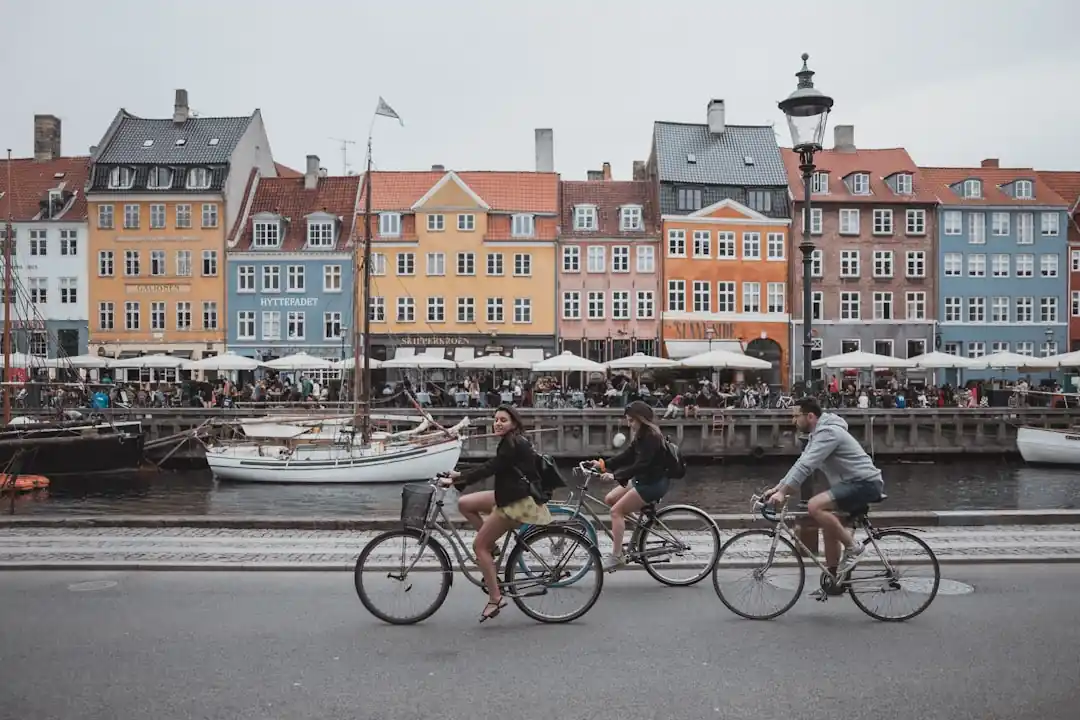
Copenhagen on Two Wheels: A Guide to Renting a Bike and Feeling Like a Local
Beyond Hygge: A Guide to Danish Etiquette for American Visitors

Related Posts
 TRANSPORT
Beyond the Highway: Finding Canada's Soul on a Western Rail Adventure
Forget road trips. I'm talking about rediscovering the romance of travel on Via Rail's most scenic routes through the heart of the Canadian West. It’s an experience that changes you.
 TRAVEL TIPS
The Unwritten Rules of the North: What to Know Before Camping in Canada
Heading to the Great White North for a camping trip? It's an amazing idea. But from campfire etiquette to wildlife wisdom, here’s what you need to know before you go.

Popular Posts

Rethinking Non-Profit Promotion: Creative Strategies That Actually Drive Event Impact

How to Actually Master a New Language on Your Own (No Magic Gene Required)

The Simple Pre-Workout Fueling Strategy That Saved My Long Runs