Can low-end smartphones handle Meta's new Muse Wonder AI features natively?
An analysis of Meta's Muse Wonder AI models, their cloud-dependent architecture, and whether low-end smartphones can run these features natively.
Understanding Meta's Muse Wonder AI architecture
$4
Cost per 1M input tokens
$20
Cost per 1M output tokens
Source: Meta Model API
Meta’s introduction of the Muse Wonder and Muse Wonder Full models follows extensive restructuring under Meta Superintelligence Labs. These models are designed to compete with high-end offerings from rivals like Anthropic and OpenAI, handling complex reasoning, coding, and multi-step agentic tasks. However, the scale and computational intensity of these models require immense infrastructure to operate. Meta trained these systems at its Prometheus data center in Ohio, using pretraining and reinforcement learning techniques that far exceed the computing capacity of any consumer electronic device.
The architecture of Muse Wonder includes Active Memory and Active Focus, which allow the AI to track contexts over weeks and navigate roadblocks during complex workflows. Because these systems parse extensive legal documents, analyze intricate financial data, and manage professional operations, their parameter counts and memory overhead are exceptionally high. Operating models of this caliber requires server-side architecture, massive throughput, and specialized data processing pipelines that exceed the local hardware found in typical mobile devices, especially entry-level hardware.
Rather than deploying these frontier models directly onto local silicon, Meta distributes them through cloud-based channels. Developers access Muse Wonder through Meta’s Model API—priced at $4 per million input tokens and $20 per million output tokens—while everyday users interact with the technology via subscription tiers inside Meta’s Muse agent applications. This design ensures that the heavy computational lifting happens on Meta's remote servers, bypassing the hardware limitations of resource-constrained consumer electronics.
Hardware constraints of low-end smartphones
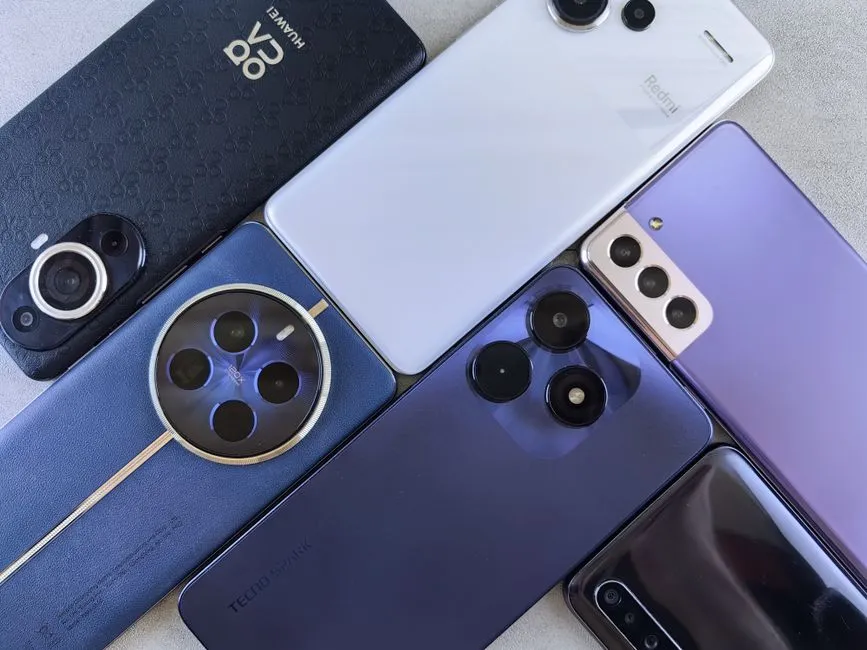
Low-end smartphones are engineered for cost-efficiency and low power consumption, resulting in modest hardware configurations. Entry-level processors typically have limited CPU core counts, restricted GPU performance, and lack the dedicated, high-performance Neural Processing Units (NPUs) needed for heavy machine learning workloads. While the industry is moving toward on-device AI to improve speed and privacy, running a frontier-class AI model locally requires vast amounts of fast memory and high-bandwidth processing units for real-time token generation and vector storage. Budget smartphones generally ship with 3GB to 6GB of RAM, much of which is occupied by the mobile operating system and background processes.
Furthermore, running large language models natively on a mobile device requires substantial storage space and memory bandwidth to load model weights. Muse Wonder and Muse Wonder Full are enterprise-grade models that require data center resources, making it impossible to store their full parameter sets within the internal flash storage of a budget phone. Even smaller open-weight models from Meta, such as the Llama series, often require optimized quantization and high-end mobile chips to run acceptably. Low-end hardware lacks the thermal management, battery capacity, and silicon horsepower to execute complex reasoning tasks locally without severe performance throttling.
Local execution of advanced AI features also drains battery life at an unsustainable rate for budget devices. Low-end smartphones generally use smaller batteries and less efficient power-management circuits. If a budget device attempted to execute complex agentic loops involving Active Memory retrieval and Active Focus error recovery natively, the processor would draw maximum current, causing rapid thermal buildup and immediate battery depletion. Consequently, manufacturers design entry-level devices to offload demanding tasks to remote servers.
Cloud-based execution vs. native processing for Muse app integration

Meta’s deployment strategy for the Muse consumer application confirms that advanced features rely on remote cloud infrastructure. When users interact with the Muse app to manage schedules, parse documents, or execute multi-step tasks, the smartphone acts as a lightweight client interface. User inputs and requests are transmitted over the internet to Meta's data centers, where the Muse Wonder models process the information and return the output to the mobile screen.
This cloud-dependent approach allows users with a wide variety of devices—including budget smartphones—to use sophisticated AI capabilities without expensive flagship hardware. As long as a low-end smartphone has a stable internet connection and can run the client application, it can interface with Muse Wonder. The computational burden of managing Active Memory and utilizing Active Focus to resolve errors is handled entirely server-side by Meta's infrastructure.
Ultimately, low-end smartphones cannot handle Meta's Muse Wonder AI features natively, but they do not need to. By using cloud APIs and application-layer integration, Meta ensures that advanced agentic capabilities are accessible regardless of local hardware. While users on budget devices miss out on offline AI processing, they can still use the full reasoning power of Meta's frontier models remotely, provided they have a data connection and the appropriate subscription.
References
Alternatives to paid Meta AI models for budget-conscious developers
Is Meta Muse Wonder AI worth the subscription cost for casual users?
Related Posts
 TECH
TECHPractical coding examples for integrating autonomous AI into web applications
A comprehensive guide on integrating autonomous AI agents and dynamic code execution into modern web applications using JavaScript, LangGraph, and secure cloud environments.
TECHHardware specs and accessibility features for mobile AI agent users
A detailed breakdown of the essential smartphone hardware specifications, accessibility tools, and NPU configurations required to effectively run and manage mobile AI agents.