Beyond the Red Square: Russia's Most Beautiful & Historic Cities
Thinking of Russia, Moscow and St. Petersburg might come to mind, but there's a whole world of architectural beauty and deep history waiting to be discovered. Let's explore it together.
When you picture Russia, what’s the first thing that comes to mind? For many of us in the US, it’s probably the imposing walls of the Kremlin or the candy-colored domes of St. Basil's Cathedral, images that have been seared into our collective imagination. And while Moscow is undeniably epic, to see Russia as just one city is like looking at a single star and thinking you’ve seen the entire galaxy. The sheer scale of the country is almost impossible to wrap your head around, and within its vast borders lie cities that are just brimming with a beauty and history so deep it feels almost tangible.
I’ll be honest, for a long time, my own understanding was shaped by Cold War movies and news headlines. But a few years ago, I started falling down a rabbit hole of Russian history and architecture, and what I found was a revelation. It’s a land of dramatic contrasts—of opulent imperial palaces that rival anything in Western Europe, ancient onion-domed monasteries that feel straight out of a fairytale, and vibrant cities where Eastern and Western cultures have mingled for centuries. It’s a story written in stone, brick, and gold leaf.
So, I wanted to take you on a little virtual journey beyond the usual suspects. We’ll wander through the grand avenues of an imperial capital, explore the spiritual heartland of ancient Rus', and discover a city where mosques and cathedrals share the same skyline. This is a look at the Russia that captivates the soul.
St. Petersburg: The Window to the West
There’s a reason St. Petersburg is often the first stop for travelers. It doesn’t just feel like a city; it feels like a declaration. Built from nothing out of a swampy river delta by Peter the Great, it was his ambitious vision of a modern, European-style capital that could rival the great cities of the West. And honestly? He succeeded. The entire city feels meticulously planned, with grand, arrow-straight boulevards, a web of canals that have earned it the nickname "Venice of the North," and a stunning architectural unity that is breathtaking to behold.
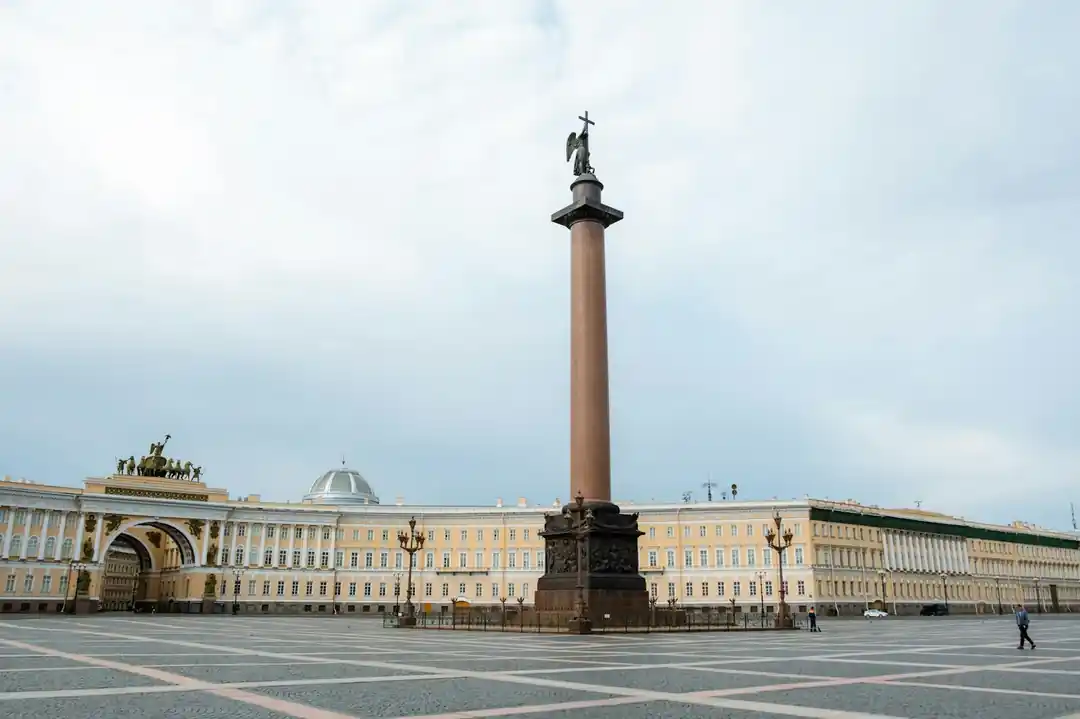
The heart of the city is the Palace Square, a space so vast and monumental it almost makes you feel small. On one side, you have the iconic Winter Palace, a sprawling, mint-green masterpiece of Baroque architecture that now houses the world-renowned Hermitage Museum. You could spend weeks inside and still not see all of its treasures. On the other side, the General Staff Building curves around in a perfect, triumphant arc. It’s a space that was designed to inspire awe, and it absolutely does.
But the magic of St. Petersburg is also in the smaller moments. It’s crossing one of the 342 bridges at twilight as the palace lights begin to glitter on the water, or stumbling upon a quiet courtyard tucked away from the crowds. It’s visiting the Church of the Savior on Spilled Blood, a jaw-droppingly intricate example of classic Russian architecture that stands in stark contrast to the city’s otherwise neoclassical feel. It’s a city of art, revolution, and romance, and its beauty is as profound as its history.
Moscow: The Ancient, Beating Heart
If St. Petersburg is Russia’s elegant, composed face, Moscow is its passionate, chaotic, and utterly captivating soul. This is a city that wears its history on its sleeve—all 800-plus years of it. It’s a sprawling megalopolis where medieval fortresses stand in the shadow of Soviet-era skyscrapers and gleaming, modern business centers. It’s less of a planned masterpiece and more of a living organism, constantly growing and changing, but always anchored to its ancient core.
That core, of course, is the Kremlin and Red Square. Stepping into the square for the first time is a moment you’ll never forget. The sheer scale of it, the history soaked into the cobblestones—it’s electric. You’re surrounded by icons: the imposing red walls of the Kremlin itself, the surprisingly beautiful GUM department store that looks more like a palace, and, at the far end, the whimsical, flame-like domes of St. Basil’s Cathedral. It’s a building that makes no logical sense, and that’s precisely why it’s so perfect.
But to truly understand Moscow, you have to explore beyond the square. Dive into the metro system, where the stations themselves are underground palaces of marble, mosaics, and chandeliers. Wander through the Novodevichy Convent, a 16th-century fortress-monastery with stunning white walls and golden domes, which feels like a peaceful oasis in the middle of the bustling city. Moscow is a city of power, art, and resilience, a place that has been burned to the ground and rebuilt, and its beauty lies in that unyielding spirit.
Kazan: Where Cultures Converge
Here’s a city you might not have on your radar, but you absolutely should. Kazan is the capital of the Republic of Tatarstan, and it’s a place where Europe and Asia don’t just meet—they embrace. For over a thousand years, this has been a melting pot of Slavic and Turkic cultures, a place where Orthodox Christianity and Islam have coexisted for centuries. This unique blend is reflected everywhere, from the food to the language, and most spectacularly, in the architecture.
The centerpiece of the city is the Kazan Kremlin, a UNESCO World Heritage site that is a testament to this cultural harmony. Within its ancient white walls, you’ll find the stunning, blue-and-gold-domed Annunciation Cathedral, a classic example of 16th-century Russian church architecture. And standing right next to it, in beautiful contrast, is the magnificent Kul Sharif Mosque.
The mosque is a modern reconstruction of one that was destroyed by Ivan the Terrible in the 16th century, and it is a breathtaking sight. With its soaring minarets and massive turquoise dome, it looks like something out of a storybook. The fact that these two powerful symbols of different faiths can stand side-by-side in peace and mutual respect is what makes Kazan so special. It’s a city that offers a different narrative of Russia, one of diversity and synthesis, and its beauty is a powerful symbol of hope.
There are so many other corners of Russia to explore—the tranquil, ancient monastery towns of the Golden Ring, the rugged beauty of Siberia, the unique port city of Vladivostok. Each one adds another layer to the story of this vast and complex nation. It’s a country that challenges your perceptions and rewards you with a depth of beauty and history that stays with you long after you’ve left. I hope you get to see it for yourself one day.

Unlocking Affordability: Your Ultimate Guide to Budget Travel in the USA
Your Small Bedroom Is Secretly a Palace: Here's How to Unlock Its Space

Related Posts
 TRANSPORT
Beyond the Highway: Finding Canada's Soul on a Western Rail Adventure
Forget road trips. I'm talking about rediscovering the romance of travel on Via Rail's most scenic routes through the heart of the Canadian West. It’s an experience that changes you.
 TRAVEL TIPS
The Unwritten Rules of the North: What to Know Before Camping in Canada
Heading to the Great White North for a camping trip? It's an amazing idea. But from campfire etiquette to wildlife wisdom, here’s what you need to know before you go.

Popular Posts

Rethinking Non-Profit Promotion: Creative Strategies That Actually Drive Event Impact

Beyond Stark White: The Best Interior Paint Colors to Light Up Your New Space

How to Actually Master a New Language on Your Own (No Magic Gene Required)
