Beyond the Beach: A US Traveler’s Guide to Barcelona’s Must-See Historical Sites
Thinking of Barcelona? Look beyond the tapas and beaches. Let's wander through ancient Roman streets and medieval alleys to uncover the city's deep, captivating history.
Barcelona. For most of us in the States, the name immediately brings to mind visions of sun-drenched Mediterranean beaches, Gaudí's whimsical architecture, and the endless buzz of tapas bars. And don't get me wrong, the city delivers on all of that spectacularly. But on my last visit, I made a conscious choice to dig a little deeper, to peel back the vibrant, modern layers and touch the ancient stones that form the city's foundation. What I found was a story far richer and more compelling than I ever imagined.
Honestly, it’s easy to just skim the surface in a place so full of life. But slowing down and intentionally seeking out its historical heart completely changed my perspective. This isn't just a city; it's a living timeline. You can stand on a street corner and be within sight of 2,000-year-old Roman walls, a 700-year-old Gothic cathedral, and a 100-year-old Art Nouveau masterpiece. It’s this incredible density of history, the feeling of walking through centuries in a single afternoon, that truly makes Barcelona unforgettable.
Getting Lost in the Gothic Quarter (Barri Gòtic)
If there's one place to begin your historical journey, it's the Barri Gòtic. This is the absolute heart of Old Barcelona. Stepping into its labyrinth of narrow, winding streets feels like you’ve been transported to another era. It’s a place where the sounds of the modern city fade, replaced by the echo of your own footsteps on ancient cobblestones. The quarter is built on top of the original Roman settlement of Barcino, and you can still find remnants of that ancient past if you know where to look. I stumbled upon the towering columns of the Temple of Augustus, hidden away in a small medieval courtyard, and was just floored. It’s a powerful, humbling experience to stand before something that has witnessed two millennia of human history.
The neighborhood's name, of course, comes from the medieval period when Barcelona was a major maritime power. The magnificent Barcelona Cathedral is the crown jewel here. It’s a breathtaking example of Catalan Gothic architecture that took nearly 150 years to complete. I spent a good hour just admiring its intricate facade and another exploring the serene cloister inside, which is famously home to 13 white geese. The legend says they represent the age of Saint Eulalia, the city's co-patron saint, at the time of her martyrdom. It’s these little details, these threads of folklore woven into the stone, that make the history feel so alive.
But the real joy of the Gothic Quarter is simply allowing yourself to get lost. Don't worry about a map. Just wander. Every turn reveals a new hidden plaza, a tiny artisan shop, or a centuries-old fountain. You'll pass under the famous Bishop's Bridge (Pont del Bisbe), a relatively modern neo-Gothic addition that has nonetheless become an iconic symbol of the area. It’s in these quiet, aimless moments, far from the crowds of La Rambla, that you can almost hear the whispers of the past and feel the true soul of the city.
Gaudí's Unfinished Dream: The Sagrada Família
You can't talk about Barcelona's history without talking about Antoni Gaudí, and you can't talk about Gaudí without being in awe of his magnum opus, the Sagrada Família. While it might not be "ancient," this basilica is a monumental piece of living history. Construction started way back in 1882, and it's still a work in progress. This fact alone is what makes it so unique. It’s not a static monument you simply observe; it’s a project that has spanned generations, funded by the people, and is constantly evolving.
Gaudí dedicated more than 40 years of his life to this church, and his vision was nothing short of extraordinary. He wanted the building itself to be a story—a "Bible in stone." The level of detail is staggering. The exterior facades depict the life of Christ with a level of sculptural complexity that you can stare at for hours. But it’s the inside that truly takes your breath away. Gaudí designed the interior columns to look like a forest, branching out as they reach the ceiling to support the vaults. The effect is otherworldly. When the sunlight streams through the brilliantly colored stained-glass windows, the entire space is bathed in a transcendent, ethereal glow. It feels less like a building and more like a sacred, natural wonder.
Visiting the Sagrada Família is more than just an architectural tour; it’s a pilgrimage to a site of incredible artistic devotion and human perseverance. Knowing that Gaudí is buried in the crypt below, and that generations of architects and craftspeople have worked to bring his vision to life, adds a profound weight to the experience. It’s a powerful reminder that the most meaningful things in life often take more than a single lifetime to build.
Montjuïc Hill: A Castle, an Olympics, and a City's Story
For a panoramic view of both the city and its history, you have to make your way up Montjuïc Hill. This broad, green hill overlooking the harbor is a microcosm of Barcelona's entire timeline. At its summit sits Montjuïc Castle, a massive 17th-century fortress that has played a pivotal role in the city's defense—and, at times, its subjugation. Walking its ramparts gives you a real sense of the city's strategic importance, with stunning views of the commercial port and the endless blue of the Mediterranean.
But the history here isn't just military. Montjuïc was the heart of the 1929 International Exposition and, more famously, the 1992 Summer Olympics. The Olympic Stadium and the soaring communications tower are still there, powerful symbols of the moment Barcelona stepped onto the world stage and transformed itself into the modern, confident city we know today. It’s fascinating to see these 20th-century landmarks sharing a space with a centuries-old fortress.
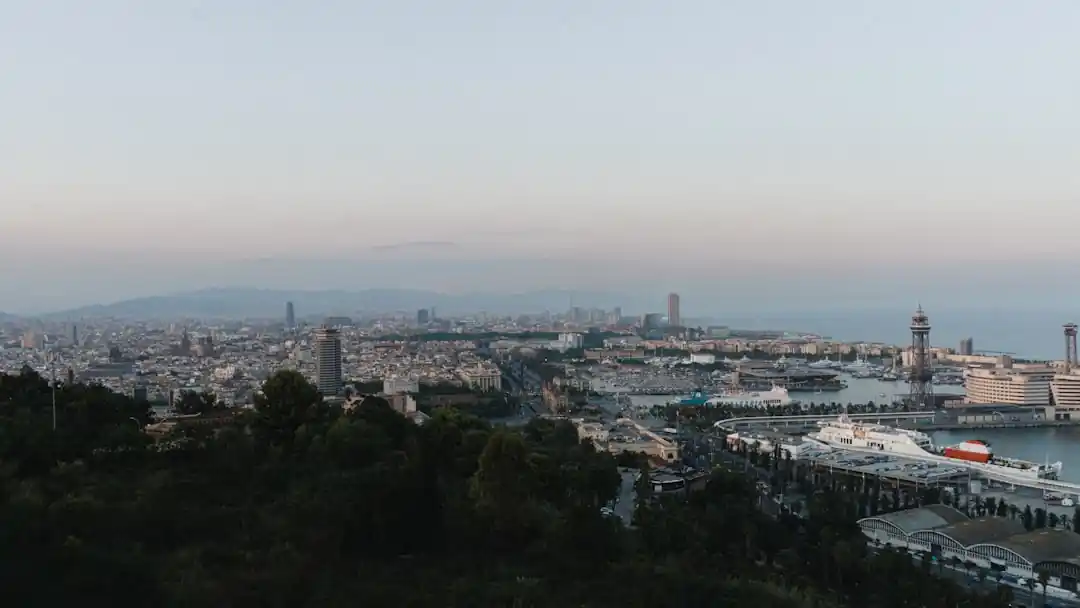
As you explore the hill, you'll also find the magnificent Palau Nacional, home to the National Art Museum of Catalonia, and the Magic Fountain, which puts on a spectacular show of light and music on select evenings. Montjuïc is a place of layers. It’s a park, a cultural hub, and a history book all in one. It tells the story of a city that has defended itself, celebrated itself, and constantly reinvented itself over the centuries.
Exploring Barcelona's historical sites is a journey that adds incredible depth and meaning to your trip. It connects you to the countless generations that have walked these streets and shaped this remarkable city. So by all means, enjoy the beach and the incredible food, but I hope you’ll also take the time to wander back in time. It’s a journey that will stay with you long after you’ve returned home.
How to Outsmart a Pickpocket in Spain: A Tourist's Guide to Staying Safe
Hopping on the Bus in Bologna: A Traveler’s Guide to Getting Around
Related Posts
 TRANSPORT
Beyond the Highway: Finding Canada's Soul on a Western Rail Adventure
Forget road trips. I'm talking about rediscovering the romance of travel on Via Rail's most scenic routes through the heart of the Canadian West. It’s an experience that changes you.
 TRAVEL TIPS
The Unwritten Rules of the North: What to Know Before Camping in Canada
Heading to the Great White North for a camping trip? It's an amazing idea. But from campfire etiquette to wildlife wisdom, here’s what you need to know before you go.
Popular Posts

Rethinking Non-Profit Promotion: Creative Strategies That Actually Drive Event Impact

Beyond Stark White: The Best Interior Paint Colors to Light Up Your New Space

How to Actually Master a New Language on Your Own (No Magic Gene Required)
