The Silent Thief: How Inflation is Quietly Eroding Your Savings
Ever feel like your money just doesn't go as far as it used to? You're not imagining it. Let's talk about the invisible force of inflation and what it's doing to your hard-earned savings.
There’s a conversation I’ve been having more and more lately, with friends, with family, even with myself. It’s this nagging feeling that no matter how carefully I budget or how much I try to put away, my money just doesn’t seem to stretch as far as it did a few years ago. The grocery bill is a little higher, the cost to fill up the gas tank is a bit more painful, and the dream of a big future purchase feels like it’s moving just a little further away. If you’ve been feeling this too, you’re not going crazy. You’re feeling the very real effects of inflation.
Honestly, for a long time, "inflation" was just a word I heard on the news. It was an abstract concept for economists to debate, something that didn't seem to have a direct line to my daily life or my savings account. But the truth is, it’s one of the most powerful, yet subtle, forces shaping our financial realities. It’s a silent thief that works 24/7, and understanding how it operates is the first and most critical step toward protecting the future you’re working so hard to build.
So, What Exactly Is This Invisible Force?
At its simplest, inflation is the rate at which the general level of prices for goods and services is rising, and subsequently, purchasing power is falling. In other words, your dollar today will buy you less than it did yesterday. Think about the cost of a coffee, a movie ticket, or a new car. Over time, these prices tend to go up. That’s inflation in action. It’s a natural part of most modern economies, but when it happens too quickly, it can cause some serious problems.
Economists in the U.S. measure this primarily through the Consumer Price Index (CPI), which tracks the average change in prices paid by urban consumers for a basket of consumer goods and services. This "basket" includes everything from food and housing to transportation and medical care. When you hear that inflation is at 2% or 3%, it means that, on average, things cost 2% or 3% more than they did a year ago.
It’s driven by a few different factors. Sometimes, it's "demand-pull" inflation, where demand for goods and services is stronger than the economy's ability to produce them—too many dollars chasing too few goods. Other times, it's "cost-push" inflation, where the cost of producing goods and services rises (think higher wages or raw material costs), and businesses pass those costs on to consumers. Regardless of the cause, the effect on our wallets is the same.
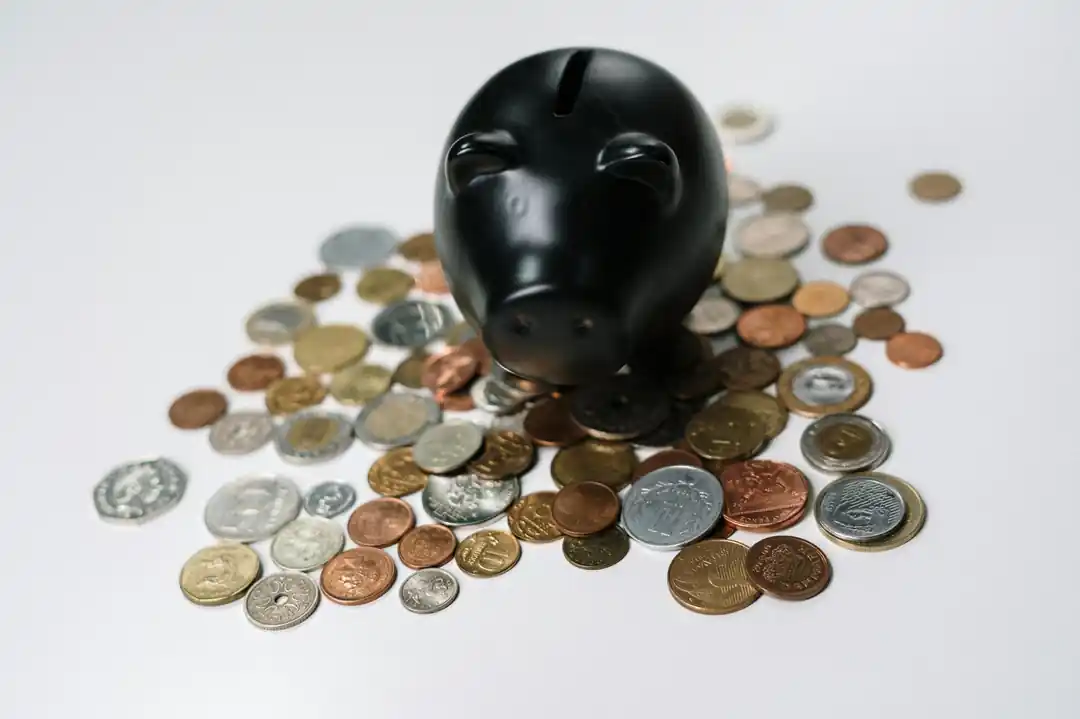
The Slow Leak in Your Savings Account
This is where inflation really hits home. Let's say you have $10,000 saved up. You’ve been responsible, you’ve tucked it away in a standard savings account, and you feel pretty good about it. But that savings account is only paying you 0.5% interest per year. If the inflation rate for that same year is 3%, what happens? Your account balance will grow to $10,050, but the cost of everything around you has increased by 3%. To have the same purchasing power you started with, you would need $10,300.
In reality, your "safe" money has actually lost about 2.5% of its value. It didn't disappear from your account, but its ability to buy things in the real world has been significantly diminished. This is the silent erosion that can be so devastating over the long term. The money you're setting aside for a down payment, for retirement, or for your kids' education is slowly becoming less and less powerful.
This is why simply saving money, while a crucial first step, isn't enough. We have to think about how we're saving and whether our savings are growing at a rate that can at least keep pace with, and hopefully outpace, inflation. Letting cash sit idle for decades is like leaving a block of ice out on a sunny day; you know it’s going to be a lot smaller when you come back to it later.
How to Protect Your Hard-Earned Money
Feeling a little discouraged? Don't be. Recognizing the problem is the most important part of the solution. You are not powerless against inflation. With a bit of strategy, you can build a financial plan that not only preserves your wealth but continues to grow it, even when prices are on the rise.
The most common strategy is investing. While it comes with its own set of risks, investing your money in assets that have the potential to grow faster than inflation is a time-tested approach. This can include a diversified portfolio of stocks, which historically have provided returns that outpace inflation over the long run. Real estate can be another hedge, as property values and rental income tend to rise with inflation.
For those who are more risk-averse, there are still options. Treasury Inflation-Protected Securities (TIPS) are a type of U.S. government bond that is indexed to inflation. The principal of a TIPS bond increases with inflation and decreases with deflation, so you're protected. High-yield savings accounts and certificates of deposit (CDs) can also offer better interest rates than their traditional counterparts, helping to close the gap. The key is to not let your money sleep.
It’s not about becoming a Wall Street trader overnight. It’s about making a conscious decision to put your money to work. It’s about understanding that a little bit of calculated risk today can lead to a much more secure and prosperous future tomorrow. Take the time to learn, start small, and build a plan that feels right for you. Your future self will thank you for it.

How to Prepare Your Personal Finances for a Recession
Riding the Market's Tides: How the Economic Cycle Shapes Your Investment Strategy
Related Posts
 BUSINESS
Rethinking Non-Profit Promotion: Creative Strategies That Actually Drive Event Impact
Discover modern, research-backed strategies for promoting non-profit fundraisers, from experiential marketing to hyper-local micro-influencers and cross-sector partnerships.
 BUSINESS
Is the TV Ad Dead? A Deep Dive into Cost and Effectiveness in 2024
In an age of streaming and scrolling, is a TV commercial still a smart bet for brands? We're breaking down the real costs and surprising effectiveness of television advertising today.

Popular Posts
Rethinking Non-Profit Promotion: Creative Strategies That Actually Drive Event Impact

Beyond Stark White: The Best Interior Paint Colors to Light Up Your New Space

The Simple Pre-Workout Fueling Strategy That Saved My Long Runs