Ever feel like a full moon messes with your sleep?It's a common story, but science is starting to listen. Let's explore why and what you can do about it.
It’s 2 a.m. You’ve counted sheep, you’ve tried deep breathing, you’ve replayed every conversation you had today. Yet, you’re wide awake, staring at the ceiling. You glance out the window, and there it is: a brilliant, full moon hanging in the sky like a giant nightlight. If you’ve ever sworn that you sleep worse when the moon is at its brightest, you’re not just imagining things. For centuries, people have passed down stories and beliefs about the moon’s power over our lives, from our moods to our sleep.
For a long time, I brushed this off as pure folklore. It sounded like something from an old storybook, not a real-life issue. How could a rock floating 238,900 miles away possibly affect my sleep schedule? But after a few too many restless nights that just so happened to coincide with a full moon, my skepticism started to wane. It felt too consistent to be a coincidence.
Honestly, it’s a strange feeling to think something so far away could have such an intimate effect on us. It’s a bit humbling, reminding us that we’re connected to these larger, cosmic rhythms whether we realize it or not. And as it turns out, science is beginning to suspect the same thing. Researchers are starting to find real, measurable data that backs up what so many have felt for generations.
The Science Behind the Silver Glow
So, what’s really going on? Is it just the extra light, or is there something more mysterious at play? For years, the scientific community was pretty divided, but a landmark 2013 study from Switzerland really opened the door to this conversation. Researchers found that even in a completely dark, controlled lab environment, participants took longer to fall asleep, slept for about 20 minutes less, and experienced a 30% reduction in deep sleep during the full moon. They even had lower levels of melatonin, the all-important sleep hormone.
This study was a game-changer because it suggested the effect wasn't just about the moonlight itself. Something else seemed to be at work, an internal clock of sorts that’s in tune with the lunar cycle. It points to the idea of a "circalunar" rhythm, an ancient, evolutionary echo from a time when our ancestors' lives were deeply governed by the moon's phases for things like hunting and navigating at night.
More recent studies have supported this, finding that people's sleep patterns tend to shift in the days leading up to a full moon. We go to bed later and sleep less. It’s not a huge, dramatic change for most, but it’s a consistent, subtle pull. While the exact mechanism is still being debated—whether it’s gravitational pull, electromagnetic changes, or this ingrained biological rhythm—the evidence is mounting that the "lunar effect" is a real phenomenon.
Practical Ways to Reclaim Your Rest
Knowing that the moon might be messing with your sleep is one thing; doing something about it is another. You can’t exactly hang a "Do Not Disturb" sign on the moon. However, you can take control of your environment and your routine to create a powerful buffer against its influence. The best part is, these tips are fantastic for improving your sleep any night of the month.
First, and most obviously, make your bedroom a dark sanctuary. This is the number one rule of good sleep hygiene. The extra light from a full moon can absolutely disrupt your sleep, so invest in some quality blackout curtains or a comfortable sleep mask. The goal is to make your room as close to a cave as possible. Less light tells your brain it’s time to produce melatonin and wind down for the night.
Second, stick to a consistent sleep schedule. This is probably the most powerful tool you have for regulating your internal clock. Going to bed and waking up around the same time every day—yes, even on weekends—anchors your circadian rhythm. When your body knows what to expect, it’s less likely to be thrown off by external cues like the lunar cycle. Think of it as creating a strong internal rhythm that can overpower the moon's gentle nudge.

Leaning into Relaxation
Beyond the practical, there’s the mental and emotional side of things. If you believe the full moon will disrupt your sleep, that anxiety alone can be enough to keep you awake. This is where mind-body practices become so essential. Instead of fighting the restlessness, try to work with it.
Creating a calming pre-sleep ritual can make a world of difference. An hour or so before bed, turn off the bright overhead lights and switch to a dim lamp. Put away your phone and laptop; the blue light they emit is notorious for suppressing melatonin. Instead, try something analog and relaxing. A warm bath with Epsom salts can help relax your muscles, or you could try some gentle stretching.
Journaling is another fantastic tool. If your mind is racing, get all those thoughts out of your head and onto paper. Sometimes just the act of writing down your worries can rob them of their power. You could also try a guided meditation or some deep breathing exercises. Apps like Calm or Headspace are great for this, offering sleep-specific meditations that can help you gently drift off. The goal isn't to force sleep, but to create a state of deep relaxation where sleep can naturally find you.
Ultimately, the full moon is a beautiful and powerful part of our natural world. Instead of seeing it as an adversary to your sleep, perhaps you can reframe it as a reminder to be more intentional about your rest. It’s a cue to listen to your body, to create a peaceful sanctuary for yourself, and to honor the quiet, restorative work that happens while you sleep. Here’s to finding your peace, even when the night is at its brightest.
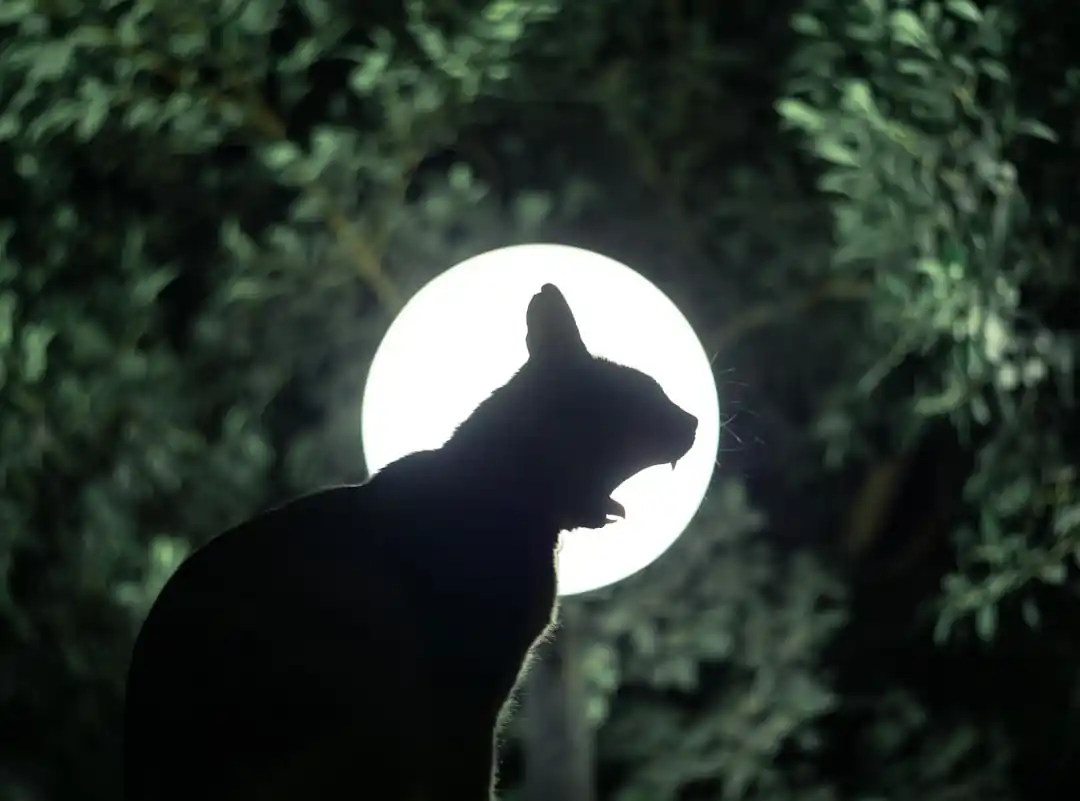
Does the Full Moon Make Your Pet...Weird? Unpacking the Lunar Effect
Tossing and Turning by the Light of the Moon? You’re Not Just Imagining It
Related Posts
 HOBBIES
The Beginner's Guide to Reading the Night Sky: How to Spot Your First Constellations
A friendly, grounded guide to navigating the night sky, understanding stellar movements, and spotting iconic constellations without expensive gear.
 PETS
PETSSniffle-Free Snuggles: America's Most-Loved Hypoallergenic Dogs
Dreaming of a furry friend but dreading the sneezes? You're not alone. Let's dive into the wonderful world of popular hypoallergenic dog breeds in the US.

Popular Posts

Rethinking Non-Profit Promotion: Creative Strategies That Actually Drive Event Impact

Beyond Stark White: The Best Interior Paint Colors to Light Up Your New Space

How to Actually Master a New Language on Your Own (No Magic Gene Required)
