Thinking about a Moroccan road trip? It’s an incredible way to see the country, but there are a few things you need to know before you get behind the wheel. Here’s the real talk.
Morocco. The name itself feels like an invitation to adventure, doesn't it? It conjures images of bustling Marrakech souks, the quiet majesty of the Atlas Mountains, and the endless, rolling dunes of the Sahara. For years, I dreamed of a trip that went beyond the guided tours, a journey where I could pull over whenever a breathtaking view appeared or follow a random road just to see where it led. The key to unlocking that dream, I discovered, was renting a car.
Honestly, the idea of driving in Morocco was a little intimidating at first. You hear stories, right? The chaotic city traffic, the donkeys sharing the road, the seemingly optional traffic laws. It’s enough to make you think twice. But after taking the plunge, I can tell you that it is single-handedly the best decision I made. It transformed my trip from a checklist of places into a genuine, soul-stirring adventure filled with spontaneous detours and unforgettable moments.
If you're from the US and used to wide lanes and predictable traffic patterns, driving in Morocco will be a different beast, but it's one that is absolutely worth taming. It’s about embracing a bit of organized chaos and discovering the incredible freedom that comes with it. This isn't just about getting from point A to B; it's about the stories you'll gather on the road between them.
The Nitty-Gritty: Before You Even Book
First things first, let's talk logistics. Renting a car in Morocco is a fairly straightforward process, but preparation is everything. You'll need your valid US driver's license, your passport, and a credit card for the deposit. While your US license is generally accepted, I strongly recommend getting an International Driving Permit (IDP) before you leave. It’s an official translation of your license, costs about $20 from AAA, and can be a lifesaver during a police stop or if you have to deal with insurance. It just smooths things over and removes any potential for confusion.
When it comes to choosing a rental company, you’ll find the big international names you recognize (Hertz, Sixt, etc.) right at the major airports in Casablanca and Marrakech. This is often the easiest route. The process is familiar, and the staff are more likely to speak English. You can also find local rental agencies, which might offer slightly better prices, but be prepared for a bit more of a language barrier and potentially older vehicles. Whichever you choose, book your car online and well in advance, especially if you need an automatic—they are less common and more expensive than manual transmissions.
Now for the most important part: insurance. Your rental will come with a basic Collision Damage Waiver (CDW), but this usually has a very high deductible (often over $1,000). This is the amount they'll hold on your credit card, and you'll be liable for it if anything happens. My advice? Spring for the full, zero-deductible insurance. It might feel like an unnecessary expense, but the peace of mind it provides on Morocco's unpredictable roads is priceless. Also, before you sign anything, call your credit card company. Many premium travel cards offer primary rental car insurance, which could save you a good chunk of money, but you need to confirm the coverage details for Morocco specifically.
On the Road: Rules, Risks, and Realities
Okay, you’ve got your car. You've taken photos of every pre-existing scratch and dent (and you absolutely should). Now it's time to drive. In Morocco, you drive on the right side of the road, just like in the US. The main highways, or autoroutes, that connect the major cities are fantastic—modern, well-maintained, and generally a pleasure to drive on. It's when you venture onto the smaller national or regional roads that the real adventure begins.
Road conditions can vary dramatically. One minute you're on smooth pavement, the next you're navigating a series of potholes. In the Atlas Mountains, the roads are winding and narrow, demanding your full attention but rewarding you with some of the most spectacular scenery on the planet. One of the biggest things to get used to is what you'll be sharing the road with. It's not just cars. It's motorcycles weaving through traffic, pedestrians who cross whenever they feel like it, and, yes, the occasional donkey, herd of goats, or even a camel.
Police checkpoints are a very common sight, usually on the outskirts of towns. Don't be alarmed. They are routine. Just slow down, make eye contact, and be prepared to show your documents if waved over. A friendly "Bonjour" goes a long way. Speed limits are enforced, sometimes with radar guns, so keep an eye on the signs (usually 120 km/h on highways, 100 km/h on national roads, and 60 km/h in towns). A helpful, unwritten rule of the road: if oncoming traffic flashes their headlights at you, it's often a warning that a police checkpoint is ahead.
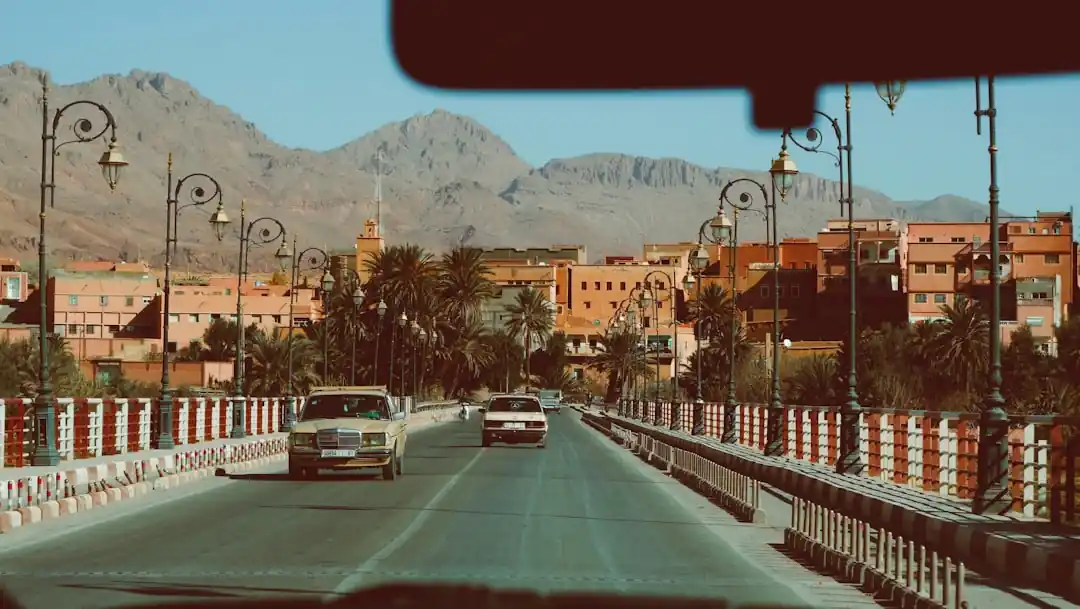
Navigating Cities and Finding Your Way
Driving within the ancient medinas of cities like Fes or Marrakech is, to put it mildly, not recommended. These are labyrinthine networks of pedestrian alleyways where a car simply won't fit. The best strategy is to park your car at your hotel or in a secure lot on the edge of the medina and explore on foot. In the modern parts of the cities, driving is a chaotic but manageable dance. Roundabouts are extremely common, and the rule is generally to yield to traffic already in the circle, but always be prepared for someone to pull out unexpectedly.
For navigation, don't rely solely on your phone's data plan, which can be spotty in remote areas. Before you leave, download offline maps of Morocco on Google Maps or use an app like Maps.me. This was an absolute lifesaver for me, especially in the mountains and desert fringes. It allows you to navigate without a cell signal, ensuring you don't get hopelessly lost when you take that intriguing detour.
Gas stations are plentiful along the main highways and in cities, but they can become sparse in rural areas. A good rule of thumb is to top off your tank whenever you have the chance in a larger town before heading into the mountains or towards the desert. Most stations are full-service, and it's customary to tip the attendant a few dirhams for their help.
Ultimately, renting a car in Morocco is an act of courage that pays off in dividends of freedom and discovery. It allows you to connect with the country on a deeper level, to see the landscapes shift from rugged mountains to golden sands, and to create a travel story that is entirely your own. Be prepared, stay alert, and embrace the beautiful, chaotic rhythm of the Moroccan road. Your adventure is waiting.
Beyond the Cornfields: Unearthing Indiana's Best-Kept Secrets
Morocco by Land: The Great Debate of Train vs. Bus Travel
Related Posts
 TRANSPORT
Beyond the Highway: Finding Canada's Soul on a Western Rail Adventure
Forget road trips. I'm talking about rediscovering the romance of travel on Via Rail's most scenic routes through the heart of the Canadian West. It’s an experience that changes you.
 TRAVEL TIPS
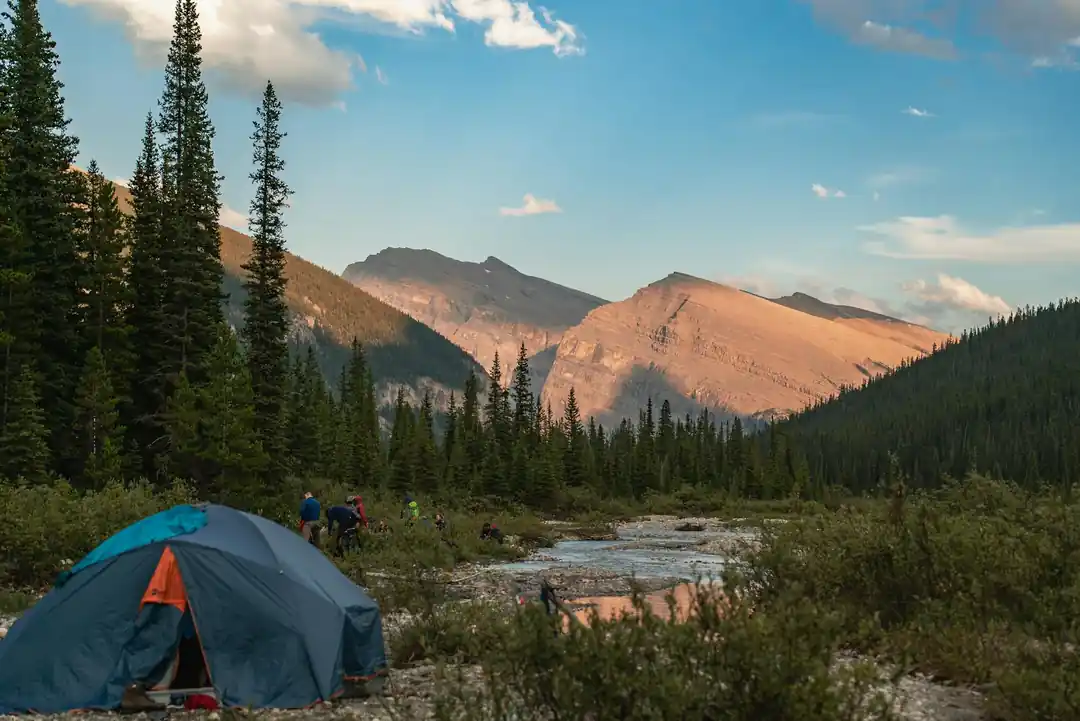
The Unwritten Rules of the North: What to Know Before Camping in Canada
Heading to the Great White North for a camping trip? It's an amazing idea. But from campfire etiquette to wildlife wisdom, here’s what you need to know before you go.

Popular Posts

Rethinking Non-Profit Promotion: Creative Strategies That Actually Drive Event Impact

Beyond Stark White: The Best Interior Paint Colors to Light Up Your New Space

How to Actually Master a New Language on Your Own (No Magic Gene Required)
