That first season of youth soccer is a beautiful, chaotic whirlwind. Here’s how to skip the boring lectures and teach the basic rules of the game through pure, unadulterated fun.
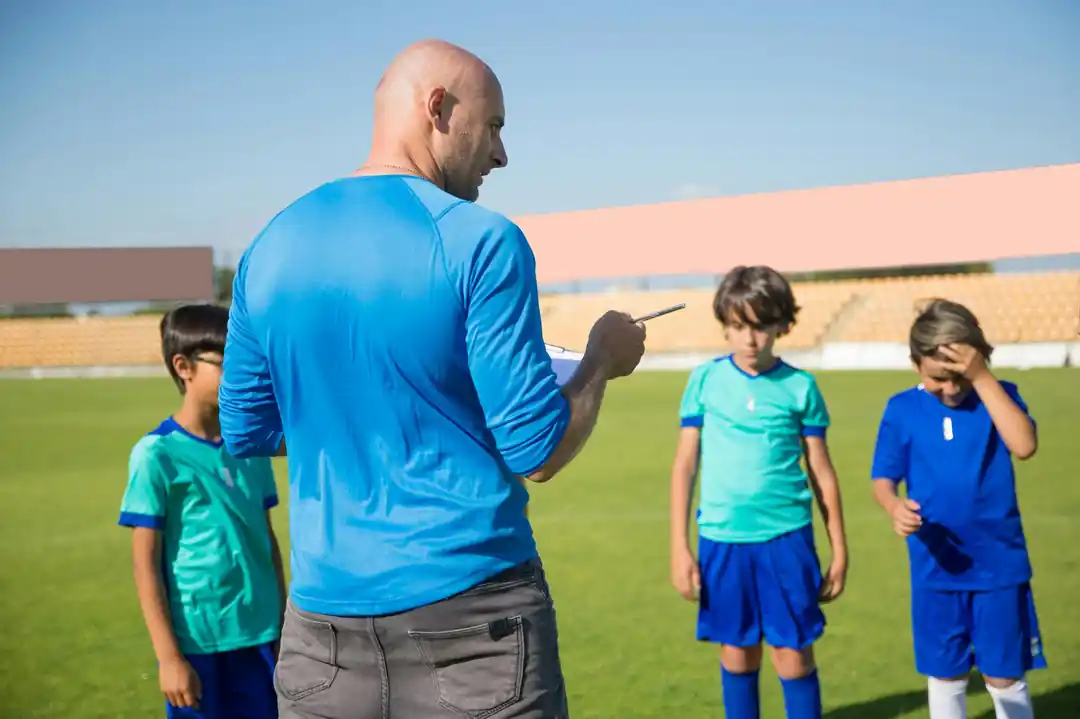
There’s a special kind of beautiful chaos that defines kindergarten soccer. It’s a swirling pack of kids, all clumped together, chasing the ball like a school of fish, with at least one child inevitably running the wrong way down the field with a giant, proud smile. As a parent watching from the sidelines, it’s both hilarious and heartwarming. But it also brings up a question: how on earth do we start teaching them the actual rules without sucking all the fun out of it?
I’ve been there. You try to explain what a "throw-in" is, and you’re met with a blank stare from a kid who is far more interested in a dandelion they just discovered near the goalpost. I recently read a coaching guide that put it perfectly: for young kids, the number one reason they play sports is to have fun. The moment it feels like a lecture, you’ve lost them. The challenge, and the joy, is to embed the rules into the fun itself.
Forget the dense, official rulebook. For kids just starting, we need to simplify. We're not training them to be referees; we're just trying to give the game a little structure so it vaguely resembles soccer. It’s about transforming abstract concepts into simple, actionable ideas they can grasp while running around. This isn't just about making it easier for them—it's about making it more effective. When learning is an adventure, the lessons stick.
The Golden Rule: No Hands! (Unless You're the Goalie)
This is it. The big one. The most fundamental rule that separates soccer from basketball, football, and just about everything else. Before you get into anything else, this is the concept to master. But even this can be tricky. A ball unexpectedly bounces up and hits an arm, and suddenly a five-year-old is looking at you with wide, panicked eyes, thinking they’ve broken the game.
The best way to teach this is to make it a game. A classic drill is "Red Light, Green Light," but with a soccer ball. The kids dribble on "green light" and have to stop the ball with their feet on "red light." Another great one is "Sharks and Minnows," where the "minnows" have to protect their ball by dribbling away from the "sharks." In these games, you can introduce a fun, gentle consequence for using hands. Maybe they have to freeze and yell "Oops, no hands!" or do three jumping jacks.
It’s also important to frame it positively. Instead of just saying "Don't use your hands," you can say, "Let's see who can be a soccer expert and only use their feet!" This turns it into a challenge rather than a restriction. And always, always differentiate between accidental and intentional. For the little ones, if it’s an accident, just say "that's okay, let's keep playing!" It keeps the game flowing and prevents them from becoming too scared to get near the ball.
Where the Ball Can and Can't Go: Understanding Boundaries
The concept of "out of bounds" is the next logical step. It introduces the idea that the field has limits. Explaining the difference between a throw-in, a goal kick, and a corner kick can feel like advanced calculus to a first-grader. So, don't. At first, just focus on the main idea: if the ball crosses the line, the game stops for a second, and the other team gets to put it back in play.
A simple way to practice this is by playing a small-sided game in a tightly defined area, maybe using cones to create a mini-field. When the ball goes out, you just yell "Other team's ball!" and have them either kick or (for a little more of a challenge) throw it back in. You can even make a game out of it called "Keep It In," where the goal is simply to keep the ball from crossing any of the lines for as long as possible.
As they get a bit older, you can start to introduce the specific terms. A simple way to remember the difference between a goal kick and a corner kick is to explain who kicked it out last. "If the attacking team kicks it over the goal line, it's a goal kick for the defenders. If the defending team kicks it out, it's a corner kick for the attackers!" Using "attacking" and "defending" helps them start to think about the direction of play and the objective of the game.
The Point of it All: Scoring a Goal
This is the part every kid understands instinctively. The objective is to get the ball in the net. But what counts as a goal? The rule is simple: the entire ball has to cross the entire goal line. You’ll often see a ball sitting right on the line with a goalie on top of it, and half the parents will be cheering for a goal while the other half are yelling to play on.
A fun way to illustrate this is to use a cone or a water bottle and show them physically. Put it on the line and say, "Is it all the way over? Nope!" Then push it completely over the line and celebrate wildly. "Now it's a goal! Yay!" This visual and auditory reinforcement is incredibly powerful.
When they're playing, make a huge deal out of every goal. Celebrate with them. It reinforces the ultimate objective and makes the game exciting. This is also a great time to gently introduce the idea of sportsmanship. After a goal is scored, encourage them to get back to their positions and be ready to play again. It teaches them that the game continues, win or lose a point, and that resetting is part of the process.
A Final Thought on Fun
At the end of the day, especially for the youngest players, the rules are secondary to the experience. Are they running? Are they smiling? Are they learning to be part of a team? That’s the real victory. The technicalities of the game will come with time, practice, and maturity. Our job, in the beginning, is simply to plant the seed of passion for the game.
Don’t be afraid to stop a drill to point out a cool-looking airplane in the sky. Don’t worry if they spend half of practice trying to balance a cone on their head. It’s all part of the journey. By keeping it light, keeping it fun, and celebrating the small victories, you’re not just teaching them soccer. You’re giving them a gift of movement, teamwork, and joy that can last a lifetime. And that’s a goal worth celebrating.

Stop Skidding, Start Slicing: A Guide to True Ski Carving
From the Sidelines to the Starting Five: Mastering Basketball's Core Skills
Related Posts
 HOBBIES
The Beginner's Guide to Reading the Night Sky: How to Spot Your First Constellations
A friendly, grounded guide to navigating the night sky, understanding stellar movements, and spotting iconic constellations without expensive gear.
 PETS
PETSSniffle-Free Snuggles: America's Most-Loved Hypoallergenic Dogs
Dreaming of a furry friend but dreading the sneezes? You're not alone. Let's dive into the wonderful world of popular hypoallergenic dog breeds in the US.
Popular Posts

Rethinking Non-Profit Promotion: Creative Strategies That Actually Drive Event Impact

Beyond Stark White: The Best Interior Paint Colors to Light Up Your New Space

How to Actually Master a New Language on Your Own (No Magic Gene Required)
