Ever watched the Olympics and thought curling looked like fun? Here’s how to go from spectator to player, even if you've never stepped on the ice before.
Every two years, like clockwork, I find myself glued to the television, completely mesmerized by the Winter Olympics. And every time, the sport that truly captures my imagination is curling. There’s something hypnotic about it—the deliberate slide from the hack, the gentle rotation of the stone, and the furious, coordinated sweeping. For the longest time, I filed it under "fascinating but probably impossible for me to try." It seemed like a sport for people in faraway, perpetually cold places, requiring special skills and expensive gear.
Honestly, I couldn't have been more wrong. Getting started in curling is surprisingly accessible, and the community is one of the most welcoming you'll ever find. It’s a game of strategy, often called "chess on ice," but it’s also a fantastic social activity that offers a light workout. The barrier to entry is incredibly low, and you absolutely do not need to be a world-class athlete to have a blast. If you've ever felt that pull of curiosity while watching a match, I’m here to tell you that making the leap from the couch to the ice is easier than you think.
It’s a sport that beautifully blends physical skill with mental acuity. One moment you're in a low lunge, sliding gracefully down a sheet of ice, and the next you're part of a frantic sweeping effort to guide a 42-pound granite stone to its exact target. It’s a unique and deeply rewarding experience, and if you're in the US, there's a good chance a curling club is waiting for you much closer than you'd expect.
Your First Step: Finding a Club and What to Expect
The journey into curling begins with a single, simple action: finding a local club. Thanks to the internet and the hard work of organizations like USA Curling, this is easier than ever. A quick search on their website will reveal a map of member clubs all across the country—from the expected hubs in Minnesota and Wisconsin to surprising hotspots in Texas, California, and even Florida. You don’t need to live in a winter wonderland to find a place to play.
Nearly every club offers "Learn to Curl" events or open houses. These are your golden ticket. They are designed specifically for people with zero experience. For a small fee, you get a two-hour session where passionate volunteers walk you through the absolute basics. They’ll teach you about safety on the ice, how to get into the hack (the starting block), the proper way to deliver a stone, and the fundamentals of sweeping. It’s a hands-on, low-pressure environment where every question is a good one.
The best part? The club provides all the essential equipment. You don’t need to show up with a broom and special shoes. They will give you a "gripper" for one foot and a "slider" for the other, which slips right over your regular sneakers. They’ll hand you a broom and show you how to use it for balance and, eventually, for sweeping. All you need to bring is yourself, dressed in warm, comfortable clothing that allows you to move.
Gearing Up (Without Breaking the Bank)
Let's talk about what to wear, because it’s the one thing you are responsible for on day one. The key is warmth and flexibility. The air temperature over the ice is usually around 40-50°F (4-10°C), so layers are your best friend. A fleece or a comfortable jacket over a long-sleeve shirt is a great start. You’ll warm up quickly once you start sweeping, so being able to shed a layer is a good idea.
The most important piece of advice is to avoid wearing jeans. They are restrictive and will make it very difficult to get into the low lunge position required for delivering the stone. Instead, opt for athletic pants, yoga pants, or any comfortable trousers that allow for a full range of motion. Clean, rubber-soled athletic shoes are also a must. The "clean" part is critical—any dirt or pebbles on your shoes can melt into the ice and alter the path of a stone, so clubs are very strict about this.
As you fall in love with the sport, you might consider buying your own gear, but there’s no rush. The first purchase is usually a pair of curling shoes, which have a built-in slider on one foot and a gripper on the other. This provides a much more consistent and smooth slide than the slip-on versions. After that, you might want your own broom, which can be cut to the perfect height and come in various weights. But for your first few months, or even your first year, using the club's equipment is perfectly fine.
The Basics of the Game: A Quick Rundown
So, what are you actually doing out there? At its core, curling is a game of precision and strategy. Two teams of four take turns sliding heavy, polished granite stones down a sheet of ice towards a target area called the "house." The goal is to get your stones closer to the center of the house (the "button") than the other team's stones. A game is divided into "ends" (like innings in baseball), where each of the eight players throws two stones.
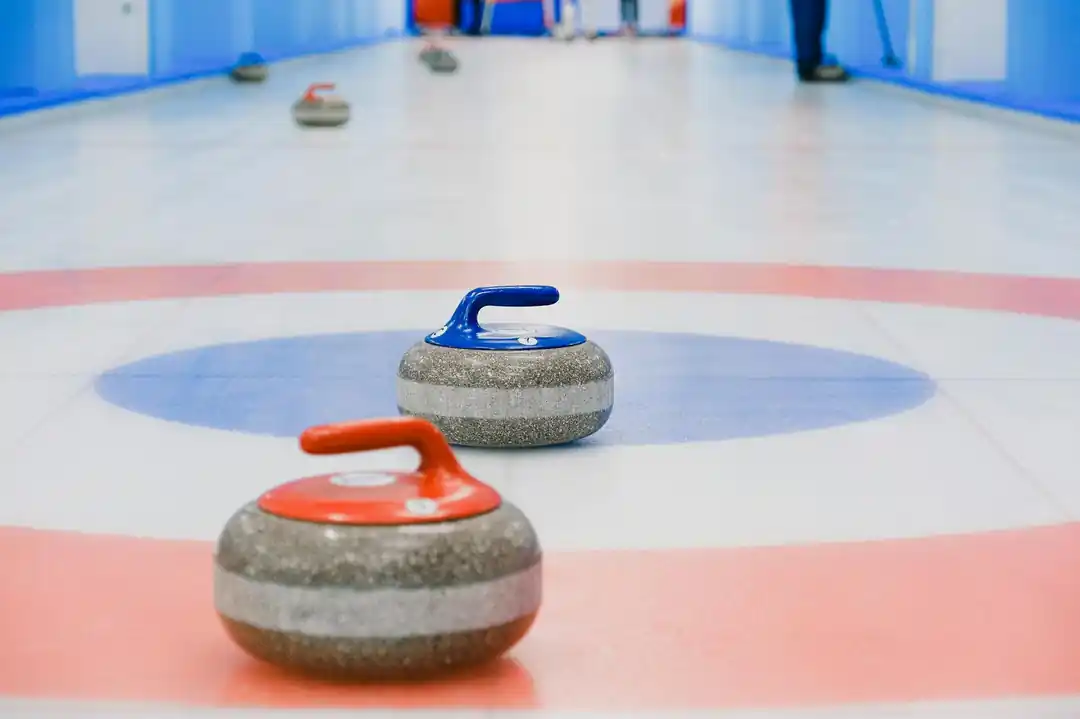
The "skip" is the team captain, who stands in the house and directs the play. They call the shots, deciding on the strategy—whether to place a guard, draw into the house, or take out an opponent's stone. The other three players deliver the stones based on the skip's instructions. The delivery itself is a graceful, controlled lunge and slide. You push off from the hack, glide forward on your slider foot, and release the stone with a gentle turn of the handle just before the hog line.
That gentle turn is what gives the stone its "curl," or the slow, arcing path it takes down the ice. And this is where sweeping comes in. The two players who aren't throwing or skipping can sweep the ice in front of their team's moving stone. Sweeping vigorously creates a thin layer of water, which reduces friction and allows the stone to travel farther and curl less. It’s an intense workout and a critical part of the game, requiring constant communication and judgment.
The Spirit of Curling
More important than any rule is the "Spirit of Curling." It’s a code of conduct that is central to the sport's identity. Curlers are expected to be respectful, honest, and courteous at all times. You call your own fouls, like accidentally touching a stone in play. You never cheer for an opponent's miss, and you are expected to genuinely compliment a good shot, no matter which team made it.
This ethos is what makes the curling community so special. After a game, it's tradition for the winning team to buy the losing team a drink. It fosters a social environment where the competition stays on the ice and the camaraderie extends into the "warm room" (the lounge area of the club). You will make friends, you will share laughs, and you will become part of a community that is passionate about this wonderful and quirky sport.
So, what are you waiting for? That strange-looking winter sport you see on TV is calling. It’s more than just sliding rocks on ice; it’s a game of finesse, a test of strategy, and a gateway to a warm and welcoming community. Take a chance, sign up for a "Learn to Curl," and get ready to have more fun than you ever expected.

Your First Draw: The Best Collectible Card Games for New Players
From Fragile to Formidable: The Surprising Evolution of Foldable Phone Durability

Related Posts
 HOBBIES
The Beginner's Guide to Reading the Night Sky: How to Spot Your First Constellations
A friendly, grounded guide to navigating the night sky, understanding stellar movements, and spotting iconic constellations without expensive gear.
 PETS
PETSSniffle-Free Snuggles: America's Most-Loved Hypoallergenic Dogs
Dreaming of a furry friend but dreading the sneezes? You're not alone. Let's dive into the wonderful world of popular hypoallergenic dog breeds in the US.

Popular Posts

Rethinking Non-Profit Promotion: Creative Strategies That Actually Drive Event Impact

Beyond Stark White: The Best Interior Paint Colors to Light Up Your New Space

How to Actually Master a New Language on Your Own (No Magic Gene Required)
