The thrill of photographing a wild reptile is immense, but it comes with a profound responsibility. Let's explore how to capture their ancient beauty without disturbing their world.
There’s a certain magic in locking eyes with a wild reptile. It feels ancient, primal. Whether it’s a garter snake weaving through the garden grass or a desert iguana basking on a sun-drenched rock, these creatures carry an air of stoic mystery. As a photographer, the desire to capture that feeling—the intricate texture of their scales, the intensity in their gaze—is almost magnetic. I get it. I’ve spent countless hours lying motionless on the ground, waiting for that perfect, fleeting moment.
But I’ve also learned a crucial lesson over the years, sometimes the hard way. The photograph is never the most important thing. The life of that animal, its peace, and its home always, always come first. It’s a philosophy that has reshaped my entire approach to wildlife photography. We live in a time where a stunning photo can travel the globe in seconds, but what does that photo truly represent if it was born from harassment or harm? Honestly, the best images are the ones that tell a story of respect, a quiet contract between photographer and subject where the animal’s well-being is the silent, guiding priority.
The Prime Directive: Do No Harm
Before we even talk about camera settings or composition, let's establish the unbreakable rule of ethical reptile photography: do no harm. This principle, borrowed from the Audubon Society's guide to ethical bird photography, applies just as strongly to our cold-blooded friends. Reptiles and amphibians are ectothermic, meaning they rely on their environment to regulate their body temperature. Forcing a lizard to stay in the shade when it needs to bask, or chasing a snake into cool water, can severely impact its health and energy reserves.
Think of it this way: every action you take has a ripple effect. A study I came across highlighted that repeated human disturbance can cause chronic stress in wildlife, leading to reduced reproductive success and a shorter lifespan. When you start seeing your presence not as a neutral observer but as a potential stressor, your entire perspective shifts. The goal isn't just to avoid direct physical harm; it's to minimize psychological stress. This means learning to read their body language. Is the snake tensing up? Is the turtle pulling its head in? These are clear signals that you're too close, that you've overstayed your welcome. The most ethical shot is often the one you take from a distance, where the animal doesn't even know you're there.
Know Before You Go: Research is Your Best Lens
You wouldn't show up to a portrait session without knowing your client's name, would you? The same courtesy should be extended to wildlife. Heading into the field without any knowledge of the species you hope to find is not only unprofessional, it's irresponsible. Every reptile has its own unique set of behaviors, habitat requirements, and signs of distress. Taking the time to research this beforehand is the single best thing you can do to prepare.
Is the species venomous? What time of day are they most active? What does their defensive posture look like? For example, some snakes will flatten their heads to appear larger when threatened, a clear sign to back away immediately. Knowing this prevents you from misinterpreting a warning sign as a cool photo opportunity. This research also helps you find them more effectively and ethically. Instead of aimlessly wandering and potentially trampling sensitive microhabitats, you can learn to identify the specific types of logs, rocks, or vegetation they prefer. It transforms your search from a brute-force intrusion into a calculated, respectful treasure hunt.
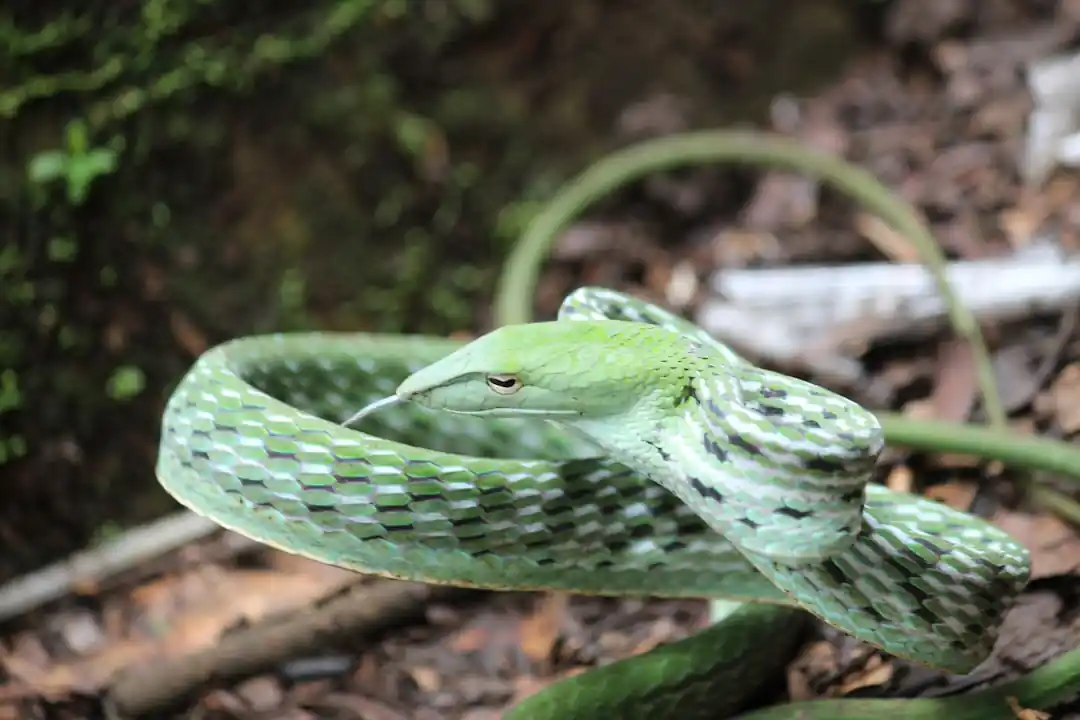
The Hands-Off Philosophy: Your Camera is Not a Prop
This is a big one, and it’s a line that should never be crossed. Never, ever handle, move, or manipulate a reptile for the sake of a photograph. I’ve seen horrifying stories online of people "field herping" where they'll catch a snake and pose it on a "cleaner" background. This is not wildlife photography; it's treating a living creature like a prop. Handling can cause immense stress, lead to the animal dropping its tail (in the case of many lizards), or even cause internal injury. Furthermore, our hands can transfer harmful bacteria or chemicals from sunscreen and insect repellent.
An even more disturbing practice is the chilling or refrigerating of amphibians and reptiles to slow them down for macro shots. This is profoundly cruel and can easily be fatal. The beauty of a wildlife photograph comes from its authenticity—a genuine moment captured in the animal's life. If you have to stage it, you've already failed the most important test. The challenge and the reward lie in your ability to adapt to the animal's world, not in forcing it to conform to yours.
Instead of getting closer physically, use your gear to bridge the distance. A good telephoto or macro lens is an ethical photographer's best friend. It allows you to fill the frame with your subject while maintaining a respectful distance that keeps them calm and undisturbed. It requires more patience, yes. It requires more skill. But the resulting image is one you can be truly proud of, knowing it was captured with integrity.
Leave No Trace, and No Geotags
Our responsibility extends beyond our direct interaction with the animal. The principle of "Leave No Trace" is paramount. This means packing out everything you pack in, of course, but it also means leaving the habitat exactly as you found it. Don't break branches, move rocks, or tear up moss to get a better angle. That rock you flip might be the only thing providing the perfect moisture level for a salamander's eggs. That branch you snap might be a crucial perch for a lizard to hunt from. We are temporary visitors, and the environment should bear no scars from our passage.
In the digital age, this principle has a modern extension: be mindful of your geotags. Sharing the exact location of a rare or sensitive species can be a death sentence. It can lead poachers directly to them or cause a flood of well-intentioned but disruptive photographers to descend on the area, stressing the animals and degrading their habitat. While the desire to share a beautiful discovery is understandable, protecting the species is far more important. If you're unsure, it's always best to be vague, perhaps mentioning the county or national park, but never the specific trail or GPS coordinate.
Ultimately, being an ethical reptile photographer is about shifting your mindset from "taking" a picture to "being given" a moment. It’s about humility, respect, and a deep appreciation for the wild lives that unfold around us. The images become secondary to the experience—the quiet observation, the patient waiting, the silent connection. And when you operate from that place of respect, the photographs you do capture will carry a weight and an authenticity that no staged shot ever could. They become a testament not just to the beauty of the animal, but to the beauty of your compassion.
The Ultimate Guide to Building a Bioactive Terrarium for Large Snakes
A Beginner's Guide to Herpetology: Welcoming a Scaly Friend into Your Home

Related Posts
 HOBBIES
The Beginner's Guide to Reading the Night Sky: How to Spot Your First Constellations
A friendly, grounded guide to navigating the night sky, understanding stellar movements, and spotting iconic constellations without expensive gear.
 PETS
PETSSniffle-Free Snuggles: America's Most-Loved Hypoallergenic Dogs
Dreaming of a furry friend but dreading the sneezes? You're not alone. Let's dive into the wonderful world of popular hypoallergenic dog breeds in the US.
Popular Posts

Rethinking Non-Profit Promotion: Creative Strategies That Actually Drive Event Impact

Beyond Stark White: The Best Interior Paint Colors to Light Up Your New Space

How to Actually Master a New Language on Your Own (No Magic Gene Required)
