Don't Just Wing It: Essential Winter Driving Tips for Icy Roads
That beautiful winter wonderland can turn treacherous in a heartbeat. Let's talk about how to really handle your car when the roads are a sheet of ice.
There’s a certain quiet magic to the first real snowfall of the year. The world gets hushed, everything is blanketed in white, and it feels peaceful. But then, reality hits. You have to actually go somewhere. That peaceful blanket of snow has been compressed into a slick, unforgiving layer of ice on the roads, and suddenly, a simple drive to the grocery store feels like an Olympic sport.
I think we've all had that heart-stopping moment—that tiny, almost imperceptible slide of our tires that reminds us we are not, in fact, in complete control. It’s a feeling that commands respect for the conditions. Driving on ice isn't about being fearless; it's about being smart, prepared, and profoundly aware of your vehicle and your surroundings. It’s a skill, and like any skill, it requires knowledge and practice.
For years, I thought having all-wheel drive (AWD) made me invincible. I was humbled quickly during a trip in upstate New York when my supposedly "invincible" SUV did a slow, graceful 180-degree spin on a patch of black ice. It was a terrifying, clarifying moment. That experience taught me that technology helps, but it doesn't suspend the laws of physics. Preparation and technique are what truly keep you safe.
Before the Engine Starts: Your Pre-Winter Checklist
The most important part of winter driving happens before you even put the key in the ignition. Treating your car to a little pre-season TLC can make the difference between a safe trip and a call for a tow truck. Honestly, it’s the boring stuff that saves you the most trouble down the line.
First, let's talk tires. Your tires are the only part of your car that actually touches the road, so their condition is non-negotiable. All-season tires are okay in light winter conditions, but if you live anywhere that sees consistent ice and snow, investing in a set of dedicated winter tires is one of the smartest safety decisions you can make. The rubber compounds are designed to stay soft and flexible in freezing temperatures, providing much better grip. At the very least, check the tread depth on your current tires (the classic penny test works great) and ensure they are properly inflated. Cold air causes tire pressure to drop, so you’ll need to check it more frequently.
Next up, get your battery tested. Cold weather is brutal on car batteries. The chemical reactions needed to generate power slow down in the cold, and at the same time, your engine requires more power to turn over. It’s a recipe for a dead battery on the coldest morning of the year. Most auto parts stores will test your battery for free. If it’s showing signs of weakness, just replace it. It’s a small price to pay for peace of mind.
Finally, assemble a winter emergency kit and keep it in your trunk. This isn't about being paranoid; it's about being self-sufficient. Your kit should include basics like a snow brush and ice scraper, jumper cables, and a bag of sand or cat litter for traction if you get stuck. But also think about your own comfort and safety: pack extra gloves, a warm blanket, a flashlight with fresh batteries, and some non-perishable snacks and water. If you’re stranded for a few hours, you’ll be so glad you have them.
The Drive Itself: Slow, Smooth, and Steady
Once you're on the road, a new set of rules applies. The core principle of driving on ice is to do everything slowly and smoothly. Every action—accelerating, braking, turning—should be gentle and deliberate. Sudden movements are what break your tires' fragile grip on the ice.
Imagine you have a full cup of hot coffee on your dashboard and you don't want to spill a drop. That’s how you should drive. Accelerate gently from a stop to avoid spinning your wheels. When you need to slow down, give yourself an enormous amount of following distance—we're talking eight to ten seconds behind the car in front of you, not the usual two or three. This gives you plenty of time to slow down gradually by just easing off the gas instead of slamming on the brakes.
One of the most counter-intuitive skills is learning how to handle a skid. If your back wheels start to slide, the natural instinct is to panic and hit the brakes. Don't. Instead, take your foot off the accelerator and gently steer in the direction you want the car to go (this is often called "steering into the skid"). If the front of your car is pointing left, steer left. This helps the tires regain traction and straighten the car out. It takes practice and a calm head, but it works.
And what about braking? If you have an anti-lock braking system (ABS), which most modern cars do, the technique is simple: press the brake pedal firmly and hold it down. You will feel a pulsing or grinding sensation under your foot—that's the ABS working exactly as it should, preventing the wheels from locking up. Do not pump the brakes. If you have an older car without ABS, then you’ll need to gently pump the brakes to avoid a lock-up.
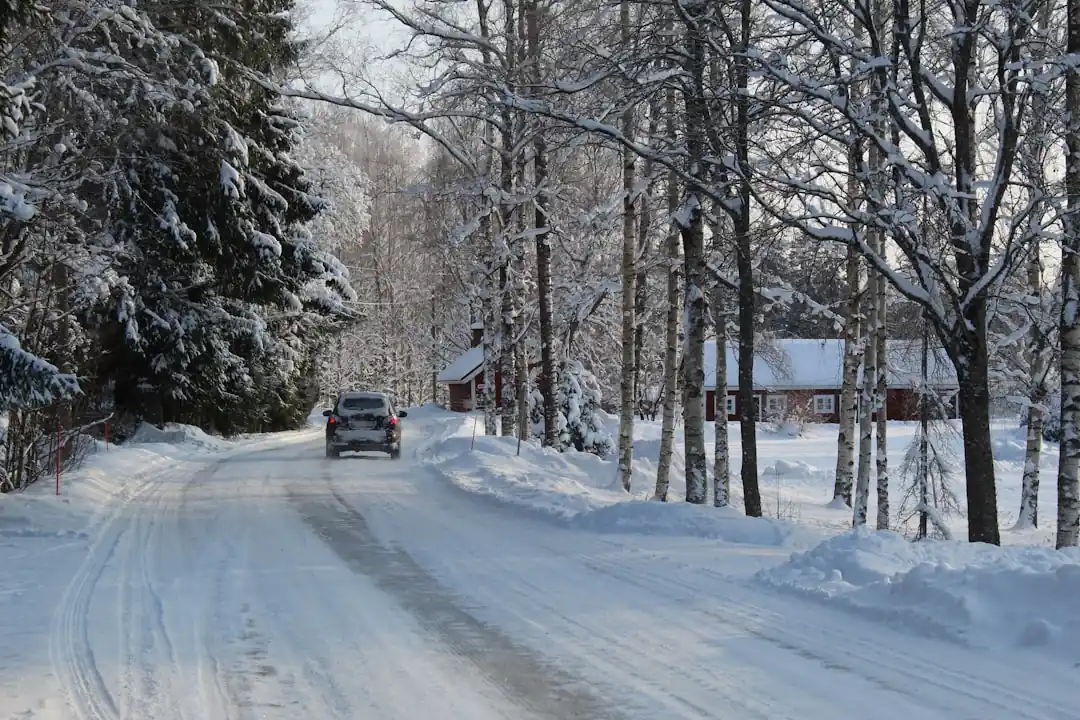
The Unseen Danger: Black Ice and Hills
Not all ice is created equal. The most treacherous kind is black ice—a thin, transparent glaze that forms on the road surface. It’s called "black" ice because it looks just like the dark pavement underneath, making it incredibly difficult to spot. Be especially wary of it on bridges, overpasses, and in shaded areas, as these surfaces freeze much faster than the rest of the road. If you see the road ahead looks wet when the temperature is below freezing, assume it's black ice and proceed with extreme caution.
Hills add another layer of complexity to the equation. The simple advice is to avoid them if you can. If you can't, the key is momentum, but controlled momentum. When approaching a hill, you need enough speed to get up it without having to accelerate hard on the incline, which could cause your wheels to spin. As you reach the crest, reduce your speed and proceed down the other side as slowly as possible, preferably in a low gear.
Never, ever stop on a hill if you can help it. Getting started again on an icy incline is next to impossible for most vehicles. It’s far better to wait at the bottom until you have a clear path all the way to the top. This requires patience and the ability to anticipate what other drivers might do, but it’s the only safe way to manage a slippery slope.
Driving in winter doesn't have to be a white-knuckle experience. It's a shift in mindset from "getting there fast" to "getting there safely." It asks for our patience and our respect. So take the time to prepare, slow down, and pay attention. The winter wonderland is much more beautiful when you can enjoy it without the stress of a dangerous drive. Stay warm and stay safe out there.

Unwrap Joy, Not Stress: Your Guide to a Calm Holiday Kitchen
The Ultimate Guide to Choosing the Best Streaming Service in 2025

Related Posts
 HOBBIES
The Beginner's Guide to Reading the Night Sky: How to Spot Your First Constellations
A friendly, grounded guide to navigating the night sky, understanding stellar movements, and spotting iconic constellations without expensive gear.
 PETS
PETSSniffle-Free Snuggles: America's Most-Loved Hypoallergenic Dogs
Dreaming of a furry friend but dreading the sneezes? You're not alone. Let's dive into the wonderful world of popular hypoallergenic dog breeds in the US.

Popular Posts

Rethinking Non-Profit Promotion: Creative Strategies That Actually Drive Event Impact

Beyond Stark White: The Best Interior Paint Colors to Light Up Your New Space

How to Actually Master a New Language on Your Own (No Magic Gene Required)
