Feeling winded after just a few laps? You're not alone. Let's dive into the real techniques that help beginners build swimming stamina, so you can finally enjoy the rhythm of the water.
There’s a certain magic to swimming, isn’t there? The idea of gliding effortlessly through the water, the rhythmic sound of your own breath, the feeling of being almost weightless. But for so many of us who are just starting, that beautiful idea quickly collides with a harsh reality: burning lungs, heavy arms, and the frustrating feeling of being completely out of gas after just a lap or two. I’ve been there. Honestly, I think most of us have. You see other swimmers moving like they were born in the water, and you can't help but wonder what their secret is.
For the longest time, I thought the answer was just to try harder. To kick more, pull faster, and just force my way through the water. That approach, as you might guess, only led to more gasping and less gliding. The real secret, the one that seasoned swimmers know, isn't about brute force. It’s about efficiency. It’s about learning to work with the water, not against it.
Building stamina isn't about some superhuman lung capacity, especially not at the beginning. It's about refining your technique so that you waste less energy. Every motion that doesn't propel you forward is a drain on your battery. In this post, we're going to break down the foundational techniques that will help you conserve that energy, find your rhythm, and finally start building the stamina you need to truly enjoy your time in the pool.
It’s Not About Speed, It’s About Slipping Through the Water
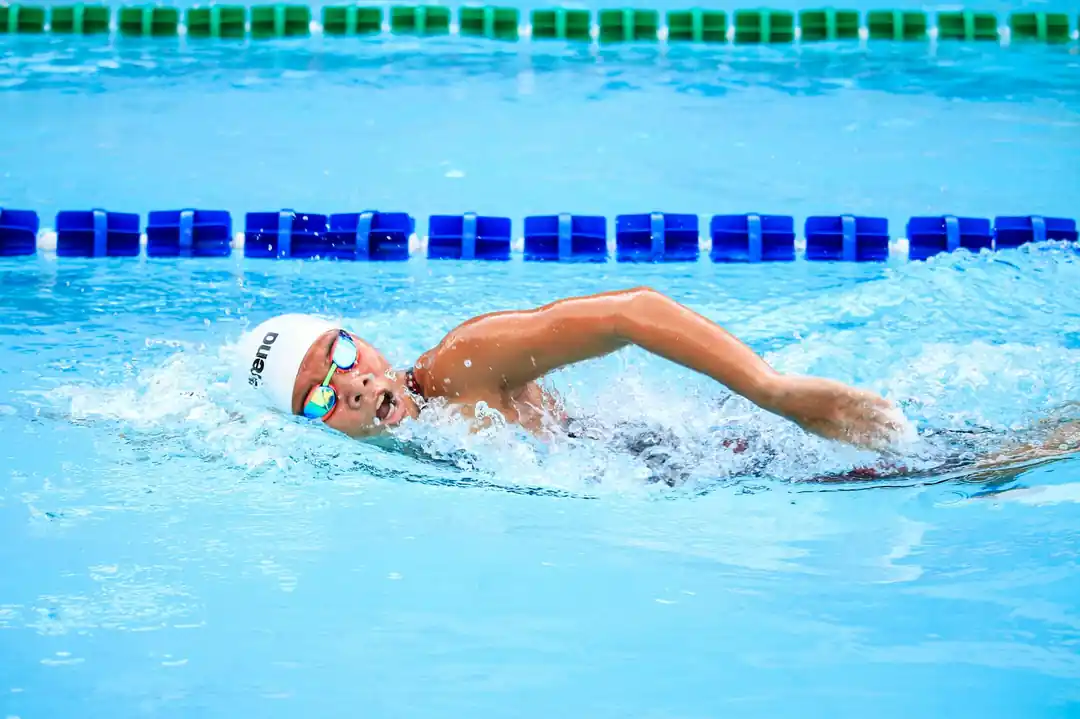
The first mental shift we have to make is to stop thinking about speed. Speed will come later. For now, our only goal is efficiency. Think of yourself not as a motorboat, but as a sleek canoe. You want to create as little disturbance in the water as possible. This all starts with your body position, or what swimmers call "streamlining."
Many beginners (and I was definitely guilty of this) swim with their head up and their hips and legs sinking. This creates a massive amount of drag, like trying to swim while towing a small anchor. The ideal position is to be as flat and horizontal as you can be. Try to keep your head in a neutral position, aligned with your spine, with your eyes looking at the bottom of the pool, not the wall in front of you. This simple adjustment helps lift your hips and legs toward the surface, dramatically reducing drag and making every stroke more effective.
Then there’s the kick. It’s so tempting to believe that a bigger, splashier kick equals more power, but for stamina, it's often the opposite. Your leg muscles are huge and consume a ton of oxygen. A frantic, wild kick will drain your energy reserves faster than almost anything else. Instead, focus on a steady, compact flutter kick that originates from your hips, not your knees. Your ankles should be relaxed, and your feet should create a small, consistent "boil" in the water rather than a giant splash. This kick is less about propulsion and more about providing stability and lift to keep your body in that streamlined position.
The Most Important Rhythm: How to Breathe
If there is one single thing that holds beginners back, it’s breathing. Or rather, the lack of it. The feeling of panic that sets in when you can't get enough air is real, and it can turn a pleasant swim into a stressful ordeal. The most common mistake is holding your breath while your face is in the water. When you do this, carbon dioxide builds up, triggering that urgent, desperate need for air.
The solution is to get into a rhythm of constantly exchanging air. As soon as your face returns to the water after taking a breath, you should start exhaling slowly and steadily through your nose or mouth. Think of it as a continuous, gentle hum. By the time you turn your head to breathe again, your lungs are already empty and ready for a quick, relaxed inhale. You’re not gasping; you’re simply topping off the tank. This rhythmic breathing is the heartbeat of endurance swimming.
Once you’re comfortable with that, you can try practicing bilateral breathing—breathing to both sides, typically every three strokes. It feels incredibly awkward at first, like trying to write with your non-dominant hand. But pushing through that initial discomfort pays huge dividends. Bilateral breathing promotes a more balanced and symmetrical stroke, preventing you from developing a lopsided pull. It also improves your overall body roll and awareness in the water, making you a much more stable and efficient swimmer in the long run.
Smart Drills to Build Your Engine
Just swimming endless laps can sometimes reinforce bad habits. Drills are your secret weapon for reprogramming your muscle memory and building a more efficient stroke. They break down the swimming motion into its core components, allowing you to focus on one thing at a time.
A fantastic drill for improving your body line and breathing is the Kickboard Drill. Simply hold a kickboard and practice your flutter kick across the pool. This isolates your legs, of course, but it also allows you to focus entirely on your breathing rhythm without having to think about your arms. You can practice exhaling into the water and turning your head to the side to inhale, building that crucial pattern until it becomes second nature.
To work on your pull, the Pull Buoy Drill is invaluable. A pull buoy is a small foam float that you place between your thighs. It keeps your legs afloat so you can stop kicking and focus 100% on your arms. This is where you can really concentrate on a long, powerful pull under the water, feeling how your hand and forearm "catch" the water and propel you forward. It builds upper body strength and endurance in a very focused way.
Finally, the Catch-Up Drill is a classic for a reason. As you swim freestyle, you leave one arm extended in front of you until the other arm completes its full stroke and "catches up" to it. This drill forces you to slow down and focus on gliding through the water after each stroke. It teaches patience and helps you feel the momentum you generate, training you to extend your stroke and get more distance out of every single pull.
Putting It All Together: Your First Stamina Workout
Okay, so how do we combine all this into a workout? The key is structure and consistency. Instead of just swimming until you're tired, try a simple interval-based workout. This will challenge your cardiovascular system more effectively and give you measurable progress.
Start with a gentle warm-up of 100-200 meters of easy swimming, just to get your body moving. Then, move into your main set. A great place to start is with something like 8 x 50 meters. Swim 50 meters (two lengths of a standard pool) at a steady, controlled pace, focusing on your technique. Then, rest for 30-45 seconds. Repeat this eight times. The rest period allows you to recover just enough to maintain good form on the next interval.
As you get more comfortable, you can start to play with the variables. You could reduce your rest time to 20 seconds. Or you could increase the distance, maybe trying 4 x 100 meters instead. The goal is to gradually and consistently increase the demand on your body. Always finish your workout with a cool-down of another 100-200 meters of very slow, relaxed swimming to help your muscles recover.
Building stamina is a journey of a thousand small adjustments. It’s about patience, consistency, and learning to be kind to yourself. There will be days when you feel like a fish, and days when you feel like a rock. Both are part of the process. Celebrate the small victories, focus on that feeling of gliding, and trust that with every lap, you are teaching your body a new, more efficient language. Before you know it, you'll look up at the clock and realize you've been swimming longer, and more peacefully, than you ever thought possible.

Beyond the Buzzwords: Real Team Management Strategies for Small Businesses in 2025
The Brainy Habit: How Word Puzzles Boost Your Mind and Vocabulary

Related Posts
 NUTRITION
The Simple Pre-Workout Fueling Strategy That Saved My Long Runs
Discover how timing your carbohydrates and embracing simple foods can eliminate mid-workout fatigue and unlock your true endurance potential.
 FITNESS
No Gym, No Problem: The Ultimate Guide to Bodyweight Fitness at Home
Forget expensive memberships. Discover how to build serious strength and transform your body using the most powerful tool you already own: yourself.

Popular Posts

Rethinking Non-Profit Promotion: Creative Strategies That Actually Drive Event Impact

Beyond Stark White: The Best Interior Paint Colors to Light Up Your New Space

How to Actually Master a New Language on Your Own (No Magic Gene Required)