Forget just turning on the lights with your voice. Advanced AI is making our homes truly intuitive, predictive, and more helpful than ever before. Here's what's coming.
Remember the early days of the smart home? It felt like we were collecting digital butlers—a voice assistant to play music, a separate app to dim the lights, another to check the security camera. It was novel, sure, but also a bit clunky. Honestly, I spent more time juggling apps than I probably saved. But the shift we're seeing now, heading into 2025 and 2026, is something else entirely. It’s less about simple commands and more about creating a home that genuinely understands and anticipates your needs, thanks to the giant leaps in advanced Artificial Intelligence.
We're moving past the era of a merely "connected" home into the age of the "intelligent" home. This isn't about filling your house with more screens and speakers. It's about an invisible layer of intelligence that works in the background, making your life smoother, safer, and more efficient without you even having to ask. I've been diving into the latest research, and it's clear that AI is fundamentally reshaping our relationship with our living spaces, turning them from passive structures into proactive partners.
From Reactive to Predictive: The Dawn of True Personalization
The most significant change that advanced AI brings to the table is the move from reactive commands to predictive personalization. Your current smart home waits for you to tell it what to do. The AI-powered home of the near future will learn your patterns, preferences, and even your habits to act on your behalf. It’s the difference between having a remote control and having a personal assistant who knows you inside and out.
Think about your daily rhythm. An advanced AI system doesn't just follow a rigid schedule. It learns that you typically wake up around 6:30 AM on weekdays but closer to 8:00 AM on Saturdays. It notices you like the lights a little dimmer in the evening and that you often turn up the heat after you get home from the gym. By analyzing data from sensors, your calendar, and even your wearable tech, the home can start to make decisions for you. It might gently warm up the bathroom floor ten minutes before your alarm goes off or start brewing your coffee the moment your smart watch registers that you're waking up.
This predictive power extends to every corner of the home. A recent report I read highlighted that AI can optimize energy consumption by learning household patterns, potentially cutting heating and cooling costs by up to 15%. The system knows when you’re home, when you’re away, and what the weather forecast looks like, adjusting the thermostat for maximum efficiency without sacrificing comfort. It’s a home that doesn’t just respond; it anticipates, creating an environment that feels perfectly tailored to your lifestyle.
Ambient Intelligence: When Technology Disappears
One of my favorite concepts emerging from this AI revolution is "ambient intelligence." The ultimate goal of technology, in many ways, is to become so seamless that it disappears into the fabric of our lives. We're finally getting there. Instead of actively managing dozens of devices, the intelligence will simply be all around you, working silently and effectively.
This is made possible by a new generation of powerful, energy-efficient AI chips that can run complex machine learning models directly on the device (a concept known as "edge computing"). This means your smart speaker, security camera, or even your refrigerator doesn't need to send all its data to the cloud for analysis. Processing information locally is faster, more reliable, and, crucially, more private. Your home can understand and respond to its environment in real-time without constantly sending personal data over the internet.
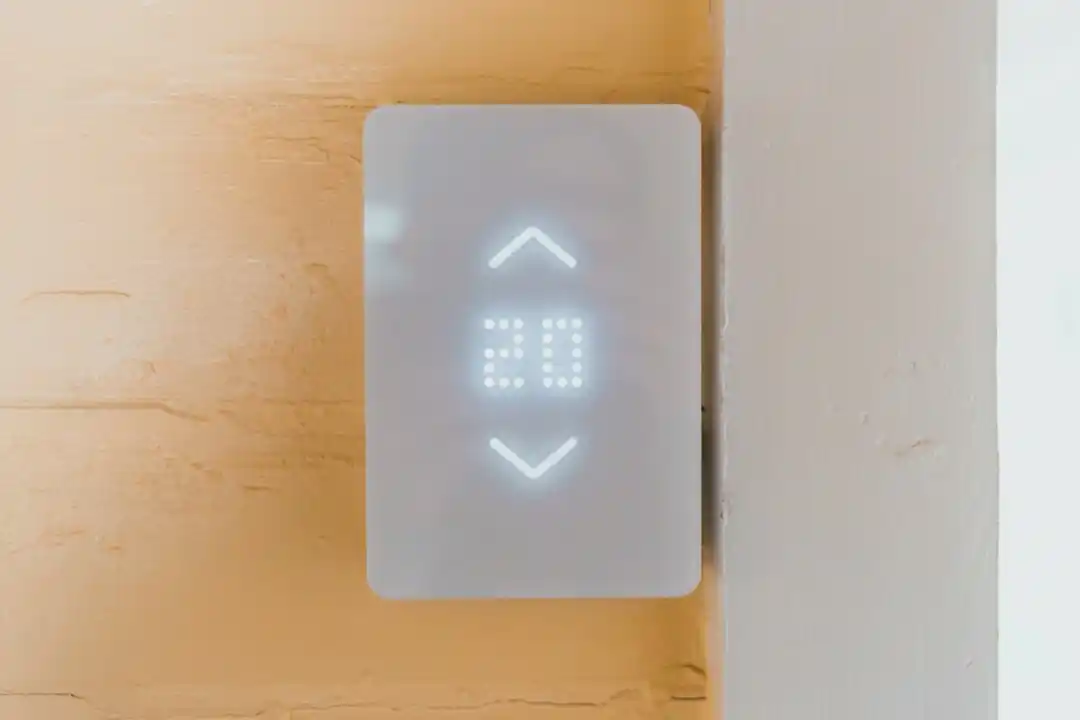
Imagine walking into a room and the lights adjust to your preferred brightness, the music softly fades in, and the temperature shifts to the perfect setting, all without you uttering a single command. The home senses your presence and understands the context—it's evening, you're alone, and you're likely winding down. This is the promise of ambient intelligence: a home that is effortlessly responsive, where the technology is so well-integrated that it feels like magic.
A Smarter Guardian: AI-Powered Security and Maintenance
Security has always been a key driver for smart home adoption, but AI is making our homes safer in ways that are much more proactive. Traditional security systems are good at telling you when something has already happened—a door has opened, or motion was detected. AI-powered systems are getting better at identifying potential threats and preventing incidents before they occur.
For example, modern AI security cameras can tell the difference between a person, a pet, and a passing car, dramatically reducing the number of false alarms you receive. Some advanced systems can even recognize familiar faces and alert you when an unknown person is on your property. But it goes further. By analyzing patterns, the AI can detect unusual behavior—like someone loitering near your property for an extended period—and proactively alert you or even trigger a deterrent like turning on exterior lights.
This proactive intelligence also applies to the health of your home itself. Generative AI is enabling predictive maintenance for appliances. Your smart refrigerator or washing machine could soon analyze its own performance data to predict a potential failure before it happens. Imagine getting an alert on your phone that says, "The water pump in your dishwasher is showing signs of wear. It's recommended to schedule a service appointment in the next 2-3 weeks." This shifts home maintenance from a reactive headache to a manageable, proactive task.
The Heart of the Home: A Future That's Human-Centric
As exciting as all this technology is, the true measure of its success will be how it enhances our human experience. The goal isn't to live in a sterile, automated box. It's to free up our time and mental energy from the small frictions of daily life so we can focus on what truly matters. A home that manages its own energy consumption, keeps itself secure, and caters to our comfort is a home that gives us back the invaluable gift of time.
Of course, with great data comes great responsibility. As our homes learn more about us, conversations around privacy and data security are more important than ever. Choosing companies with strong privacy policies and transparent data practices will be paramount. But the trajectory is clear: we are moving toward a future where our homes are not just smart, but wise.
This evolution is creating a space that is more than just a collection of walls and furniture. It's a partner in our well-being, a silent supporter of our daily lives, and a testament to how technology, when designed with intention and intelligence, can genuinely make life better. The truly smart home is one that fades into the background, leaving you with a feeling of seamless comfort and quiet support. And that's a future I'm very much looking forward to living in.

Diving into Digital Gold: 5 Fundamental Principles for Crypto Beginners
Your Smartphone Is About to Get a Whole Lot Smarter: The Rise of On-Device AI

Related Posts
 MOBILE
The Great Console Debate: How to Choose the Right Gaming System for Your Family
Feeling stuck between a Switch, a PlayStation, and an Xbox? Let's break down which gaming console is the perfect fit for your family's game nights.
 MOBILE
From Fragile to Formidable: The Surprising Evolution of Foldable Phone Durability
Remember when the idea of folding a smartphone screen in half felt like a disaster waiting to happen? Let's talk about how far they've come, because the story is pretty incredible.

Popular Posts

Rethinking Non-Profit Promotion: Creative Strategies That Actually Drive Event Impact

Beyond Stark White: The Best Interior Paint Colors to Light Up Your New Space

How to Actually Master a New Language on Your Own (No Magic Gene Required)
