Ever felt that pang of doubt before a big purchase? Let's move past the brand names and learn to read the real signs of quality in luxury leather goods.
There’s a certain romance to luxury leather, isn’t there? It’s a material that promises more than just function; it promises a story. We imagine a beautiful handbag or a sturdy pair of boots becoming a part of our daily lives, aging gracefully and collecting memories along the way. But let’s be honest, the dream can quickly turn into disappointment if that expensive purchase starts to scuff, crack, or fall apart within a year. The sting of realizing you've invested in a dud is real.
I’ve been there. Years ago, I saved up for a "designer" bag that I thought was the epitome of quality. It looked the part, at least for a little while. But soon, the shiny hardware began to tarnish, and the "leather" started to feel suspiciously like plastic. It was a hard lesson, but a valuable one. True luxury isn't about the logo stitched on the front; it's about the intrinsic quality of the materials and the skill of the hands that crafted them.
Learning to spot that quality is a skill, and it’s one that empowers you to make truly smart investments. It’s about training your senses—your eyes, your hands, and even your nose—to recognize the hallmarks of something built to last. It’s a quiet confidence that allows you to walk into any boutique and know, for yourself, what’s worth the price tag.
Beyond the Surface: Understanding the Leather Itself
The first and most important lesson is that not all leather is created equal. The terms can be confusing, and sometimes, they're downright misleading. The absolute gold standard is full-grain leather. This is the top layer of the hide, with all its natural textures, pores, and imperfections left intact. It hasn't been sanded or buffed to look uniform. When you look at full-grain leather, you're seeing the real, unedited story of the material. It’s the strongest and most durable type of leather, and it’s the only kind that will develop a beautiful, rich patina over time.
Just below that is top-grain leather. It's still a high-quality option, but the very top surface has been lightly sanded to remove some of the imperfections. This makes it smoother and more uniform in appearance, but slightly less durable than full-grain. It's a solid choice, but it won't age with quite the same character.
Here’s where it gets tricky. The term "genuine leather" sounds great, but it's often used to describe the lowest quality of real leather. It can be made from the bottom layers of the hide or even from leather scraps bonded together with glue and pressure. It’s technically leather, but it lacks the strength, durability, and beauty of its higher-grade cousins. It won't develop a patina and is much more likely to wear out quickly. If a label just says "genuine leather," it's worth being skeptical.
The Devil in the Details: Stitching and Edges
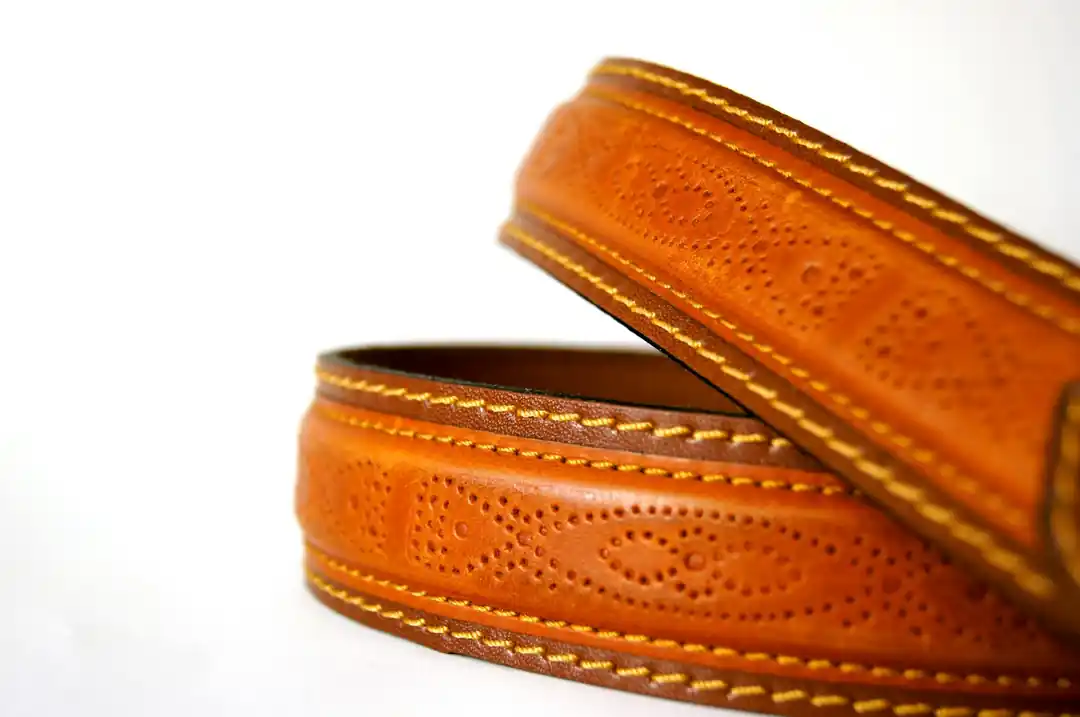
Once you’ve assessed the leather itself, it’s time to play detective with the craftsmanship. The way a piece is put together is just as important as the material it’s made from. Start by examining the stitching. On a high-quality item, the stitches will be small, straight, and consistent. There should be no loose threads, no wobbles, and no signs of unraveling. The thread itself should look sturdy, not thin or flimsy.
Run your fingers over the seams. They should feel tight and secure. Poorly made items often have wide, uneven stitches that look like they could be pulled apart with minimal effort. This is a corner that manufacturers often cut to save time and money, and it’s a dead giveaway of a product that isn’t built to last. Whether the stitching is done by hand or by a machine, precision is the goal.
Next, look at the edges of the leather. On a luxury piece, the edges will be beautifully finished. This might mean they are burnished (smoothed and polished by friction), painted with a special edge paint, or have the leather carefully folded over. The finish should be smooth, neat, and consistent. If you see raw, frayed edges, or thick, goopy paint that looks like it could crack or peel, it’s a sign of sloppy workmanship. This small detail speaks volumes about the overall care that went into the product's creation.
A Feast for the Senses: The Feel and Smell of Quality
Don't be afraid to get hands-on with a potential purchase. Your sense of touch is one of your best tools. High-quality leather should feel supple and have a bit of substance to it. It shouldn't feel stiff, plasticky, or paper-thin. When you press your finger into full-grain leather, it should wrinkle naturally and then bounce back. It feels alive.
Pay attention to the texture. While top-grain might be smooth, full-grain will have a more varied, interesting surface. You might feel tiny pebbles or subtle variations in the grain. This isn't a flaw; it's the hallmark of authenticity. A surface that is perfectly uniform and almost slick to the touch is often a sign of a heavily corrected or even synthetic material.
And finally, don’t forget to use your nose. Real, well-tanned leather has a distinct, rich, and earthy smell. It’s a natural and often pleasant aroma that is impossible to fake convincingly. If a product smells like chemicals, plastic, or nothing at all, that’s a major red flag. Some manufacturers of fake leather goods will try to spray them with a leather scent, but it often smells artificial and fades quickly. Trust your instincts; the deep, authentic smell of quality leather is unmistakable.
The Finishing Touches: Hardware and Lining
The final clues to quality lie in the parts of the item that aren't leather. The hardware—the zippers, clasps, buckles, and feet—should feel solid and substantial. It should be made of a quality metal like brass or nickel and have a smooth, flawless finish. Open and close the zippers; they should glide effortlessly without snagging. Flimsy, lightweight hardware that feels like it could break or that is already showing signs of tarnish is a clear indicator that corners were cut.
The same goes for the lining. Open the bag or wallet and look inside. A luxury item will be just as beautifully finished on the inside as it is on the outside. The lining should be made of a durable, high-quality fabric like canvas, suede, or a strong synthetic blend. The seams should be neat, and there shouldn't be any loose threads or raw edges. A cheap, papery-thin lining is a sign that the maker didn't expect the inside of the bag to be scrutinized, and it’s often the first part of a poorly made bag to rip.
Ultimately, buying luxury leather is about more than just a purchase. It's an investment in an object that you will live with for years to come. By learning to look past the marketing and recognize the true signs of quality, you're not just becoming a smarter shopper. You're becoming a connoisseur of craftsmanship, able to appreciate the beauty of something made with skill, care, and integrity. And that is a feeling of luxury that no brand name can buy.

The Anatomy of Cool: Key Elements of 1960s Mod Fashion
The Unseen Threads: Weaving Economic Prosperity in Sanctuary Cities

Related Posts
 BUYING GUIDES & PRICE INFO
The Clean Beauty Decoder: Your Guide to Actually Understanding Ingredients
Feeling lost in the world of clean beauty? Let's cut through the noise together and learn how to read ingredient labels with confidence. It's easier than you think.
 PRODUCT CATEGORIES
Beyond the Badge: The Real Things to Look For When Buying a Luxury SUV
Thinking about a luxury SUV? It's more than just a status symbol. Let's explore the details that truly matter, from the whisper-quiet ride to the long-term value.

Popular Posts

Rethinking Non-Profit Promotion: Creative Strategies That Actually Drive Event Impact

Beyond Stark White: The Best Interior Paint Colors to Light Up Your New Space

How to Actually Master a New Language on Your Own (No Magic Gene Required)
