Ever wondered how you can make a call from the middle of nowhere? Let's break down the incredible technology of satellite phones, your lifeline when you're truly off the grid.
Have you ever stood on a mountain peak, miles from the nearest road, and watched as the signal bars on your smartphone vanished one by one? There’s a moment of pure, untethered freedom in that—followed by a quiet, nagging thought: what if I needed to make a call? For most of us, it’s a fleeting concern. But for adventurers, sailors, and professionals working in the world's most remote corners, that "what if" is a serious question. The answer, more often than not, is a rugged, unassuming device: the satellite phone.
I used to think of satphones as something straight out of a spy movie—bulky, impossibly expensive, and reserved for secret agents or disaster-relief teams. And while they are indeed crucial in emergencies, the reality of how they work and who uses them is far more accessible and fascinating. They aren't just about emergencies; they're about connection, safety, and the simple ability to speak to another human being from literally anywhere on the planet.
So, how do these magical devices bridge the vast, empty spaces where our cell networks can't reach? It’s a journey that involves a trip to space and back in the blink of an eye.
What's the Difference? Cell Phones vs. Satellite Phones
First, let's get the biggest distinction out of the way. Your smartphone is part of a terrestrial network. It works by constantly searching for and connecting to nearby cell towers. As long as you're within range of a tower, you have service. But the infrastructure to build and maintain these towers is immense, which is why they are concentrated where people live and travel. Venture too far off the beaten path, and you'll find yourself in a "dead zone."
A satellite phone, on the other hand, completely bypasses this ground-based system. Instead of looking for a tower on the ground, it sends its signal directly up to a satellite orbiting the Earth. Think of it as having your own personal cell tower in the sky. This is the fundamental magic that gives it the power to work in the middle of the ocean, deep in a desert, or on a remote polar expedition.
This difference in infrastructure dictates their design and function. Satphones are built for durability and connection, not for browsing social media. They are typically bulkier, with large, prominent antennas needed to send and receive signals over vast distances. Their purpose is singular and critical: to provide a reliable line of communication when nothing else will.
The Journey of a Call: From Your Hand to the Stars
Making a call on a satellite phone is an incredible feat of engineering that happens almost instantaneously. When you dial a number and press "send," you kick off a remarkable chain of events.
-
The Uplink: Your satphone, with its antenna pointed toward a clear sky, converts your voice into a digital signal and beams it upwards. This signal travels thousands of miles into space until it reaches a satellite in Low Earth Orbit (LEO) or Geostationary Orbit (GEO).
-
The Relay in Space: The satellite acts as a sophisticated switchboard in the sky. It receives your signal and immediately relays it back down toward Earth. Some networks, like Iridium, use a constellation of interconnected LEO satellites that can even pass the signal between themselves before sending it down, ensuring a strong and continuous link.
-
The Downlink to a Ground Station: The signal from the satellite is sent to a large, terrestrial antenna at a ground station (sometimes called a gateway or Earth station). These stations are the bridge between the satellite network and our conventional communication systems.
-
Connecting to the World: From the ground station, your call is patched into the global telephone network, just like any other call. It's routed to the person you're calling, whether they're on a landline, a cell phone, or another satellite phone. The entire round trip—from your phone, to space, and back to Earth—happens in a fraction of a second.
Of course, for this to work, you need a clear line of sight to the sky. This is the one major caveat of satellite phones. They don't work well indoors, in a dense forest, or in a deep canyon. The signal needs an unobstructed path to its celestial partner.
The Big Players in the Sky
Not all satellite networks are created equal. The three main providers for personal satellite phones are Iridium, Inmarsat, and Globalstar, and each has a different architecture that affects its coverage and performance.
-
Iridium: This is the only network that offers truly global, pole-to-pole coverage. It achieves this with a constellation of 66 cross-linked LEO satellites that are constantly orbiting the planet. This makes it the go-to choice for serious adventurers and polar explorers who need a connection no matter where they are.
-
Inmarsat: Inmarsat uses a smaller number of GEO satellites that are positioned much farther away from Earth. These satellites remain in a fixed position relative to the ground, providing incredibly reliable coverage over vast regions (like entire continents or oceans), though they don't cover the extreme polar areas.
-
Globalstar: Globalstar also uses LEO satellites, but its system works a bit differently, acting as a "bent pipe" that relays signals to a ground station within the satellite's footprint. This makes it a more budget-friendly option, but coverage can be less consistent in very remote or oceanic regions.
Choosing a network really depends on where you're going and what you need. Are you trekking in Antarctica? Iridium is your best bet. Sailing across the Atlantic? Inmarsat is a solid choice. Sticking to North American backcountry? Globalstar might be all you need.
A Tool, Not a Toy
It’s important to remember that a satellite phone is a specialized tool. The handsets can be expensive, and the calling plans are priced per minute, so it's not something you'd use for a casual chat. It's a lifeline, a piece of safety equipment as essential as a first-aid kit or an emergency beacon for anyone venturing far from civilization.
The existence of this technology is a quiet miracle. It’s a promise that no matter how far we wander, how deep into the wilderness we go in search of solitude or discovery, we are never truly out of reach. It’s the peace of mind that comes from knowing that, with the press of a button, you can send a signal to the stars and hear a human voice on the other end. And in the world's wildest places, that connection is everything.

The Unseen Dance: How Your Phone *Actually* Knows Where You Are
Decoding the Cosmos: The Software Behind Space Discovery

Related Posts
 MOBILE
The Great Console Debate: How to Choose the Right Gaming System for Your Family
Feeling stuck between a Switch, a PlayStation, and an Xbox? Let's break down which gaming console is the perfect fit for your family's game nights.
 MOBILE
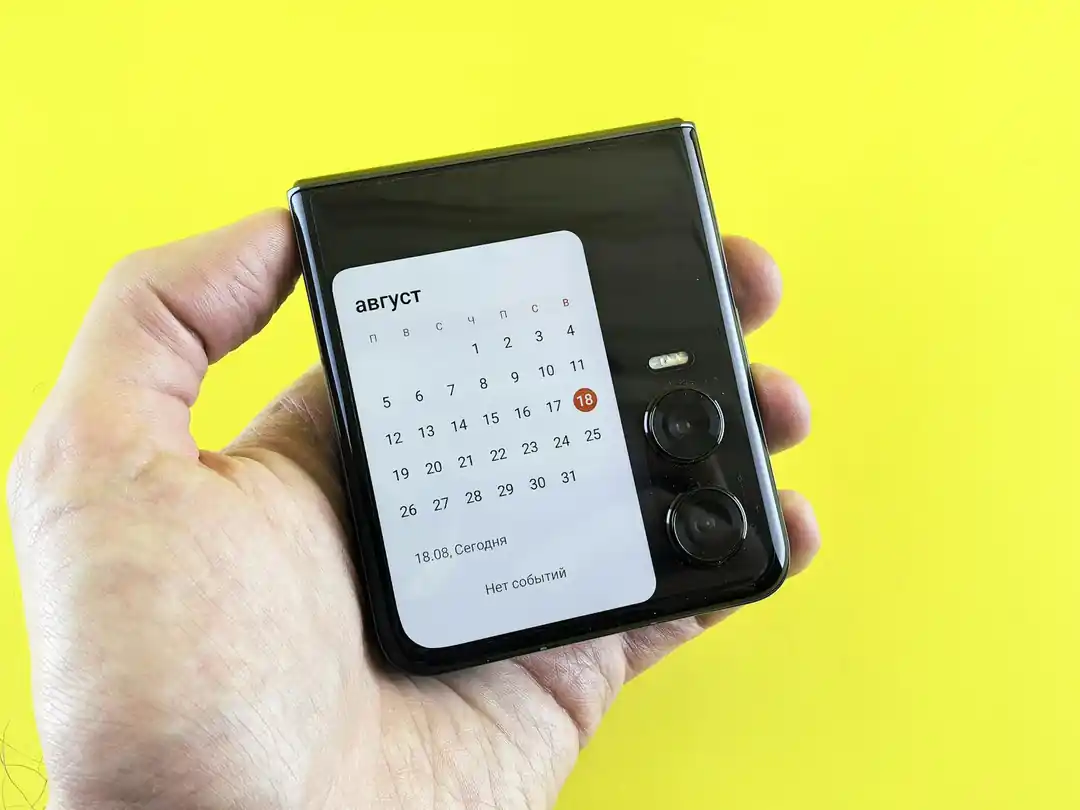
From Fragile to Formidable: The Surprising Evolution of Foldable Phone Durability
Remember when the idea of folding a smartphone screen in half felt like a disaster waiting to happen? Let's talk about how far they've come, because the story is pretty incredible.

Popular Posts

Rethinking Non-Profit Promotion: Creative Strategies That Actually Drive Event Impact

Beyond Stark White: The Best Interior Paint Colors to Light Up Your New Space

How to Actually Master a New Language on Your Own (No Magic Gene Required)
