How Does Neural Capture Actually Work? A Deep Dive Into the Quad Cortex's Magic
Ever wondered how the Neural DSP Quad Cortex magically captures the soul of your favorite amps and pedals? Let's dive into the biomimetic AI that makes it all possible.
As guitarists, we're on a perpetual quest. It's a chase for that perfect, elusive tone—the one that feels like an extension of our own hands, that responds to every nuance of our playing, and that just sings. For decades, this quest involved heavy tube amps, a meticulously ordered collection of pedals, and a spaghetti monster of cables. Then, a piece of technology came along that felt less like an iteration and more like a revolution: Neural Capture on the Neural DSP Quad Cortex.
Honestly, when I first heard the term, I was skeptical. The world of digital amp modeling has been littered with promises of "real amp feel" for years, often with mixed results. We've all heard modelers that sound great in a dense mix but feel strangely sterile and unresponsive when you're playing alone in a room. So, when Neural DSP claimed they were using "biomimetic AI" to capture the very essence of an amplifier, my curiosity was piqued, but my expectations were tempered.
But this is different. This isn't just about creating a static snapshot of a tone. It's about teaching a machine to listen, perceive, and react in a way that's remarkably similar to how we, as humans, experience sound. It’s a technology that promises to capture not just the sound of your gear, but its soul. And after spending countless hours with it, I can tell you it gets astonishingly close.
So, What Is Neural Capture, Really?
In the simplest terms, Neural Capture is a proprietary technology developed by Neural DSP that uses a sophisticated form of artificial intelligence, specifically a neural network, to create a digital model of a physical piece of audio gear. This could be a guitar amplifier, a speaker cabinet, an overdrive pedal, a compressor, or even a combination of these things.
The key phrase here is "neural network." Unlike traditional modeling, which often involves a developer analyzing a circuit and recreating each component in code, Neural Capture takes a more holistic, "black box" approach. It doesn't need to know that a specific resistor or capacitor is in the circuit. Instead, it focuses entirely on the relationship between the signal that goes in and the signal that comes out. By feeding the device a special, proprietary audio signal and analyzing the result, the AI learns the device's unique sonic fingerprint.
This "biomimetic" approach is designed to perceive sound in a way that's analogous to human hearing. It’s not just about matching an EQ curve. It’s about understanding and recreating the dynamic response, the harmonic complexity, the subtle compression, and the non-linearities that make a vintage tube amp feel so alive and inspiring to play through. It’s the magic that happens between the notes that truly sets great gear apart, and this is precisely what Neural Capture is designed to replicate.
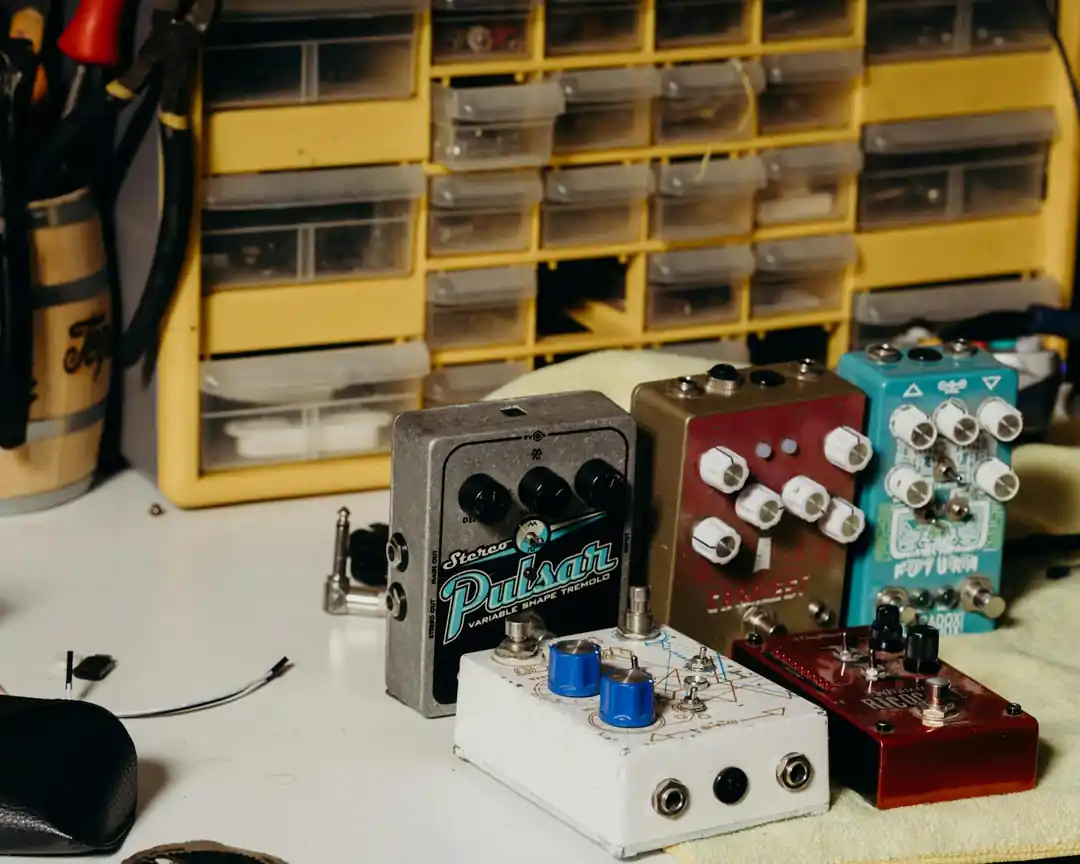
The Process: How the Magic Happens
So, how do you actually create one of these digital doppelgängers? The process is surprisingly intuitive and user-friendly, which is a testament to the design of the Quad Cortex.
First, you set up the physical connections. You run a cable from a dedicated "Capture Out" on the Quad Cortex to the input of the amp or pedal you want to capture. Then, the output of your gear is routed back into an input on the Quad Cortex. If you're capturing a full amp rig (amp head and speaker cabinet), you'll place a microphone in front of the cabinet and plug that microphone into one of the Quad Cortex's inputs. This physical loop is crucial, as it allows the unit to send its test signal and listen to the result in real-time.
Once you initiate the capture process on the Quad Cortex's touchscreen, the unit takes over. It sends a series of complex, sweeping audio signals through your gear. It sounds a bit like a sci-fi movie, with a series of chirps, whooshes, and static-like noises. These sounds are meticulously designed to excite the full range of your gear's behavior—from its cleanest tones to its most saturated roar, and every dynamic level in between. The neural network listens intently to how your amp or pedal colors this signal, analyzing the difference between the original signal and the processed one.
This analysis phase is where the heavy lifting occurs. The AI builds a dynamic model based on the thousands of data points it just collected. It's not just creating one sound; it's creating a model that understands how to react as if it were the physical amp. After a few minutes, the process is complete, and you're presented with a direct A/B comparison between your physical rig and the newly created Neural Capture. The first time you do this and struggle to hear a difference, it feels like pure magic.
Why It Feels Different: Dynamic vs. Static
This brings us to what I believe is the most important distinction between Neural Capture and some older forms of this technology, like "profiling." While profiling can create a remarkably accurate snapshot of an amp at a single setting, it can sometimes feel a bit static. Adjusting the gain or EQ on a profile can feel like you're simply turning a filter up or down on a recording.
Neural Capture, because it's a dynamic model, feels more interactive and authentic. When you dig in with your pick, the capture responds with the appropriate bite and harmonic richness. When you roll back your guitar's volume knob, it cleans up with that familiar, organic feel. This is because the neural network didn't just learn one sound; it learned the behavior of the amp across its entire dynamic range.
This technology represents a monumental step forward for musicians. It gives us the ability to preserve the sound and feel of our most cherished, unique, and even temperamental analog gear in a reliable, portable, and recallable format. It’s the freedom to take your entire studio collection of amps to a gig in a backpack. It’s the power to share your perfect tone with a friend across the world. It’s a new chapter in our endless quest for the perfect sound, and honestly, it’s an incredibly exciting time to be a guitar player.
The New Gods of Tone: An Honest Look at AI Guitar Modeling
Tame the Tone Beast: A Guitarist's Guide to Managing Quad Cortex Presets
Related Posts
 MOBILE
The Great Console Debate: How to Choose the Right Gaming System for Your Family
Feeling stuck between a Switch, a PlayStation, and an Xbox? Let's break down which gaming console is the perfect fit for your family's game nights.
 MOBILE
From Fragile to Formidable: The Surprising Evolution of Foldable Phone Durability
Remember when the idea of folding a smartphone screen in half felt like a disaster waiting to happen? Let's talk about how far they've come, because the story is pretty incredible.

Popular Posts

Rethinking Non-Profit Promotion: Creative Strategies That Actually Drive Event Impact

Beyond Stark White: The Best Interior Paint Colors to Light Up Your New Space

How to Actually Master a New Language on Your Own (No Magic Gene Required)